Snake Plant Types & Varieties: Laurentii, Moonshine, Cylindrica & More
Snake plant covers dozens of distinct types, from tall variegated Laurentii to solid silvery Moonshine, round-leaved Cylindrica, oversized Whale Fin, and compact rosette types like Bird's Nest. This guide compares them by leaf shape, size, and light needs so you can identify or choose the right one.
Quick Answer
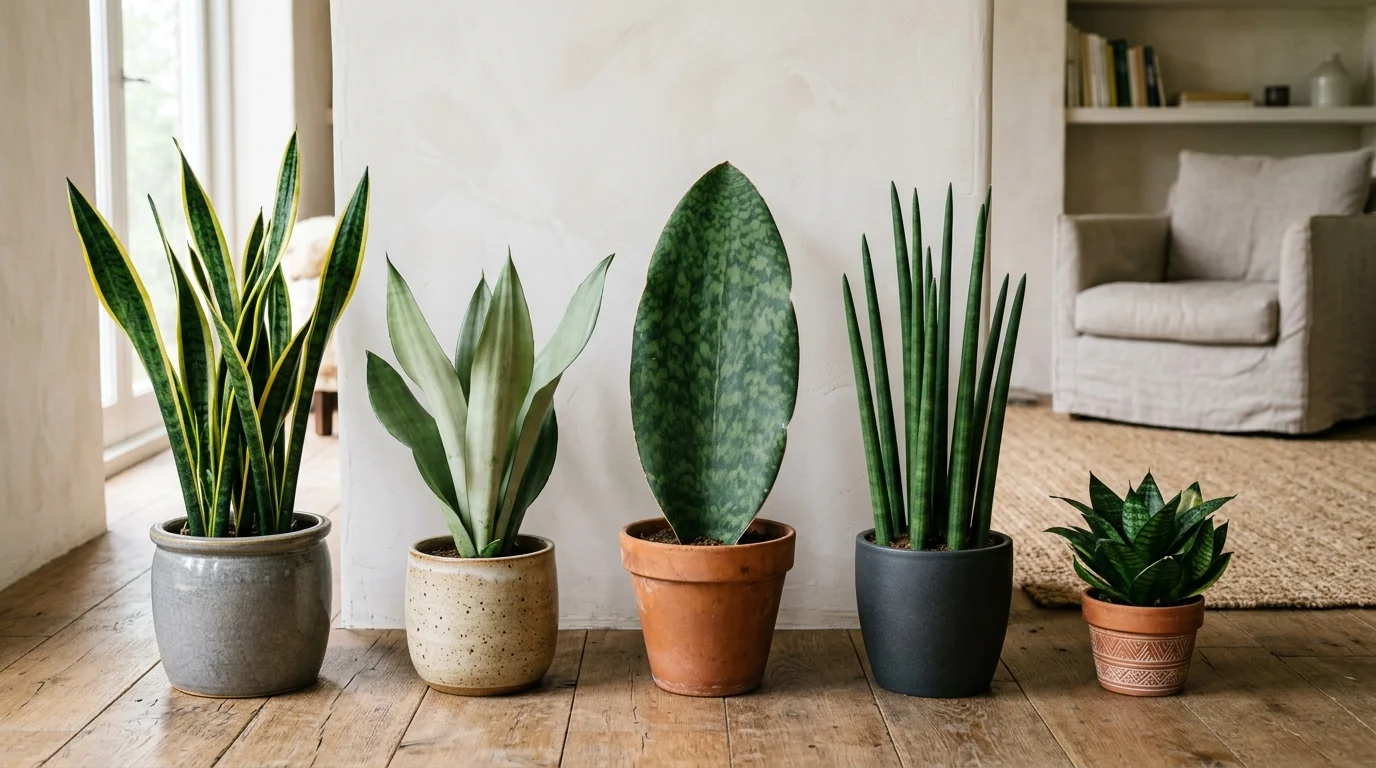
Snake plant (Dracaena trifasciata, formerly Sansevieria) has many common types: Laurentii (tall, yellow-edged leaves) is the most widely sold, Black Gold has darker centers with yellow margins, Moonshine has solid silvery-green leaves, Cylindrica has round spear-like leaves, Whale Fin grows one or two giant paddle leaves, and compact rosette types like Bird's Nest, Hahnii, and Cleopatra stay under a foot tall. All share the same core care: bright to low light, infrequent watering, and fast-draining soil.
Key Takeaways
- Laurentii is the most common snake plant type, with tall upright leaves edged in yellow.
- Moonshine has solid pale silvery-green leaves with no edge variegation.
- Compact rosette types like Bird's Nest, Hahnii, and Cleopatra stay under a foot tall and suit small spaces.
- Variegated types can revert to solid green in low light; brighter light helps new growth keep its pattern.
- All snake plant types share the same basic care and are toxic to cats and dogs.
Quick Facts
- Most common type Laurentii (tall, yellow-edged leaves)
- Smallest types Bird's Nest, Hahnii, Cleopatra (under 12 in / 30 cm)
- Pet safety Toxic to cats and dogs across all types
What Should I Do?
You want the classic, widely available look
You have limited desk or shelf space
Your variegated snake plant is growing all-green leaves
PlantSolve Recommendation
- Conservative dosage designed for container plants
- Based on manufacturer instructions
- Adjusted using horticultural best practices
- Start low and increase only if vigorous growth is observed
Snake plant is now classified as Dracaena trifasciata (formerly Sansevieria trifasciata), but the genus Sansevieria includes dozens of distinct species and cultivars sold as houseplants. Leaf shape, height, and color vary far more than the name suggests, from the classic tall, upright Laurentii to the rosette-forming bird's nest types and the round, pencil-like cylindrica.
This guide compares the most common snake plant types by leaf shape, size, and light needs, so you can identify what you have or choose the right one for a space. For day-to-day care, see the full snake plant care guide, which covers watering, soil, and troubleshooting in depth.
Common Snake Plant Types at a Glance
| Variety | Look | Approx. Height | Light Needs |
|---|---|---|---|
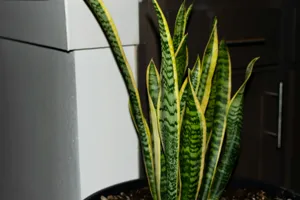
| Laurentii (D. trifasciata 'Laurentii') | Tall, upright, dark green leaves with wide yellow edges | 2 to 4 ft (60 to 120 cm) | Tolerates low light; best color in bright indirect light |
| Black gold ('Black Gold') | Dark, almost black-green center with bright yellow margins | 2 to 3 ft (60 to 90 cm) | Bright indirect light for best contrast |
| Moonshine ('Moonshine') | Broad, solid pale silvery-green leaves, no edge variegation | 1.5 to 2 ft (45 to 60 cm) | Bright indirect light; low light is tolerated but color fades |
| Cylindrica / African spear (D. angolensis) | Round, spear-like leaves, sometimes fanned or braided | 2 to 3 ft (60 to 90 cm) | Bright light for tight, upright growth |
| Whale fin ('Masoniana') | One or a few very large, wide paddle-shaped leaves | 1.5 to 2.5 ft (45 to 75 cm) | Bright indirect light |
| Bird's nest (dwarf types, e.g. 'Hahnii') | Low, compact rosette rather than tall spikes | 6 to 12 in (15 to 30 cm) | Tolerates lower light well; good for desks and shelves |
| Cleopatra ('Hahnii' cultivar) | Compact rosette with red-tinged, wavy leaf edges | 6 to 10 in (15 to 25 cm) | Bright indirect light brings out the red tones |
| Silver flame | Compact rosette with silvery, sword-shaped leaves | 8 to 14 in (20 to 35 cm) | Bright indirect light |
| Starfish (D. cylindrica 'Boncel') | Fan-shaped cluster of round, pointed leaves | 6 to 12 in (15 to 30 cm) | Bright light |
Sansevieria naming is inconsistent across nurseries: the same plant may be labeled Sansevieria, Dracaena, or just "snake plant." When in doubt, compare leaf width, edge color, and growth habit against the table above rather than relying on the tag.
Tall vs Compact Snake Plant Types
| Group | Examples | Best For |
|---|---|---|
| Tall, upright | Laurentii, Black Gold, Moonshine, Cylindrica, Whale Fin | Floor plants, corners, and vertical accents |
| Compact rosette | Bird's nest, Hahnii, Cleopatra, Silver Flame, Starfish | Desks, shelves, and small spaces |
All types share the same care needs at a high level, but a full rosette in a shallow pot dries out faster than a tall variety in a deep pot, so check soil moisture by feel rather than by a fixed schedule. See the watering calculator for a starting point.
Variegated vs Solid-Color Snake Plants
| Type | Leaf Pattern | Light to Keep the Look |
|---|---|---|
| Laurentii, Black Gold, Cleopatra | Variegated edges (yellow or reddish) around a darker center | Bright indirect light keeps variegation strongest; low light can cause plain green regrowth |
| Moonshine | Solid pale silvery-green, no edge variegation | Bright indirect light for the brightest color |
| Standard green (Sansevieria trifasciata) | Solid to mottled deep green, no bright edging | Tolerates the lowest light of the group |
If a variegated snake plant starts producing all-green leaves, the new growth is reverting, most often from insufficient light. Move it somewhere brighter; existing leaves will not regain their pattern, but new growth may improve.
Are All Snake Plant Types Toxic to Pets?
Yes. The ASPCA lists snake plant (Sansevieria/Dracaena trifasciata) as toxic to cats and dogs across all cultivars, since the toxic compounds are present throughout the genus, not just in specific varieties. Reported signs include drooling, vomiting, and diarrhea if chewed. See the full snake plant profile for toxicity details, and check other plants with the pet safety calculator.
Which Snake Plant Type Should You Choose?
| If You Want | Best Type | Why |
|---|---|---|
| The classic look, most widely available | Laurentii | Easy to find, reliably variegated, tolerates a range of light |
| A calmer, monochrome look | Moonshine | Solid pale color reads as more modern; needs a bit more light |
| A dramatic single statement leaf | Whale Fin | One or two oversized paddle leaves make a strong visual anchor |
| A small plant for a desk or shelf | Bird's nest or Cleopatra | Compact rosette habit fits tight spaces |
| A sculptural, architectural look | Cylindrica | Round, spear-like leaves stand apart from the flat-leaved types |
| The lowest light tolerance | Standard green or Laurentii | Among the most shade-tolerant of the group |
Care Basics for All Snake Plant Types
Every type above shares the same core needs. For the full detail on each point, see the complete snake plant care guide.
| Factor | What They Need | Tool |
|---|---|---|
| Light | Tolerates low light; brightest color and fastest growth in bright indirect light | Snake plant light guide |
| Watering | Let the soil dry out fully between waterings; overwatering is the top cause of loss | Watering calculator |
| Soil | Fast-draining cactus or succulent mix | Potting mix calculator |
| Repotting | Infrequent; snake plants prefer being slightly snug in their pot | Repotting calculator |
Authority References & Further Reading
- ASPCA: Toxic and non-toxic plant listing for Sansevieria / Dracaena trifasciata.
- For complete watering, light, propagation, and troubleshooting detail across all types, see the full snake plant care guide.
Recommended next actions
Next Best Actions
Move from reading to action with related calculators, plant profiles, and quiz-based recommendations.
Plant Guide
Snake Plant
Expert care guide and diagnostic data for the Snake Plant. Learn how to properly water, light, and troubleshoot common issues.
Topic Guide
Overwatering Plants: Symptoms, Diagnosis & Prevention
Learn how to identify, treat, and prevent overwatering in your indoor and aquarium plants. Expert care tips and troubleshooting.
Guide
Cactus vs Succulent: Are Cacti Succulents? Key Differences
All cacti are succulents, but not all succulents are cacti. This guide explains the difference, the areole test, plants that only look like cacti (euphorbia, agave, aloe), and how cactus and succulent care differ.
Frequently Asked Questions
What are the different types of snake plants?
What is the most common snake plant?
Are all snake plant varieties easy to care for?
Why did my variegated snake plant turn all green?
Are snake plant varieties toxic to cats and dogs?
What is the smallest snake plant type?
Sources & References
-
Source: aspca.org
Toxic and non-toxic plant listing covering Sansevieria / Dracaena trifasciata.
Explore More