Crown of Thorns Types: Thai Giant, Dwarf & Bract Colors
Crown of thorns spans the classic red-bracted species to hundreds of Thai-bred hybrids in bold colors and sizes, from dwarf desk plants to large Thai Giant cultivars. This guide compares them by bract color, size, and origin, and links back to full care instructions.
Quick Answer
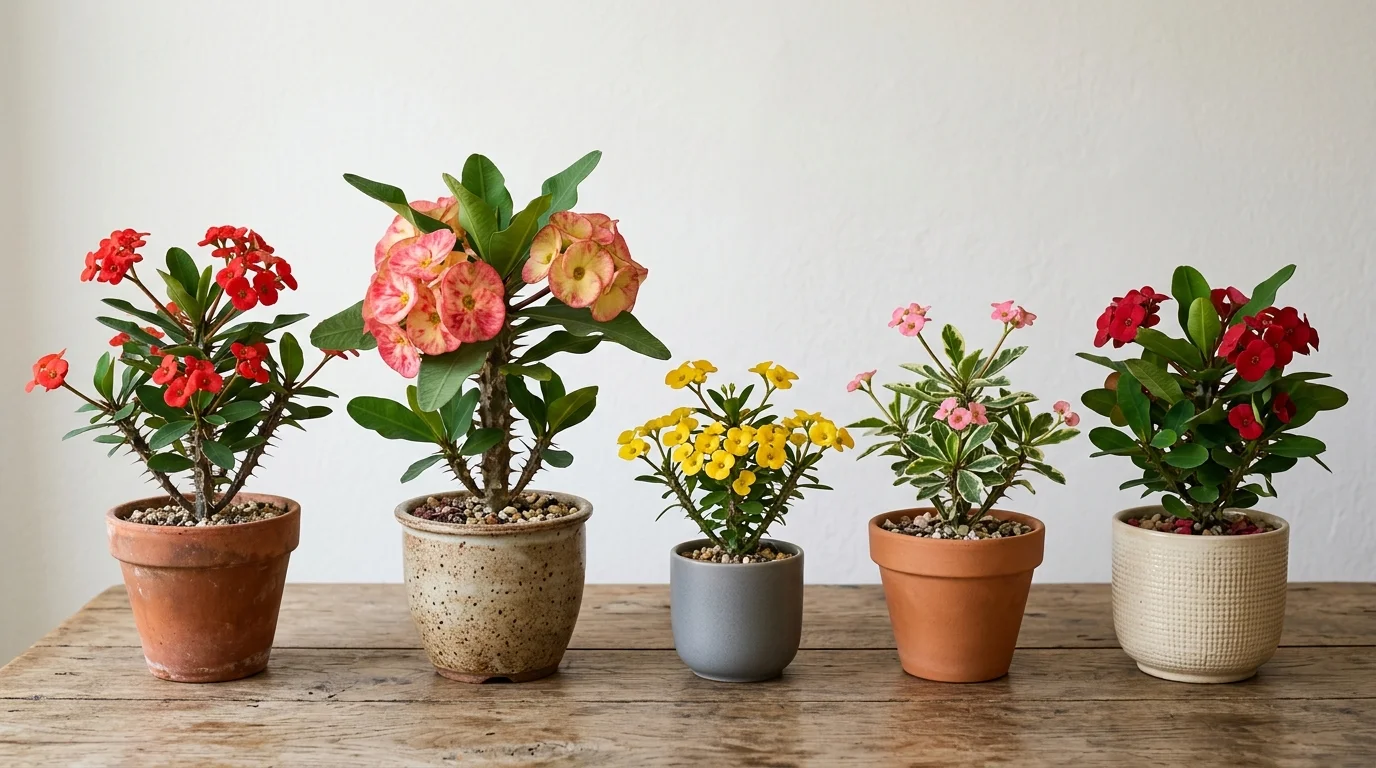
Crown of thorns (Euphorbia milii) ranges from the species type with small red or yellow bracts to Thai Giant hybrids bred since the 1990s for large, bold, multicolored bracts, dwarf compact cultivars under 1.5 ft, and many named Thai color hybrids such as 'Rose of the North'. Bract color and size come from breeding, so every type shares the same core care: 4 to 6 hours of direct sun, fast-draining soil, and watering only when the soil is mostly dry. All types have toxic white sap and sharp spines.
Key Takeaways
- The species type has small red or yellow bracts; Thai Giant hybrids were bred for bracts over 2 in (5 cm) in bold and multicolored patterns.
- Dwarf cultivars stay under about 1.5 ft, suited to small pots and windowsills.
- Cultivar naming is inconsistent between growers, so the same plant may be sold under different names.
- Bract color and size come from breeding, not care; all types need the same light, water, and soil.
- Every crown of thorns type has toxic white latex sap and sharp spines, so handle all of them with gloves.
Quick Facts
- Bract color source Breeding (cultivar), not care
- Bloom trigger 4 to 6 hours of direct sun daily
- Safety note All types have toxic sap and sharp spines
What Should I Do?
You want the largest, boldest blooms
You have limited windowsill or desk space
You have children or pets
PlantSolve Recommendation
- Conservative dosage designed for container plants
- Based on manufacturer instructions
- Adjusted using horticultural best practices
- Start low and increase only if vigorous growth is observed
Crown of thorns (Euphorbia milii) is a thorny, semi-succulent shrub from Madagascar, grown for bracts (colored, petal-like leaves) that can appear almost year-round in bright light. The wild species has small red or yellow bracts, but decades of breeding, mostly in Thailand since around 1990, produced hundreds of hybrid cultivars in far more colors, bract sizes, and plant sizes than most owners expect.
This guide compares crown of thorns types by size, bract color, and origin. For day-to-day watering, light, and toxicity precautions, see the full crown of thorns care guide, which covers those in depth.
Crown of Thorns Types at a Glance
| Type | Bract Size / Color | Plant Size | Notes |
|---|---|---|---|
| Species type (E. milii var. milii / splendens) | Small, typically red | Up to 3 to 6 ft (1 to 1.8 m), woody and sprawling | The classic, widely available form; heavily spined stems |
| Thai Giant hybrids | Large bracts, often over 2 in (5 cm) across; red, pink, yellow, white, and multicolored forms | More compact and heavier blooming than the species | Bred in Thailand from the 1990s onward for size and color |
| Dwarf / compact cultivars (e.g. 'Short and Sweet') | Small to medium bracts | Under 1 to 1.5 ft (30 to 45 cm) | Suited to small pots, desks, and windowsills |
| Named Thai color hybrids (e.g. 'Rose of the North', 'Tabtim Siam') | Large, often bicolor bracts (red-and-white, rosy pink with green) | Varies; many are compact, heavy bloomers | Sold under many individual cultivar names; expect inconsistent naming between sellers |
| E. milii × E. lophogona hybrids | Free-flowering, with thicker, deep green leaves | Varies | Bred for continuous flowering and larger foliage |
Naming is inconsistent across growers, and "a single complete collection of cultivars doesn't exist" because so many hybrids have been produced, mostly in Thailand and China. Expect the same plant to be sold under different names depending on the source.
Crown of Thorns Bract Colors
| Color Group | Typical Cultivars | Notes |
|---|---|---|
| Red | Species type, many Thai hybrids | The most common and widely available color |
| Yellow | Species and hybrid forms | Second most common traditional color |
| Pink / rose | 'Rose of the North', 'Tabtim Siam' | Popular among Thai hybrid selections |
| White / cream | Various hybrids | Less common than red or yellow |
| Multicolor / bicolor | 'Rose of the North' (red-and-white), various Thai hybrids | A result of intensive hybridization since the 1990s |
Bract color and size are driven mostly by breeding, not by care, so choosing a cultivar is the main way to get a specific color. Light and feeding affect how heavily any cultivar blooms, covered in the care guide's light and fertilizing sections.
Standard vs Thai Giant vs Dwarf: Which to Choose
| If You Want | Choose | Why |
|---|---|---|
| The classic, easiest-to-find look | Species type / standard red | Widely sold, well suited to a sunny windowsill |
| The largest, showiest blooms | Thai Giant hybrids | Bred specifically for bract size over 2 in (5 cm) and bolder colors |
| A plant for a small pot or desk | Dwarf / compact cultivars | Stay under 1 to 1.5 ft (30 to 45 cm) |
| Something unusual or bicolor | Named Thai hybrids (e.g. 'Rose of the North') | Selected for multicolor or patterned bracts |
| Denser foliage alongside flowers | E. milii × E. lophogona hybrids | Thicker, more leathery leaves than the species |
Do All Crown of Thorns Types Need the Same Care?
Yes. Bract color, size, and plant size vary a great deal between cultivars, but the underlying care is the same across the group. For the full detail on each point below, see the complete crown of thorns care guide.
| Factor | What All Types Need | Tool |
|---|---|---|
| Light | 4 to 6 hours of direct sun minimum to bloom; a south- or west-facing window | Crown of thorns light guide |
| Watering | Water when the top 50 to 75% of soil is dry; do not treat it like a bone-dry desert cactus | Watering calculator |
| Soil | Fast-draining cactus or succulent mix with excellent drainage | Potting mix calculator |
| Temperature | 65 to 90°F (18 to 32°C); protect from cold below about 50°F (10°C) | Cold damage |
| Fertilizing | Diluted, phosphorus-leaning fertilizer monthly in spring and summer | Fertilizer basics |
The one exception to "same care" is dwarf cultivars in small pots, which dry out faster than a larger species-type shrub, so check the soil more often rather than watering on a fixed schedule.
Handling Different Types Safely
Every crown of thorns type, regardless of bract color or size, shares the same two hazards: sharp spines and toxic white latex sap that can severely irritate skin and eyes and is dangerous if ingested.
- Always wear thick gloves and eye protection when pruning or repotting any cultivar.
- Keep all types away from children and pets. See our pet safety calculator and indoor plants safe for cats and dogs.
- Wash tools after use, since dried sap on pruners can still irritate skin later.
- If sap contacts skin or eyes, rinse thoroughly with water and seek medical advice if irritation persists.
Crown of Thorns vs Other Blooming Succulents
| Plant | Bloom Trigger | Toxicity |
|---|---|---|
| Crown of thorns (Euphorbia milii) | Direct sun (4 to 6 hours daily) | Highly toxic sap |
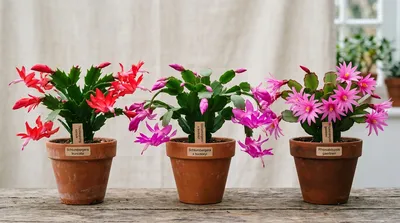
| Holiday cactus (Schlumbergera) | Long, dark nights | Generally listed as non-toxic; see the holiday cactus guide |
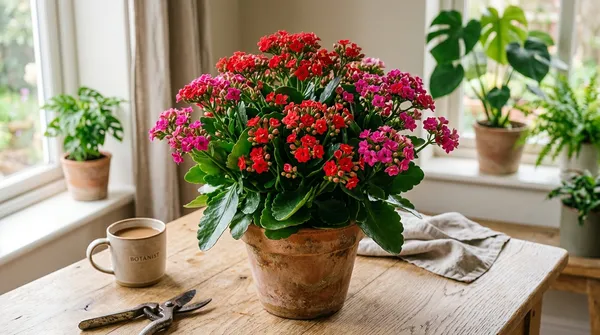
| Kalanchoe | Long, dark nights | Toxic to pets; see the kalanchoe care guide |
Crown of thorns stands out because it flowers with strong light rather than long darkness, so it can bloom on a different schedule than these other popular flowering succulents.
Authority References & Further Reading
- University of Wisconsin-Madison Extension: Background on crown of thorns species, hybrid breeding history, and bloom triggers.
- For complete watering, light, fertilizing, and toxicity detail across all types, see the full crown of thorns care guide.
Recommended next actions
Next Best Actions
Move from reading to action with related calculators, plant profiles, and quiz-based recommendations.
Plant Guide
Crown Of Thorns
The Crown of Thorns (Euphorbia milii) is a rugged, sun-loving succulent that rewards bright windowsills with year-round colorful blooms. However, its toxic sap requires careful handling.
Topic Guide
Overwatering Plants: Symptoms, Diagnosis & Prevention
Learn how to identify, treat, and prevent overwatering in your indoor and aquarium plants. Expert care tips and troubleshooting.
Guide
Christmas vs Thanksgiving vs Easter Cactus: How to Tell Apart
Most plants sold as Christmas cactus are actually Thanksgiving cactus, and Easter cactus is a third relative with different flowers. This guide compares stem shape, flower shape, bloom timing, and care, and gives a simple routine to trigger flowers plus a troubleshooting table for bud drop and limp segments.
Frequently Asked Questions
What are the different types of crown of thorns?
What is a Thai Giant crown of thorns?
Do different crown of thorns colors need different care?
What is the smallest crown of thorns type?
Are all crown of thorns varieties toxic?
Why does my crown of thorns have different colored bracts than the one I saw online?
Sources & References
-
Source: hort.extension.wisc.edu
Background on Euphorbia milii species, hybrid breeding history, and flowering triggers.
Explore More