Crown of Thorns Care: Blooms, Spines, and Toxic Sap
The Crown of Thorns (Euphorbia milii) is a rugged, sun-loving succulent that rewards bright windowsills with year-round colorful blooms. However, its toxic sap requires careful handling.

-
Difficulty
easy
-
Light
Requires full, direct sunlight to bloom. If placed in indirect light, it will survive but will grow weak, leggy stems and refuse to produce flowers.
-
Temperature
65°F - 90°F (18°C - 32°C)
-
Growth
slow
-
Humidity
30% - 50%
-
pH range
6.0 - 7.0
-
Biggest Owner Mistake
Overwatering because the thick, fleshy stems look tropical and thirsty—but it's a succulent that stores substantial water in its stems, and wet soil causes root rot that spreads upward invisibly until the stems collapse. Let the soil dry out completely between waterings.
-
What Nobody Tells You
The milky white sap that bleeds from any cut is a skin and eye irritant that can cause temporary vision loss if rubbed into the eyes—always wash hands thoroughly after any pruning. Despite this, it's one of the easiest succulents to keep blooming indoors year-round.
-
Real Home Conditions
In low-light rooms it stops blooming entirely and produces long, weakly-attached stems that drop leaves at the base. It needs a very sunny window—ideally south-facing—to sustain the continuous flower cycle that makes it worth growing.
Quick Answer
Crown of Thorns is a succulent euphorbia that demands bright light including direct sun for prolific blooming, and tolerates drought by storing water in its thick stems. Water only after soil dries completely, handle carefully due to sharp thorns and irritating milky sap, and use a fast-draining succulent mix to prevent root rot. This Madagascar native blooms year-round in adequate light.
Key Takeaways
- Provide bright light, including direct sun, for the best blooming.
- Water only after soil has dried out; this succulent tolerates drought well.
- Handle carefully, since stems have sharp thorns and irritant sap.
- Use a fast-draining succulent mix to help prevent root rot.
Overview
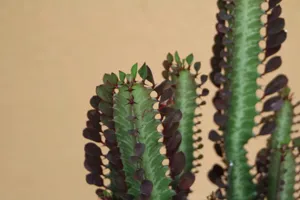
The Crown of Thorns (Euphorbia milii) is a fascinating, semi-succulent shrub native to Madagascar. It features thick, water-storing stems completely covered in sharp, formidable spines. Despite its rugged, intimidating appearance, it produces delicate, teardrop-shaped green leaves and stunning, colorful blooms (which are technically modified leaves called bracts) in shades of red, pink, yellow, and white.
It is one of the few indoor plants capable of blooming year-round, making it highly prized for sunny windowsills. However, this is not a plant for everyone. It comes with two major warnings: first, its spines are sharp enough to draw blood, and second, it bleeds a highly toxic white latex sap when damaged. It must be handled with care and kept away from children and pets.
Light Requirements: Full Sun is Mandatory
If you want a Crown of Thorns to bloom, you must provide it with the brightest light possible. It requires a minimum of four to six hours of direct, unfiltered sunlight every day. A south-facing or west-facing window is non-negotiable. If you place it in a dim room or a north-facing window, the plant will survive, but it will grow weak, "leggy" stems, drop its lower leaves, and refuse to produce a single flower.
Watering Strategy
This is where many indoor gardeners fail. Because it looks like a cactus, people treat it like a cactus, withholding water for months at a time. While the Crown of Thorns is drought-tolerant, it will respond to extreme drought by dropping all of its leaves to survive. To keep it lush and blooming, water the plant thoroughly when the top 50% to 75% of the soil feels dry. During the heat of summer, this might be once a week. In winter, reduce watering significantly, allowing the soil to dry out almost completely.
Temperature and Humidity
Being native to Madagascar, this plant loves heat. Typical indoor temperatures between 65°F and 90°F (18°C - 32°C) are perfect. It is highly sensitive to cold; temperatures below 50°F (10°C) or exposure to a freezing window draft will cause it to drop its leaves immediately. It prefers dry air and has zero need for a humidifier, making it perfectly suited for centrally heated Western homes.
Soil and Potting
Excellent drainage is required to prevent root rot. Use a high-quality commercial cactus and succulent mix, or amend standard potting soil with 50% perlite or pumice. Always use a pot with a large drainage hole. Terracotta pots are excellent for Euphorbias because they breathe, allowing the soil to dry out faster.
Fertilizing
To support its continuous blooming cycle, the Crown of Thorns requires slightly more fertilizer than a typical succulent. Feed it once a month during the spring and summer using a liquid houseplant fertilizer diluted to half-strength. Look for a fertilizer slightly higher in phosphorus to encourage blooming. Do not fertilize during the winter.
Pruning and Toxicity Warning
Over time, the plant can become leggy and unruly. You can prune it back to encourage branching, but you must take extreme precautions. Like all Euphorbias, the Crown of Thorns contains a milky white latex sap that is highly toxic and severely irritating.
If this sap touches your skin, it can cause a painful rash or blistering. If it gets in your eyes, it can cause temporary blindness and severe pain. If ingested by cats, dogs, or humans, it causes intense vomiting and gastrointestinal distress. Always wear thick, leather gardening gloves and protective eyewear when pruning this plant. Wash your tools immediately afterward.
Common Problems
Leaves Dropping Suddenly: Usually caused by one of two things: letting the soil stay bone-dry for too long, or exposing the plant to a cold draft. Adjust your watering or move it away from the drafty window.
Yellowing Bottom Leaves: This is the classic sign of overwatering. Ensure the soil is drying out halfway down before watering again, and never let the pot sit in a saucer of standing water.
No Flowers: The plant is not receiving enough direct sunlight. Move it to a brighter window.
Calculator
Interactive Calculators for Crown Of Thorns
Recommended next actions
Next Best Actions
Use calculators and guides to turn this plant profile into a practical care routine.
Topic Guide
Watering
Learn everything about watering for your indoor and aquarium plants. Expert care tips, troubleshooting, and related guides.
Guide
Yellow Houseplant Leaves: Diagnose & Fix Guide 2026
After diagnosing hundreds of yellow-leaf cases across dozens of plant species, we've mapped the ten distinct causes that look nearly identical at first glance — and built the only systematic guide that tells you not just what's wrong, but exactly how to confirm it and fix it.
Topic Guide
Root Rot
Learn how to identify and treat root rot in houseplants. Discover causes, symptoms, and step-by-step solutions to save your plants from overwatering.
Structured Plant Data
Plant Data Profile
The following data is extracted directly from our botanical knowledge graph for accuracy and transparency.
Growth Characteristics
Growth Rate
slow
Mature Height
2-3 feet indoors
Mature Spread
1-2 feet
Life Cycle
Perennial
Flowering Season
Year-round (if given enough light)
Container Friendly
yes
Indoor Capable
yes
Environmental Parameters
| Parameter | Recommended | Survivable |
|---|---|---|
| Temperature | 65°F - 90°F (18°C - 32°C) | 50°F - 100°F (10°C - 38°C) |
| Humidity | 30% - 50% | 10% - 60% |
| Soil PH | 6.0 - 7.0 | 5.5 - 7.5 |
Lighting
Description
Requires full, direct sunlight to bloom. If placed in indirect light, it will survive but will grow weak, leggy stems and refuse to produce flowers.
Nutrients
Nitrogen Demand
low
Phosphate Demand
moderate
Potassium Demand
moderate
Micronutrient Notes
Requires more fertilizer than a typical succulent to support continuous blooming.
Fertilizer Frequency
Once a month during spring and summer with a blooming houseplant fertilizer diluted to half strength.
Organic Options
Bone meal mixed into the topsoil in spring.
Relationships
-
Root Rot
Vulnerability | Strength 8
Susceptible to root rot if placed in heavy soil or if the pot lacks drainage holes.
Blooming Succulent Comparison
| Plant | Bloom Trigger | Toxicity |
|---|---|---|
| Crown of Thorns | Direct Sun | Highly Toxic |
| Christmas Cactus | Long Dark Nights | Non-Toxic |
| Kalanchoe | Long Dark Nights | Toxic |
Troubleshooting & Diagnostics Guide
1 Why is my Crown of Thorns dropping its leaves?
Diagnosis: Underwatering (soil too dry) or cold drafts
Treatment: If soil is bone dry, water deeply; if cold, move to a warmer spot; ensure no drafts.
Prevention: Water when the top inch of soil is dry; maintain temperatures above 15°C.
2 Why are the leaves turning yellow?
Diagnosis: Overwatering or poor drainage leading to root rot
Treatment: Allow soil to dry out; if rot is advanced, repot in dry, well-draining soil.
Prevention: Water sparingly; use cactus/succulent mix.
Authoritative Resources
For additional peer-reviewed information on plant diseases, toxicity, and care, consult these trusted botanical and agricultural extensions:
Glossary of Terms
- Bract
- A modified or specialized leaf, especially one associated with a reproductive structure such as a flower. In the Crown of Thorns, the 'petals' are actually bracts.
- Latex
- A milky fluid found in many plants, such as Euphorbias, which exudes when the plant is cut and coagulates on exposure to the air. Often highly irritating or toxic.
Frequently Asked Questions
Why is my Crown of Thorns dropping its leaves?
How do I get my Crown of Thorns to bloom indoors?
Is the Crown of Thorns plant toxic?
How often should I water a Crown of Thorns?
Why are the leaves turning yellow?
Sources & References
-
Source: powo.science.kew.org
-
Source: edis.ifas.ufl.edu
Explore More