How to Increase Humidity for Houseplants: What Actually Works
Discover effective ways to raise humidity for tropical houseplants. We compare humidifiers, pebble trays, misting, and grouping plants to find what really.
Quick Answer
The most effective way to increase humidity for houseplants is using an ultrasonic room humidifier. Misting only raises humidity for a few minutes and risks fungal disease. Pebble trays provide a minor (1-3%) local boost. Grouping plants together creates a collective microclimate that successfully raises humidity through shared transpiration.
Key Takeaways
- Misting is highly ineffective at raising ambient humidity and often leads to leaf rot.
- A dedicated room humidifier is the only way to significantly raise humidity across an entire room.
- Grouping plants closely together traps transpired moisture, creating a humid microclimate.
- Keeping plants away from heating vents and drafts is just as important as adding moisture.
Quick Facts
- Ideal humidity for tropicals 60-80%
- Typical home humidity 30-40%
- Humidifier target RH 50-60%
- Pebble tray boost +1-3% (local only)
- Misting effect duration ~10 minutes
What Should I Do?
Growing sensitive tropicals (Calathea, Anthurium) in a dry room
Want a low-effort supplemental boost, not a primary fix
Humidity Methods Compared
| Method | Effectiveness | Best For |
|---|---|---|
| Room humidifier | Sustained 50-60% RH | Sensitive tropicals (Calathea, Anthurium) |
| Grouping plants | Microclimate via shared transpiration | Mixed broad-leaf and sensitive plants |
| Pebble tray | +1-3% local only | Minor supplement, not a standalone fix |
| Misting | ~10 min spike, then back to baseline | Not recommended - infection risk |
| Bathroom/kitchen placement | Naturally elevated humidity | Ferns, Marantas |
Why Humidity Matters
Plants "breathe" through microscopic pores on their leaves called stomata. When the surrounding air is dry, moisture is rapidly pulled out of the stomata. If the plant loses water faster than its roots can absorb it from the soil, the cells at the edges of the leaves dehydrate, resulting in crispy brown tips.
Quick Facts
- Ideal humidity for tropicals: 60-80%
- Typical home humidity: 30-40%
- Humidifier target RH: 50-60%
- Pebble tray boost: +1-3% (local only)
- Misting effect duration: ~10 minutes
How to Increase Humidity
1. Use a Room Humidifier
If you own sensitive tropicals like Calathea or Anthurium, an ultrasonic humidifier is an essential piece of equipment. It is the only method that provides a sustained, measurable increase in relative humidity (RH). Aim to keep the room between 50% and 60% RH. Note: Always use distilled or filtered water to prevent white mineral dust from settling on your leaves.
2. Group Plants Together
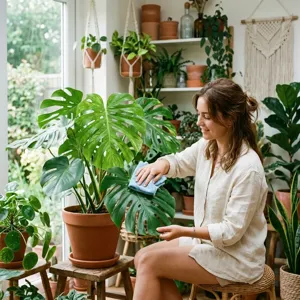
Plants constantly release water vapor into the air (transpiration). By grouping several plants close together, you trap this moisture in a shared canopy, effectively creating a humid microclimate. Mix large, broad-leaf plants (like Monstera) with smaller, sensitive plants (like Ferns) to maximize this effect.
3. Use a Pebble Tray
A pebble tray is a shallow dish filled with stones and water, placed underneath the plant pot. As the water evaporates, it creates a small column of humidity directly around the foliage. While it looks nice, hygrometer tests show that pebble trays only raise local humidity by 1% to 3%. It's helpful, but won't save a struggling Calathea in a dry room.
4. Use Naturally Humid Rooms
If you don't want to buy a humidifier, move your humidity-loving plants to naturally humid rooms. Bathrooms with showers and kitchens (near the sink or kettle) frequently spike in humidity, providing an excellent environment for ferns and Marantas.
The Myth of Misting
Misting your plants with a spray bottle feels intuitive, but it is fundamentally flawed. When you mist a plant, the humidity spikes for about 10 minutes until the water evaporates, returning the room to its baseline dryness. This yo-yo effect can add stress to the plant. Worse, leaving water sitting on foliage in a stagnant indoor environment can contribute to fungal and bacterial leaf spot infections.
Which Method Should You Use?
Growing sensitive tropicals (Calathea, Anthurium) in a dry room: Use a room humidifier - pebble trays and misting alone are insufficient.
Want a low-effort supplemental boost, not a primary fix: Group plants together or use a pebble tray.
What Actually Works
If you take one thing from this guide: a room humidifier is the only method that reliably sustains the 50-60% RH sensitive tropicals need. Pebble trays and plant grouping are useful supplements, not substitutes, and misting does more harm than good. For most humidity-sensitive plants, pair a humidifier with grouping for the strongest, lowest-maintenance result.
Winter Humidity Adjustments
Winter presents a unique challenge for indoor humidity. As outdoor temperatures drop and central heating systems run continuously, indoor relative humidity can plummet to 20-30%—far too dry for most tropical houseplants. To combat this, group your plants closely together to create a microclimate of shared transpiration, use a humidifier to maintain a consistent 40-60% relative humidity, or employ pebble trays. However, be mindful of airflow; stagnant, humid air can encourage fungal diseases, so ensure the room still receives gentle circulation while avoiding direct blasts from heating vents.
Frequently Asked Questions
Does misting increase humidity for houseplants?
How much does a pebble tray actually raise humidity?
What humidity do tropical houseplants need?
Can I use tap water in a humidifier for my plants?
Sources & References
-
Source: extension.psu.edu
Type: extension
-
Source: extension.umd.edu
Type: extension
Explore More