Iron Chlorosis in Plants
Iron chlorosis is one of the most common micronutrient issues affecting houseplants, lawns, and woody ornamentals. Because iron is an immobile nutrient within plant tissue, plants cannot transport stored iron from older foliage to nourish new growth. As a result, symptoms always appear on the newest leaves first. While an actual absence of iron in the substrate can cause chlorosis, high soil pH (above 6.5–7.0) is the primary trigger, converting soluble iron into insoluble forms roots cannot absorb. Treating iron chlorosis requires immediate symptom relief using chelated iron alongside long-term fixes like correcting soil pH, improving drainage, and relieving root compaction.
Quick Answer
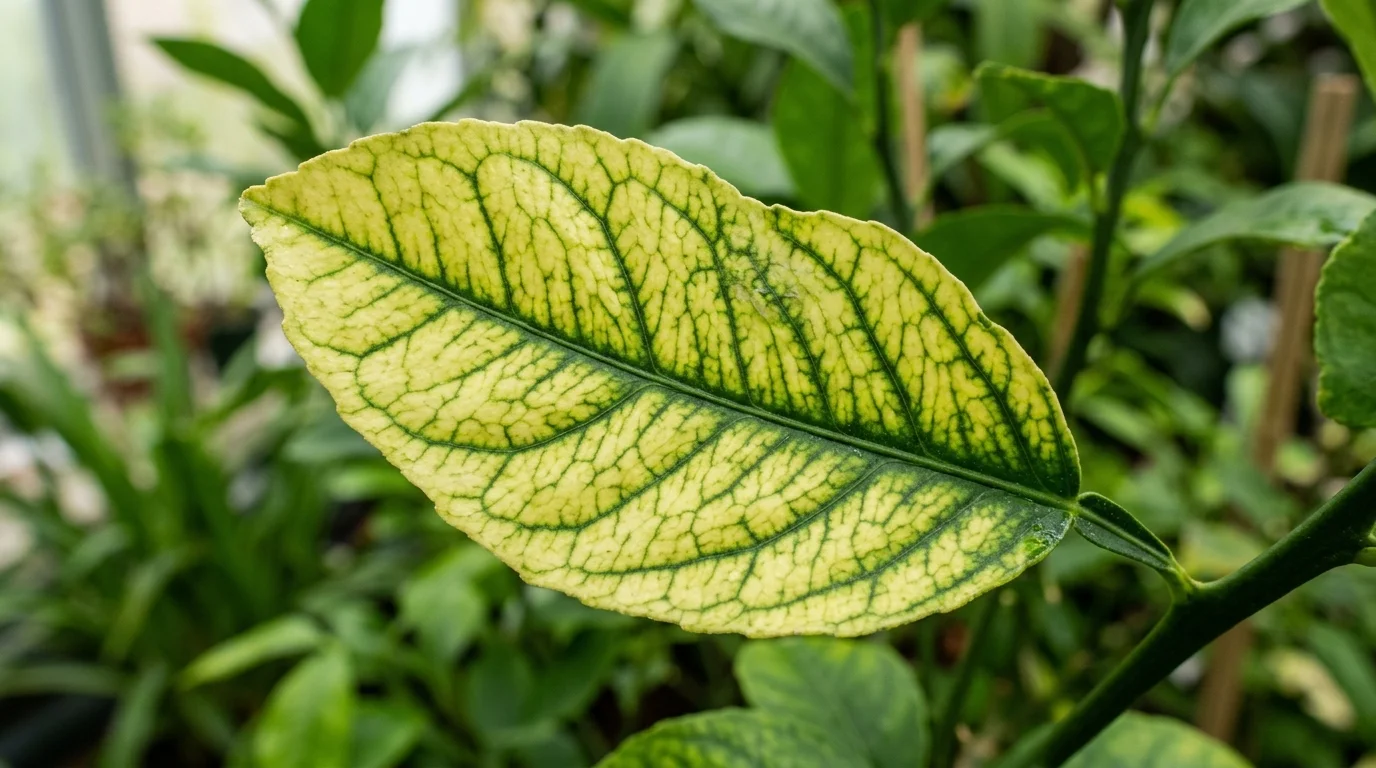
Iron chlorosis is a nutrient deficiency symptom where new plant leaves turn yellow while the veins remain distinctly green. It happens when plants cannot access enough iron—often due to high soil pH, overwatering, or compacted soil locking up available iron rather than an actual lack of iron in the soil.
Symptoms
- Interveinal chlorosis on new leaves: Leaf tissue between veins turns pale yellow or ivory while the veins stay dark green.
- Bleached or pure white emerging leaves: In severe cases, chlorophyll synthesis completely fails, causing new leaves to emerge white and scorch quickly.
- Stunted leaf size and slow terminal growth: Without sufficient iron for cellular respiration and energy production, new leaf development slows dramatically.
- Browning margins and premature leaf drop: Severely chlorotic leaves develop necrotic edges due to sun burning fragile tissue before dropping off.
Common Causes
- High soil or water pH: Alkaline conditions (pH > 6.5) cause soluble ferrous iron (Fe2+) to oxidize into insoluble ferric compounds (Fe3+) that roots cannot absorb.
- Overwatering and poor soil aeration: Waterlogged soil reduces oxygen in the root zone, shutting down active transport mechanisms needed for iron uptake.
- Excess soil phosphorus or zinc: High concentrations of phosphorus or heavy metals compete with iron at the root surface, causing nutrient lockout.
- Cold or compacted soils: Low root zone temperatures and dense soil reduce root metabolic activity, suppressing iron absorption during early growth.
Prevention
- Maintain target soil pH levels (5.5–6.5 for most plants; 4.5–5.5 for acid-loving plants like Gardenias and Azaleas).
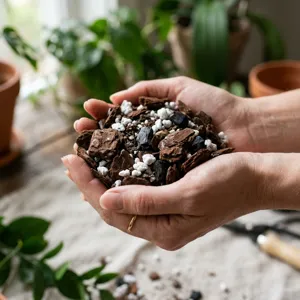
- Ensure potting mixes contain 20–30% coarse amendments like perlite or bark to prevent root hypoxia.
- Avoid over-fertilizing with high-phosphorus bloom boosters that trigger iron lockup.
- Irrigate with rainwater or filtered water if tap water is heavily alkaline or rich in carbonates.
- Apply preventive soil drenches of EDDHA or DTPA chelated iron in areas with naturally high-pH soils.
Best Practices
- Match the chelate form to your soil pH: EDTA (<6.5), DTPA (6.5–7.5), EDDHA (>7.5).
- Apply foliar iron sprays early in the morning or late evening to prevent solar leaf burn.
- Combine soil drench treatments with organic soil acidifiers (like elemental sulfur) for lasting correction.
- Check active ingredients on iron products—avoid FeHEDTA unless selectively targeting broadleaf weeds in turf.
Understanding Iron Chlorosis
Iron chlorosis is a widespread plant nutritional disorder caused by a lack of available iron during chlorophyll production. Iron acts as a vital catalyst in synthesizing chlorophyll—the green pigment that converts sunlight into plant energy. Without sufficient iron, green leaf tissue fails to form properly, leaving clear yellow spaces between dark green vascular veins.
The Role of Soil pH in Iron Availability
In most container mixes and garden soils, iron is naturally present in abundance. However, its chemical availability depends heavily on soil pH. In alkaline conditions (pH > 6.5–7.0), iron converts into insoluble hydroxides that root transport systems cannot absorb. This condition is often referred to as lime-induced chlorosis.
Frequently Asked Questions
What is the fastest way to fix iron chlorosis?
A foliar spray of liquid chelated iron provides the fastest response, often restoring green leaf color within 3 to 7 days because the iron bypasses locked-up root zone chemistry.
Why are my old leaves green but new leaves yellow?
Iron is an immobile plant nutrient. Plants cannot move iron from older tissue to nourish new leaves. When iron is lacking, old leaves stay green while newly emerging growth turns chlorotic.
Will iron chlorosis kill my plant?
Mild chlorosis slows growth, but severe chlorosis prevents photosynthesis completely. Over time, leaves will scorch, drop, and terminal branch dieback will occur, eventually killing the plant.
Explore More
Related Topics
Related Plant Guides
No specific plant guides found matching this topic.
Recommended next actions
Continue Exploring
Dive deeper into related plant care tools and profiles.
Guide
How to Use Chelated Iron for Plants, Lawns & Trees (Dosage Guide)
A practical guide to diagnosing iron chlorosis, selecting the right iron chelate based on soil pH, and applying chelated iron correctly to houseplants, garden plants, lawns, and trees — plus why some iron products are herbicides, not fertilizers.
Topic Guide
Soil pH and Nutrient Availability
Learn how soil pH affects nutrient absorption in houseplants and garden soils. Discover how to test, raise, or lower soil pH effectively.
Topic Guide
Micronutrients for Plants
Spot iron, zinc and boron deficiency signs in houseplants and correct trace mineral shortages before growth is affected.