Hoya Kerrii Care Guide: Light, Watering & Vine Growth
The Sweetheart Hoya is famous for its thick, heart-shaped leaves. However, millions of people buy the single-leaf cuttings without realizing they are 'zombie plants' that will never grow into a vine.

-
Difficulty
easy
-
Light
Needs exceptionally bright light to push out new growth. A few hours of direct morning or late afternoon sun is highly beneficial. Without enough light, it will simply sit dormant.
-
Temperature
65°F - 85°F (18°C - 29°C)
-
Growth
very slow
-
Humidity
40% - 60%
-
pH range
6.0 - 7.0
-
Biggest Owner Mistake
Buying a single heart-shaped leaf in a small pot expecting it to grow into a vine—a cutting without a node (a piece of stem with a growth bud) has no ability to produce new growth and will sit unchanged for years before eventually dying. It's essentially a long-lived decoration, not a developing plant.
-
What Nobody Tells You
To get an actual vining Hoya kerrii you need a cutting that includes a section of stem with at least one node—the vast majority of single-leaf 'sweetheart' plants sold commercially have no node and will never vine. Inspect before buying, or seek out a stem cutting from a reputable grower.
-
Real Home Conditions
In low light, the heart-shaped leaves become soft and floppy rather than thick and succulent, and any natural waxy sheen fades. Bright indirect light is what keeps the leaves firm, glossy, and the plant's appearance at its best.
Quick Answer
A single-leaf Hoya Kerrii will rarely grow into a vine because it lacks a stem node. For mature vines, provide hours of bright light, use chunky orchid soil, and water only when the soil is 100% completely dry. Monitoring the plant regularly helps catch early signs of stress before they cause any lasting damage.
Key Takeaways
- Provide bright, indirect sunlight to sustain sturdy, thick succulent growth.
- Allow the gritty succulent potting mix to dry out 100% before watering.
- Ensure single-leaf specimens possess a stem node to grow into vining plants.
- Use containers with drainage holes to prevent subterranean stem rot.
Overview
The Sweetheart Hoya (Hoya kerrii) is a thick, succulent-like climbing vine native to Southeast Asia. It has gained massive global popularity due to its perfectly heart-shaped leaves. Around Valentine's Day, nurseries and big-box stores sell millions of these plants as adorable, single green hearts protruding from small pots.
However, this massive retail trend has led to the number one frustration indoor gardeners have with this plant: it won't grow. Most of these single-leaf cuttings are what horticulturists call "zombie leaves." Because the leaf was cut without a piece of the main stem (a node), it has no cellular material capable of producing new vines. It will root and live as a single leaf for years, but it will never grow larger. If you want a trailing, climbing vine, you must purchase an established plant that already has a stem with multiple leaves.
Light Requirements
Hoya kerrii is a sun-lover. To produce its massive, heavy leaves and eventual clusters of star-shaped flowers, it requires bright, indirect light mixed with a few hours of direct sunlight. An east-facing window that gets morning sun, or a south-facing window with a sheer curtain, is ideal. If placed in a dim room, it will enter a state of total dormancy and refuse to grow.
Watering: Treat It Like a Succulent
This is where most growers accidentally kill their Hoyas. Despite coming from the tropical rainforest, Hoyas are epiphytes that grow on the bark of trees, meaning their roots are adapted to drying out quickly between rainstorms. Furthermore, their thick, rigid leaves act as water reservoirs.
You must allow the soil to dry out completely—100% bone dry—before watering. If the leaves feel slightly flexible or pliable, it is time to water. If they are rock hard, leave the plant alone. When you do water, soak the pot thoroughly until water drains out the bottom.
Temperature and Humidity
Typical household temperatures between 65°F and 85°F (18°C - 29°C) are perfect. They are highly sensitive to cold; keep them away from drafty winter windows. While they appreciate higher humidity (around 50-60%), their thick, waxy cuticle allows them to perfectly tolerate the dry air caused by central heating and air conditioning. You do not need a humidifier to successfully grow a Hoya kerrii.
Soil and Potting: The Epiphyte Mix
Because it is an epiphyte, planting a Hoya kerrii in standard, dense houseplant soil can quickly lead to severe root rot. The roots will suffocate and rot. You must use an extremely chunky, well-aerated mix. Combine equal parts high-quality potting soil, coarse orchid bark, and perlite or pumice. This ensures water drains instantly, leaving pockets of air for the roots to breathe.
Pruning: Never Cut the Bare Vines
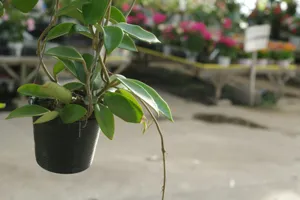
As a full vine of Hoya kerrii grows, it will frequently shoot out long, completely bare tendrils that look like alien tentacles. Many beginners panic and prune these off, thinking the plant is sick. Do not cut them! This is how Hoyas naturally grow. They send out a bare tendril to grab onto a branch (or your trellis), and once it feels secure, it will begin to populate that bare vine with leaves and flower spurs. If you cut the bare vine, you are cutting off the future foliage.
Flowering
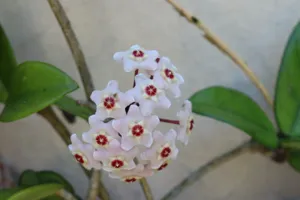
Mature Hoya kerrii vines are famous for their spectacular flowers. During the summer, they produce tight, spherical clusters (umbels) of fuzzy, star-shaped flowers that look like they are made of porcelain or wax. These flowers drip large amounts of sticky, sweet-smelling nectar. Never cut the flower stalk (the peduncle) off after the bloom finishes, as Hoyas will re-bloom from that exact same spot year after year.
Toxicity
One of the best attributes of the entire Hoya genus is its safety profile. Hoya kerrii is completely non-toxic to cats, dogs, and humans, making it an excellent, worry-free climbing plant for pet owners.
Calculator
Interactive Calculators for Hoya Kerrii
Recommended next actions
Next Best Actions
Use calculators and guides to turn this plant profile into a practical care routine.
Topic Guide
Watering
Learn everything about watering for your indoor and aquarium plants. Expert care tips, troubleshooting, and related guides.
Plant Guide
Hoya Carnosa
After growing and propagating over 40 Hoya carnosa plants and coaxing them to bloom year after year, we have mastered the 'epiphyte-style' care routine required to keep these waxy vines thriving.
Guide
Yellow Houseplant Leaves: Diagnose & Fix Guide 2026
After diagnosing hundreds of yellow-leaf cases across dozens of plant species, we've mapped the ten distinct causes that look nearly identical at first glance — and built the only systematic guide that tells you not just what's wrong, but exactly how to confirm it and fix it.
Topic Guide
Root Rot
Learn how to identify and treat root rot in houseplants. Discover causes, symptoms, and step-by-step solutions to save your plants from overwatering.
Structured Plant Data
Plant Data Profile
The following data is extracted directly from our botanical knowledge graph for accuracy and transparency.
Growth Characteristics
Growth Rate
very slow
Mature Height
Climbing up to 13 feet (if a full vine)
Mature Spread
1-2 feet
Life Cycle
Perennial
Flowering Season
Summer (produces clusters of star-shaped, nectar-dripping flowers)
Container Friendly
yes
Indoor Capable
yes
Environmental Parameters
| Parameter | Recommended | Survivable |
|---|---|---|
| Temperature | 65°F - 85°F (18°C - 29°C) | 55°F - 95°F (13°C - 35°C) |
| Humidity | 40% - 60% | 20% - 80% |
| Soil PH | 6.0 - 7.0 | 5.5 - 7.5 |
Lighting
Description
Needs exceptionally bright light to push out new growth. A few hours of direct morning or late afternoon sun is highly beneficial. Without enough light, it will simply sit dormant.
Nutrients
Nitrogen Demand
low
Phosphate Demand
moderate
Potassium Demand
moderate
Micronutrient Notes
Too much fertilizer will burn the epiphytic roots.
Fertilizer Frequency
Feed once a month during spring and summer with a balanced fertilizer diluted to quarter-strength.
Organic Options
Orchid spray applied to the foliage.
Relationships
-
Root Rot
Vulnerability | Strength 9
Because it is an epiphyte, planting it in heavy potting soil that stays wet will rot the roots instantly.
Hoya Variety Comparison
| Variety | Leaf Shape | Growth Speed |
|---|---|---|
| Hoya Kerrii | Thick, rigid hearts | Very Slow |
| Hoya Carnosa | Smooth, thick ovals | Moderate |
| Hoya Linearis | Thin, hairy needles | Fast |
Troubleshooting & Diagnostics Guide
1 Why isn't my single-leaf Hoya Kerrii growing?
Diagnosis: Zombie leaf – no node, will never grow into a vine
Treatment: No action; it will remain a single leaf. If you want a plant, buy one with a node.
Prevention: Choose plants with a stem node.
2 Why is my Hoya Kerrii sending out long, bare vines with no leaves?
Diagnosis: Normal tendril growth – leaves will follow after support
Treatment: Provide a support; do not cut; leaves will appear.
Prevention: Offer a trellis.
3 Why are the leaves on my Hoya turning yellow and mushy?
Diagnosis: Overwatering – root rot
Treatment: Stop watering; repot in dry, well-draining mix if necessary.
Prevention: Water only when soil is completely dry.
Authoritative Resources
For additional peer-reviewed information on plant diseases, toxicity, and care, consult these trusted botanical and agricultural extensions:
Glossary of Terms
- Epiphyte
- A plant that grows harmlessly on another plant (like a tree trunk) and derives its moisture and nutrients from the air, rain, and debris accumulating around it.
- Peduncle
- The stalk bearing a flower or fruit. In Hoyas, peduncles should never be cut, as the plant re-blooms from the same structure every year.
Frequently Asked Questions
Why isn't my single-leaf Hoya Kerrii growing?
How do I water my Hoya Kerrii?
Is the Sweetheart Hoya safe for cats?
Why is my Hoya Kerrii sending out long, bare vines with no leaves?
Why are the leaves on my Hoya turning yellow and mushy?
Sources & References
-
Source: powo.science.kew.org
-
Source: edis.ifas.ufl.edu
Explore More