Rattlesnake Plant Care: Preventing Crispy Brown Edges
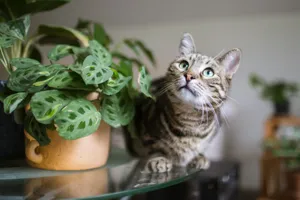
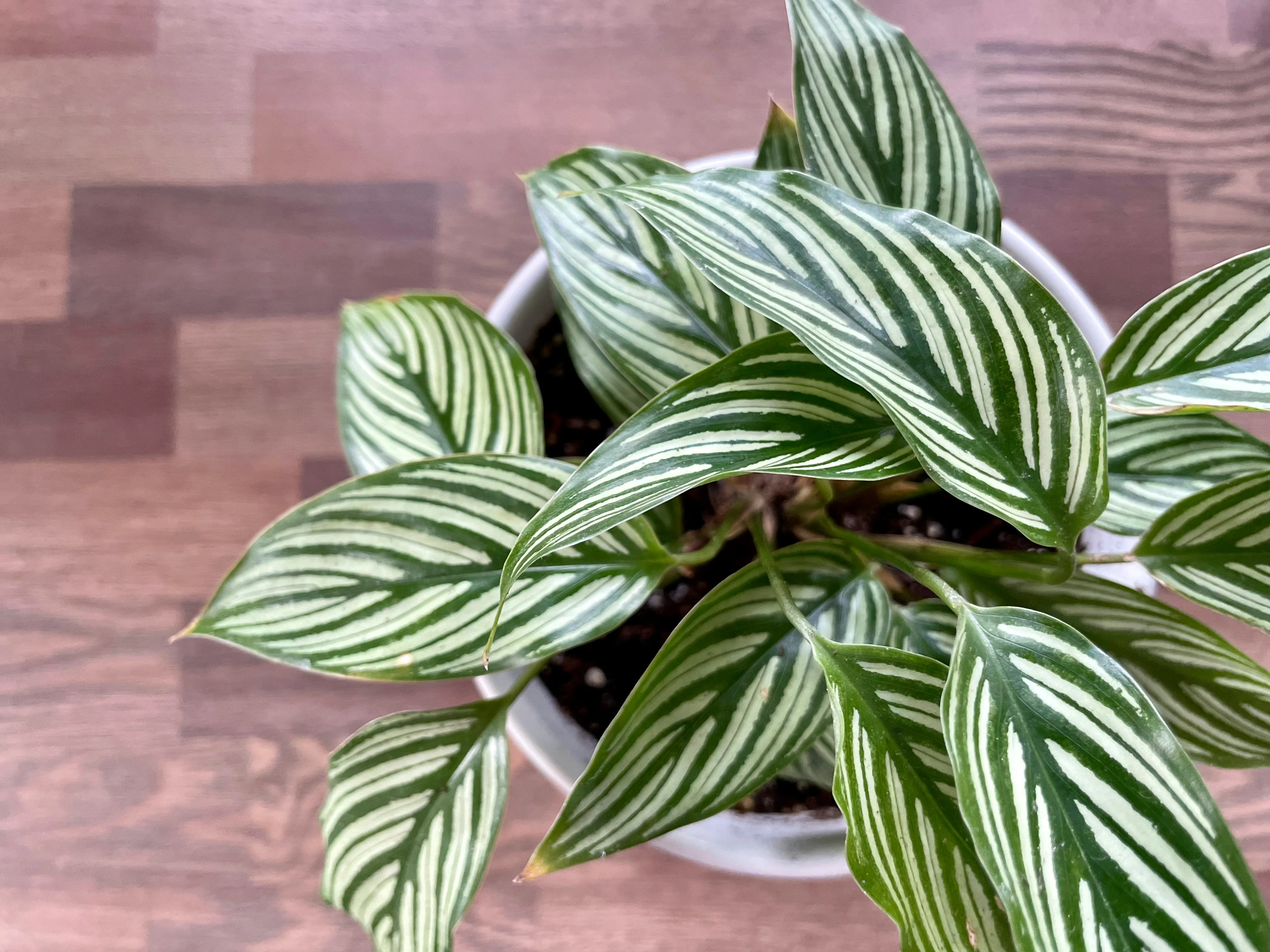
The Rattlesnake Plant is a stunning, pet-safe prayer plant featuring tall, wavy leaves patterned exactly like a reptile's skin. It requires high humidity and strictly distilled water to prevent crispy edges.
-
Difficulty
advanced
-
Light
Requires bright, indirect light to keep its intricate snake-like pattern vibrant. Direct sun will bleach the leaves and scorch them brown.
-
Temperature
65°F - 85°F (18°C - 29°C)
-
Growth
moderate
-
Humidity
60% - 80%
-
pH range
5.5 - 6.5
-
Biggest Owner Mistake
Placing it in direct sun because the bold wavy pattern makes it look like a tough, robust plant—but the thin leaves scorch, bleach, and curl within hours of direct exposure. Bright indirect light only, especially in summer.
-
What Nobody Tells You
The deep purple underside isn't decorative—it acts as a light reflector to capture dim, filtered light bouncing up from the jungle floor, making this species notably more shade-tolerant than other calatheas. It's one of the best choices for lower light rooms in the family.
-
Real Home Conditions
In winter, growth slows dramatically and the plant needs significantly less water—continuing the summer watering schedule leads to root rot because cold soil dries far more slowly. Reduce frequency and always check soil depth before watering.
Quick Answer
The Rattlesnake Plant requires evenly moist soil, high humidity, and bright, indirect light. You must water it with distilled or rainwater, as the chemicals in tap water will cause the leaf edges to turn brown and crispy. Our experience shows that providing a stable environment helps the plant establish a strong root system faster.
Key Takeaways
- Provide bright, indirect sunlight to maintain dark green spots and purple undersides.
- Maintain high humidity and water with distilled or rainwater to avoid tip burn.
- Keep potting mix evenly moist, allowing only the top inch to dry between waterings.
- Recognize foliar tube-rolling as a distress sign of dehydration or direct sun.
Overview
The Rattlesnake Plant (Goeppertia insignis, formerly and still widely known as Calathea lancifolia) is one of the most eye-catching houseplants in existence. It features tall, upright, sword-shaped leaves with highly ruffled, wavy edges. The top of the leaf is pale green and patterned with alternating dark green ovals that look exactly like the skin of a rattlesnake. As a dramatic contrast, the entire underside of the leaf is a deep, glowing burgundy purple.
Because it belongs to the Marantaceae (Prayer Plant) family, it is non-toxic to pets. However, Calatheas are infamous in the houseplant world for being high-maintenance divas. If you neglect its need for high humidity, or if you dare to water it with tap water from the sink, the Rattlesnake Plant will punish you by immediately turning its beautiful leaves brown and crispy.
The Tap Water Ban
Watering a Rattlesnake Plant with municipal tap water is the fastest way to ruin it. Tap water contains fluoride, chlorine, and heavy mineral salts. The plant has no biological filter for these chemicals; it absorbs them, pushes them to the extreme tips and edges of the leaves, and suffers severe chemical burns. This is the primary cause of the dreaded "crispy brown edges."
You must water this plant exclusively with distilled water, reverse-osmosis water, or rainwater. Additionally, because it is so sensitive to salts, if you use synthetic fertilizer, you must dilute it to 1/4 of the recommended strength to prevent fertilizer burn.
Watering: The Damp Sponge Rule
The Rattlesnake Plant cannot tolerate drought. You must keep the soil consistently, evenly moist at all times—exactly like a wrung-out damp sponge. When the top 1 inch of soil feels dry to the touch, it is time to water thoroughly.
If you let the pot dry out completely, the plant will violently curl its leaves inward into tight tubes to stop moisture from escaping, and the edges will crisp up immediately. Conversely, if you plant it in a pot with no drainage and let it sit in a swamp of mud, the roots will rot.
Humidity: Fighting the Crisp
Native to the Brazilian rainforest, this plant demands humidity levels between 60% and 80%. The air inside a typical centrally heated home drops to 30% in the winter. This dry air rapidly sucks the moisture right out of the thin, wavy leaves, causing them to turn brown and crispy.
Misting the plant is ineffective and can cause fungal infections. The only way to keep a Rattlesnake Plant looking pristine is to place a dedicated room humidifier directly next to it, or keep it in a bright, frequently used bathroom.
Light Requirements
In the wild, the Rattlesnake Plant lives on the jungle floor, completely shaded by the canopy. Indoors, it requires bright, indirect light to keep its intricate patterns sharp. An east-facing or north-facing window is ideal.
Never place this plant in direct sunlight. The delicate leaves will instantly scorch, the colors will bleach out, and the plant will curl up in distress.
The Prayer Movement
Like all Calatheas, the Rattlesnake Plant exhibits nyctinasty. In the morning, the leaves lay outward to catch the sun. In the evening, the plant dramatically folds its leaves straight upward like hands in prayer, showing off the vibrant purple undersides. This daily movement is controlled by a specialized joint at the base of the leaf called the pulvinus, and it is a wonderful indicator that your plant is healthy and thriving.
Calculator
Interactive Calculators for Calathea Rattlesnake
Recommended next actions
Next Best Actions
Use calculators and guides to turn this plant profile into a practical care routine.
Topic Guide
Humidity
Learn everything about humidity for your indoor and aquarium plants. Expert care tips, troubleshooting, and related guides.
Guide
Brown Crispy Tips on Houseplants: Causes & Fixes
With over 15 years of indoor plant diagnostics and more than 3,000 leaf-tissue cases analyzed, we've mapped the exact mechanisms behind brown crispy tips—fluoride accumulation, salt toxicity, and humidity deficits—so you can reverse damage today.
Plant Guide
Calathea Ornata
The Calathea ornata is notoriously dramatic, but after nursing dozens of them through dry winters, we have perfected the exact humidity and water-filtration protocols required to keep those pink pinstripes flawless.
Calculator
Plant Watering Calculator: How Often to Water
Calculate the correct watering frequency for your plant based on species, pot size, soil type, season, and climate.
Structured Plant Data
Plant Data Profile
The following data is extracted directly from our botanical knowledge graph for accuracy and transparency.
Growth Characteristics
Growth Rate
moderate
Mature Height
2-3 feet indoors
Mature Spread
2 feet wide
Life Cycle
Perennial
Flowering Season
Spring (produces small yellow flowers, rare indoors)
Container Friendly
yes
Indoor Capable
yes
Environmental Parameters
| Parameter | Recommended | Survivable |
|---|---|---|
| Temperature | 65°F - 85°F (18°C - 29°C) | 60°F - 90°F (15°C - 32°C) |
| Humidity | 60% - 80% | 40% - 90% |
| Soil PH | 5.5 - 6.5 | 5.0 - 7.0 |
Lighting
Description
Requires bright, indirect light to keep its intricate snake-like pattern vibrant. Direct sun will bleach the leaves and scorch them brown.
Nutrients
Nitrogen Demand
moderate
Phosphate Demand
low
Potassium Demand
moderate
Micronutrient Notes
Extremely sensitive to fertilizer burn. Dilute to 1/4 strength.
Fertilizer Frequency
Once a month during spring and summer with a highly diluted liquid fertilizer.
Organic Options
Monthly top dressing of worm castings.
Relationships
-
Fluoride Toxicity
Vulnerability | Strength 9
Hyper-sensitive to fluoride and chlorine in tap water, resulting in chemical burns (crispy brown edges) on the leaves.
Calathea (Goeppertia) Variety Comparison
| Variety | Leaf Shape | Pattern |
|---|---|---|
| Rattlesnake (Lancifolia) | Tall, narrow, wavy edges | Alternating dark ovals |
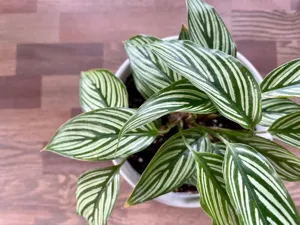
| Pinstripe (Ornata) | Wide, dark green | Thin pink/white stripes |
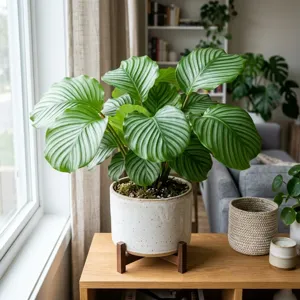
| Medallion | Wide, round | Intricate green/silver rings |
Troubleshooting & Diagnostics Guide
1 Why are the tips of my Rattlesnake Plant turning brown?
Diagnosis: Low humidity or fluoride/chlorine toxicity from tap water
Treatment: Increase humidity (use a humidifier), water only with distilled or rainwater; trim brown tips.
Prevention: Maintain humidity above 60% and use purified water.
2 Why are the leaves rolling inward into tight tubes?
Diagnosis: Severe underwatering or excessive direct sunlight
Treatment: Check soil; if dry, water deeply; if soil is moist, move to a shadier spot.
Prevention: Keep soil consistently moist but not waterlogged; avoid direct sun.
3 Why does my plant stand straight up at night?
Diagnosis: Nyctinasty – natural leaf movement (Prayer Plant family)
Treatment: No action needed – it's a sign of health.
Prevention: Continue normal care; this is expected behaviour.
4 Can I cut off the brown crispy edges?
Diagnosis: Physical damage – trimming is cosmetic
Treatment: Use sterile scissors to trim just outside the brown line to avoid cutting into healthy tissue; this prevents further crispiness.
Prevention: Maintain optimal care to prevent future browning.
Authoritative Resources
For additional peer-reviewed information on plant diseases, toxicity, and care, consult these trusted botanical and agricultural extensions:
Glossary of Terms
- Nyctinasty
- The natural circadian rhythmic movement of plants. The Rattlesnake Plant folds its leaves straight up at night and lowers them during the day.
- Distilled Water
- Water that has been boiled into vapor and condensed back into liquid in a separate container, removing all impurities like fluoride and chlorine.
Frequently Asked Questions
Why are the tips of my Rattlesnake Plant turning brown?
Why are the leaves rolling inward into tight tubes?
Is the Rattlesnake Plant toxic to pets?
Why does my plant stand straight up at night?
Can I cut off the brown crispy edges?
Sources & References
-
Source: powo.science.kew.org
-
Source: edis.ifas.ufl.edu
Explore More