Rosemary Care Guide: How to Grow Rosemary Indoors
Learn how to care for Rosemary plants indoors. Expert tips on watering, light requirements, avoiding powdery mildew, and keeping this Mediterranean herb.
Quick Answer
Rosemary (Salvia rosmarinus) is a Mediterranean herb that grows best with abundant direct sunlight and exceptionally well-draining soil. Indoors, place it in the brightest available south- or west-facing window and supplement with a grow light when natural light is insufficient. Water thoroughly when the top 2 inches of soil are dry, never let the pot sit in standing water, and provide good air circulation to reduce the risk of powdery mildew.
Key Takeaways
- Rosemary needs abundant direct sunlight; supplement with grow lights if needed.
- Use a sandy, gritty potting mix (cactus soil mixed with perlite or coarse sand) to mimic its native rocky soil.
- Water when the top 2 inches are dry; err toward too dry.
- Provide good air circulation (a small oscillating fan) to reduce the risk of powdery mildew, a common indoor disease.
- Rosemary can be moved outdoors in summer but must be gradually acclimated to avoid sunburn.
Quick Facts
- Light requirement Abundant direct sunlight; at least 6 hours daily where practical; full sun in mild climates, some afternoon shade in very hot climates
- Watering Water thoroughly when top 2 inches of soil are dry; never let the pot sit in water
- Soil Sandy, gritty, well-draining mix (cactus soil + perlite or coarse sand)
- Fertilizer Dilute balanced fertilizer once in spring; avoid overfeeding
- Common diseases Powdery mildew (white powder), root rot (yellowing, mushy roots)
- Best pot type Terracotta or unglazed clay helps wick away excess moisture
What Should I Do?
Leaves are crispy, brown, and dry but soil is wet
Leaves are crispy and brown, but soil is dry
White powder appears on leaves
Plant looks pale, leggy, and stretched
Lower leaves yellowing and falling off, soil is soggy
Common Rosemary Problems: Symptoms & Solutions
| Problem | Symptoms | Likely Cause | Solution |
|---|---|---|---|
| Crispy, brown needle-like leaves | Leaves turn brown, brittle, and dry | Usually underwatering; could also indicate root rot or salt buildup | Water thoroughly; if soil is moist, check roots for rot and repot if needed |
| Yellowing lower leaves + wet soil | Lower leaves turning yellow, wilting, mushy stems | Overwatering / root rot | Reduce watering immediately; repot in dry, gritty soil and remove rotted roots |
| White powder on leaves | White, powdery coating on leaves and stems | Powdery mildew (fungal disease) — thrives in stagnant, humid air | Improve air circulation with a small fan; treat with a fungicide labeled for powdery mildew, following product directions |
| Leggy, pale, sparse growth | Stems stretch with large gaps between leaves, leaves lose deep green color | Insufficient light | Move to brighter window or add a grow light |
Lighting Requirements
Rosemary is a full-sun plant. The number one reason it dies indoors is insufficient light. Place it directly in a south-facing or west-facing window that receives abundant direct sunlight—aim for at least 6 hours where practical. If you do not have a suitable window, supplement with a strong LED grow light. In very hot climates, some afternoon shade can help prevent leaf scorch.
Watering the Mediterranean Way
Rosemary is adapted to well-drained, relatively dry conditions and does not tolerate consistently waterlogged soil. If the soil remains soggy, root rot will set in. However, if the soil becomes entirely bone-dry, the needle-like leaves will quickly turn brown and brittle.
The Rule of Thumb: Water thoroughly when the top 2 inches of soil feel dry to the touch. Ensure the pot has drainage holes, and never let the plant sit in a saucer of standing water. Err on the side of slightly too dry rather than too wet—Rosemary is drought-tolerant but cannot recover from root rot once it has set in.
Soil and Repotting
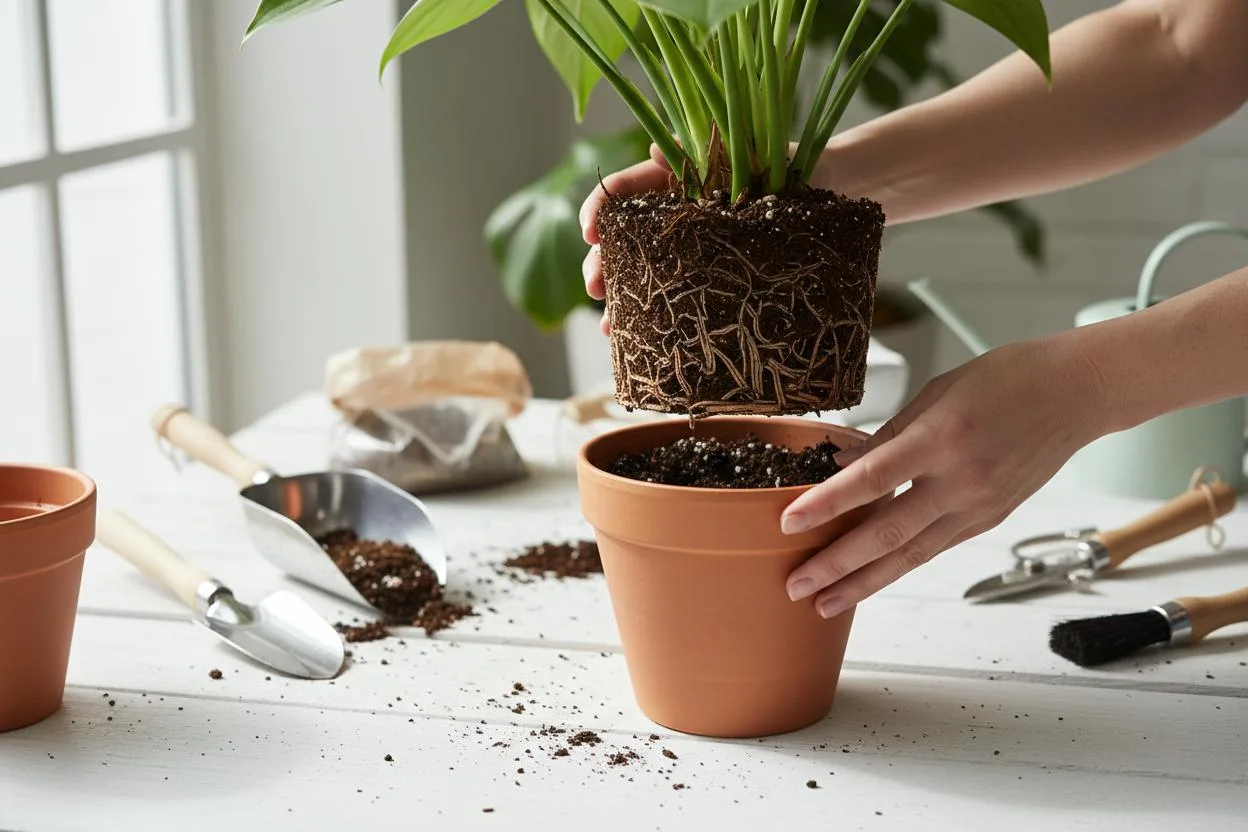
Standard indoor potting soil holds too much moisture for Rosemary. Amend a standard mix with perlite or coarse sand, or simply use a high-quality cactus/succulent mix. Terracotta pots are highly recommended because the porous clay helps wick away excess moisture.
Fertilizer
Rosemary is not a heavy feeder. Apply a dilute, balanced liquid fertilizer once in early spring at half the recommended strength. Avoid fertilizing in winter when the plant is semi-dormant, as excess nutrients can lead to salt buildup and root burn.
Common Problems
Powdery Mildew
If you see a white, powdery coating on the leaves, improve air circulation and reduce conditions that favor prolonged leaf wetness. If treatment is needed, use a fungicide labeled for powdery mildew and follow the product directions carefully.
Crispy Brown Needles
Crispy brown leaves on Rosemary are often a sign of underwatering, but they can also indicate root rot (which prevents water uptake) or salt buildup from fertilizer. Check the soil moisture first: if it's dry, water thoroughly; if it's wet, inspect the roots for rot and repot if needed. If salt buildup is suspected (visible crust on soil), flush the soil with clean water.
Root Rot
Rosemary is prone to root problems when grown in consistently wet or poorly drained soil. Symptoms include yellowing lower leaves, wilting, and soft, mushy stems. If you suspect root rot: stop watering immediately, gently remove the plant from its pot, cut away any dark, mushy roots, and repot in fresh, dry, gritty soil.
Seasonal Care
Rosemary can thrive outdoors in summer but needs gradual acclimation to avoid sunburn. Bring it indoors before the first frost. During winter, reduce watering slightly and ensure it still receives maximum light—consider a grow light if daylight hours are short.
Frequently Asked Questions
How much light does Rosemary need indoors?
How often should I water my indoor Rosemary?
Why does my Rosemary have white powder on the leaves?
Why are my Rosemary leaves turning crispy and brown?
Can I keep Rosemary indoors year-round?
Can Rosemary grow under artificial light?
What type of soil is best for Rosemary?
Sources & References
-
Source: extension.illinois.edu
Type: extension
-
Source: extension.umn.edu
Type: extension
-
Source: hgic.clemson.edu
Type: extension
-
Source: s3.wp.wsu.edu
Type: extension