Nerve Plant Care: Fix the Dramatic Fainting
The Nerve Plant (Fittonia) is a humidity-loving, pet-safe beauty famous for its brightly colored veins and its dramatic habit of 'fainting' when thirsty.
-
Difficulty
moderate
-
Light
Thrives in bright, indirect sunlight or strong fluorescent lighting. Direct sun will burn the delicate leaves and fade the vibrant pink/white veins.
-
Temperature
65°F - 80°F (18°C - 27°C)
-
Growth
moderate
-
Humidity
60% - 90%
-
pH range
6.0 - 6.5
-
Biggest Owner Mistake
Letting it wilt even once—the leaves collapse completely within hours of the soil drying out, and the plant often doesn't fully recover its upright posture even after rewatering, leaving it permanently limp. It needs consistently moist soil with zero tolerance for dry periods.
-
What Nobody Tells You
High humidity is not just a preference but a requirement for the bright vein patterns to remain vivid—in dry air, the colors fade and leaves curl as the thin leaf tissue desiccates. The plant essentially cannot look its best outside of a terrarium or very humid bathroom.
-
Real Home Conditions
In typical living rooms, it stays small, crispy-edged, and struggles to remain upright because household humidity is rarely above 40%. It's genuinely one of the best terrarium plants available and one of the worst open-air houseplants for most homes.
Quick Answer
Nerve Plants require constant soil moisture and high humidity, making them perfect for terrariums. If they dry out, they will dramatically collapse, but watering them quickly will usually revive them within an hour or two. For best results, we suggest keeping an eye on the plant's response throughout the active growing season.
Key Takeaways
- Provide bright, indirect sunlight to sustain vivid pink or white vein patterns.
- Keep the substrate consistently moist; avoid letting the mix dry out completely.
- Maintain high relative humidity (60–90%), making it an ideal terrarium subject.
- Bottom-soak immediately if the plant collapses from temporary drought shock.
Overview
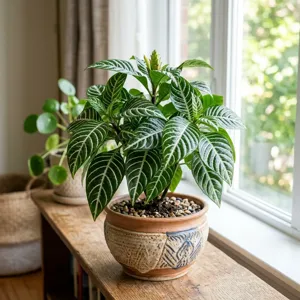
The Nerve Plant (Fittonia albivenis) is an incredibly popular indoor plant prized for its intricate, contrasting vein patterns that look like a delicate nervous system etched across the leaves. Available in vibrant shades of pink, white, and red, it brings a massive pop of color to any indoor space.
However, it has earned a reputation as the ultimate "drama queen" of the houseplant world. Native to the damp, humid rainforest floors of South America, Fittonia has no tolerance for drought. If you are a day or two late on your watering schedule, the entire plant will dramatically collapse flat against the soil as if it were dead. Fortunately, if you water it immediately, it will magically stand back up within a few hours. Mastering its need for constant moisture and high humidity is the key to a thriving Nerve Plant.
Light Requirements
Because they naturally grow under the dense canopy of the rainforest, Nerve Plants require bright, indirect light. They have zero tolerance for direct sunlight, which will quickly scorch their paper-thin leaves and bleach out their vibrant colors. An east-facing or north-facing window is ideal. They also perform exceptionally well under artificial grow lights or standard office fluorescent lighting.
Watering: Avoiding the Faint
Watering is the most critical aspect of Fittonia care. The soil must be kept "evenly moist" at all times, similar to a wrung-out sponge. If the top of the soil feels dry to the touch, it is time to water. Do not wait for the plant to "faint" before watering, as collapsing repeatedly stresses the root system and will eventually cause permanent damage.
While they love moisture, they hate "wet feet." Always ensure your pot has adequate drainage holes so excess water can escape. Sitting in a pool of standing water will lead to rapid root rot.
Temperature and Humidity
Fittonia requires warm temperatures between 65°F and 80°F (18°C - 27°C). They are highly sensitive to cold drafts; a blast of cold air from a winter window can cause severe leaf drop.
Humidity is their second biggest demand. Typical indoor environments, especially during the winter when central heating is running, are far too dry for them. At low humidity (under 40%), the leaf edges will turn brown, crispy, and curl inward. To combat this, you can run a humidifier, group it tightly with other tropical plants, or keep it in a bright bathroom. However, the absolute best solution for a Nerve Plant is to grow it in a glass terrarium, which traps moisture perfectly.
Soil and Potting
A moisture-retentive but draining soil is ideal. Standard African Violet potting mix works perfectly, as it usually contains a high ratio of peat moss (to hold water) mixed with perlite (for drainage). Because Fittonia is a creeping plant with a shallow root system, it prefers shallow, wide pots over deep ones.
Fertilizing
Nerve Plants are light feeders. Fertilize them once a month during the active growing season (spring and summer) using a balanced liquid houseplant fertilizer diluted to half-strength. Do not fertilize during the winter when the plant's growth slows down.
Propagation
Propagating Fittonia is very straightforward. Simply take a stem cutting that includes at least two leaf nodes (the bumps where leaves attach). Remove the bottom set of leaves and place the stem in a glass of water or directly into moist potting soil. If propagating in soil, place a clear plastic bag over the pot to create a mini-greenhouse; the high humidity will encourage rapid root growth within two to three weeks.
Toxicity
Nerve Plants are completely non-toxic to cats, dogs, and humans. Their small size and pet-safe nature make them perfect for desktop displays and low shelves where pets might have access.
Calculator
Interactive Calculators for Nerve Plant
Recommended next actions
Next Best Actions
Use calculators and guides to turn this plant profile into a practical care routine.
Topic Guide
Humidity
Learn everything about humidity for your indoor and aquarium plants. Expert care tips, troubleshooting, and related guides.
Plant Guide
African Violet
African Violets are classic indoor bloomers, but their fuzzy leaves demand a unique watering approach. We break down the 'bottom-watering' technique essential for preventing crown rot and triggering year-round flowers.
Guide
Yellow Houseplant Leaves: Diagnose & Fix Guide 2026
After diagnosing hundreds of yellow-leaf cases across dozens of plant species, we've mapped the ten distinct causes that look nearly identical at first glance — and built the only systematic guide that tells you not just what's wrong, but exactly how to confirm it and fix it.
Calculator
Plant Watering Calculator: How Often to Water
Calculate the correct watering frequency for your plant based on species, pot size, soil type, season, and climate.
Structured Plant Data
Plant Data Profile
The following data is extracted directly from our botanical knowledge graph for accuracy and transparency.
Growth Characteristics
Growth Rate
moderate
Mature Height
3-6 inches
Mature Spread
12-18 inches (creeping habit)
Life Cycle
Perennial
Flowering Season
Summer (produces insignificant greenish-white flower spikes)
Container Friendly
yes
Indoor Capable
yes
Environmental Parameters
| Parameter | Recommended | Survivable |
|---|---|---|
| Temperature | 65°F - 80°F (18°C - 27°C) | 60°F - 85°F (15°C - 29°C) |
| Humidity | 60% - 90% | 50% - 100% |
| Soil PH | 6.0 - 6.5 | 5.5 - 7.0 |
Lighting
Description
Thrives in bright, indirect sunlight or strong fluorescent lighting. Direct sun will burn the delicate leaves and fade the vibrant pink/white veins.
Nutrients
Nitrogen Demand
moderate
Phosphate Demand
low
Potassium Demand
moderate
Micronutrient Notes
Requires minimal feeding. Too much fertilizer will burn the shallow roots.
Fertilizer Frequency
Once a month during spring and summer at half strength.
Organic Options
Weak worm compost tea in early spring.
Relationships
-
Low Humidity
Vulnerability | Strength 9
Native to the rainforest floor, Fittonia requires constant, high humidity. Dry winter heating often causes the leaf edges to become crispy and brown.
Fittonia Variety Comparison
| Variety | Vein Color | Leaf Base Color |
|---|---|---|
| Frankie | Bright Pink | Olive Green |
| White Anne | Crisp White | Dark Green |
| Red Star | Deep Red/Burgundy | Very Dark Green |
Troubleshooting & Diagnostics Guide
1 Why is my Nerve Plant completely flat and drooping?
Diagnosis: Severe underwatering – dramatic wilting
Treatment: Water thoroughly; it will recover within hours if not too far gone.
Prevention: Keep soil consistently moist; water when surface feels dry.
2 Why are the leaves on my Nerve Plant getting crispy?
Diagnosis: Low humidity or inconsistent watering
Treatment: Increase humidity; water when top inch is dry.
Prevention: Maintain high humidity; use a humidifier.
3 Why are the veins losing their bright pink color?
Diagnosis: Insufficient light – fading pigment
Treatment: Move to brighter indirect light; avoid direct sun.
Prevention: Provide bright indirect light.
Authoritative Resources
For additional peer-reviewed information on plant diseases, toxicity, and care, consult these trusted botanical and agricultural extensions:
Glossary of Terms
- Node
- The point on a plant stem where leaves, branches, or aerial roots grow out.
- Terrarium
- A sealable glass container containing soil and plants, which can be opened for maintenance to access the plants inside.
Frequently Asked Questions
Why is my Nerve Plant completely flat and drooping?
Can I keep a Nerve Plant in a terrarium?
Is the Nerve Plant toxic to cats?
Why are the leaves on my Nerve Plant getting crispy?
Why are the veins losing their bright pink color?
Sources & References
-
Source: powo.science.kew.org
-
Source: edis.ifas.ufl.edu
Explore More