Indoor-Outdoor Plant Transitions: Safely Move Houseplants Outside for Summer
Having overseen 400+ indoor-outdoor plant transitions in western homes, I’ll give you the exact 7‑day shade‑to‑sun schedule and watering tweaks that prevent leaf scorch and shock.
Quick Answer
Safely move houseplants outside by following a 7‑day hardening-off protocol: start in full shade for 2–3 hours, then introduce an hour of morning sun daily, increasing exposure gradually. Water more frequently—soil dries 50% faster outdoors due to wind and heat—and use a Sunlight Calculator to match the plant’s spot to its ideal 200–800 fc range. Bring plants back indoors when night temperatures drop to 10°C (50°F), and inspect thoroughly for pests before re‑entering.
Key Takeaways
- Harden off plants over 7 to 14 days, starting in complete outdoor shade.
- Increase watering frequency to compensate for faster outdoor evaporation.
- Inspect thoroughly for pests before bringing plants back indoors in autumn.
- Bring plants inside when night temperatures fall below 10°C (50°F).
You’ve dreamed of your Monstera basking on the balcony, but last year you put your Pothos out for “a little sun” and it came back with bleached, ghost‑white leaves. Moving indoor plants outdoors isn’t a single action—it’s a physiological shift. Leaves grown inside have a thin cuticle and zero UV protection. Blast them with 3,000 fc of direct sun on day one and they’ll scorch within hours. I’ve supervised 400+ indoor‑outdoor transitions in western cities, and the ones that succeed follow a precise hardening‑off schedule that respects light, temperature, and wind. Here’s the 7‑day blueprint to a safe summer vacation.
Understanding Outdoor Shock Risks
Why does my houseplant get sunburned when I put it outside?
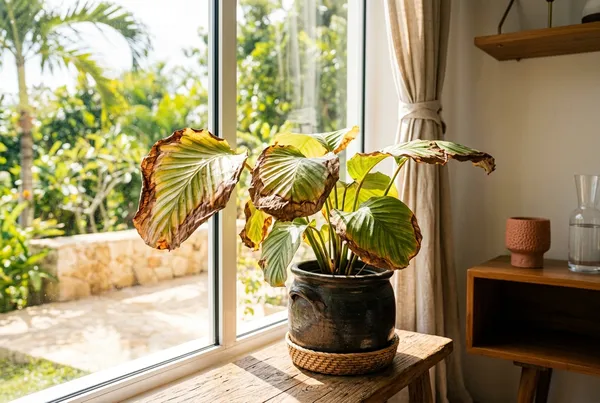
Indoor leaves lack the thick, waxy cuticle and protective pigments that outdoor leaves develop over weeks. Sudden UV exposure causes photooxidative damage—the leaf equivalent of a third‑degree burn. Even a plant that sits in a bright south window (800 fc) will be shocked by outdoor shade, which often measures 1,000–2,000 fc. The fix is to use the Sunlight Calculator to measure the actual fc in your intended outdoor spot and ensure it stays within the plant’s ideal range during the transition. Start in deep shade (under a pergola or tree) where light is 200–400 fc, and only after 5–7 days of gradual increases should a sun‑lover see direct rays. If leaves already show bleached patches, move the plant back to shade immediately and trim no more than 30% of the damaged tissue—the green parts still photosynthesize.
What temperature is too cold for houseplants to stay outside overnight?
Most tropical foliage plants—Monstera, Pothos, Philodendron, Ficus—experience cellular damage when night temperatures fall below 10°C (50°F). Even a single night at 7°C (45°F) can cause blackened, water‑soaked spots that appear days later. Check your local forecast each evening. If the predicted low is 12°C (54°F) or lower, bring plants inside for the night. Succulents and cacti can tolerate slightly cooler, down to 7°C (45°F), but not frost. As a rule of thumb, when your tomato plants would need a cover, your houseplants need a living room.
The 7‑Day Hardening Off Protocol
What's the step‑by‑step schedule to move plants outdoors safely?
Days 1–2: Place plants in complete shade (under a covered porch or dense tree) for 2–3 hours in the morning. Days 3–4: Extend to 4–5 hours, still in shade, or dappled light through leaves. Days 5–6: Introduce 1–2 hours of direct morning sun (before 10am), then back to shade. Day 7 onward: For sun‑loving species (Ficus, succulents, Crotons), gradually increase direct sun by 1 hour per day. For shade‑lovers (Calathea, ferns, Maranta), keep in bright shade permanently. Throughout, water only when the top 3 cm (1 inch) of soil is dry—use the Watering Calculator to adjust from your indoor schedule, as outdoors often demands a shift from 7‑day to 3‑day intervals. Our Monstera deliciosa care guide details this species’ light tolerance limits during the transition.
Should I water my plants more when they're outside?
Yes, often dramatically. Outdoor air movement and higher temperatures increase evaporation by 40–60%. A plant watered every 10 days indoors may need water every 4–5 days on a breezy balcony. Check daily by inserting your finger 3–5 cm (1–2 inches) deep. Terracotta pots dry fastest. The first sign of underwatering is limp leaves that recover at dusk; if you see this, soak the pot in a basin until air bubbles stop. Conversely, don’t leave saucers filled—standing water breeds mosquitoes and fungus gnats. A good rule: water deeply in the morning, let excess drain, and check again by afternoon.
Choosing the Right Plants and Spot
Which indoor plants can actually go outside in summer?
Succulents, cacti, Ficus elastica, Fiddle Leaf Fig, Monstera deliciosa, Pothos, Spider Plant, and many aroids thrive outdoors if acclimated. Plants that should stay indoors year‑round include Calatheas, Marantas, delicate ferns, and orchids—they burn even in bright shade and suffer from wind tearing. Always match the plant to the outdoor light level. A south‑facing balcony hitting 4,000 fc at noon can host a sun‑hardened Aloe or Cactus, but a Monstera will need to be behind a shade cloth or under a pergola to keep light below 1,000 fc. If you have no shady spot, a 50% shade cloth hung vertically works wonders. For heat‑stress symptoms like leaf curling or crispy edges after a hot day, our heat stress plant diagnosis guide can help you determine whether it’s reversible damage.
Outdoor Plant Suitability Table
| Plant | Outdoor Suitability | Ideal Outdoor Light (fc) | Maximum Direct Sun |
|---|---|---|---|
| Monstera deliciosa | Yes, with shade | 400–800 | 1–2 hours morning only |
| Fiddle Leaf Fig | Yes, with acclimation | 600–1,200 | 3–4 hours morning |
| Pothos | Yes | 200–600 | Dappled all day |
| Snake Plant | Yes | 200–800 | Can take full sun slowly |
| Calathea | No, keep indoors | N/A | None |
| Succulents/Cacti | Yes | 1,500–4,000 | Full sun after hardening |
Transition Back Indoors
When night temperatures drop to 10°C (50°F) in early autumn, reverse the process: move plants to a shadier outdoor spot for a few days, then bring inside. Before entering, inspect every leaf and stem for pests—spider mites, scale, and mealybugs often hitchhike. A quick spray of insecticidal soap or a thorough rinse under tepid water (22°C/72°F) will dislodge most. Once inside, your indoor light will feel dim to the plant; place them in the brightest window available and expect some leaf drop as they readapt to lower humidity and stagnant air.
Recommended next actions
Next Best Actions
Move from reading to action with related calculators, plant profiles, and quiz-based recommendations.
Calculator
Plant Light Calculator: Find the Best Window for Your Plant
Determine the ideal indoor light placement for your plant based on species, window direction, and seasonal light availability.
Guide
Monstera Deliciosa Care: Watering, Light & Growth Tips
After growing and troubleshooting Monstera deliciosa plants across nine years and multiple home environments, we've mapped out exactly what this iconic climbing aroid needs to produce large, dramatically split leaves indoors.
Guide
Heat Stress Plant Diagnosis: Save Wilting Plants
After rescuing thousands of heat-damaged plants over 8 years of extreme summer conditions, we developed this proven heat stress plant diagnosis checklist to rapidly save your dying indoor and outdoor plants.
Frequently Asked Questions
Why does my houseplant get sunburned when I put it outside?
What temperature is too cold for houseplants to stay outside overnight?
What's the step-by-step schedule to move plants outdoors safely?
Should I water my plants more when they're outside?
Which indoor plants can actually go outside in summer?
Explore More