Hoya Pubicalyx Care: Why You Shouldn't Cut the Bare Vines
The Hoya Pubicalyx is a spectacular, fast-growing vine famous for its thick, narrow leaves heavily splashed with silver. It is pet-safe and produces massive clusters of fuzzy, fragrant flowers.
-
Difficulty
easy
-
Light
Requires high levels of bright, indirect light to grow rapidly and eventually bloom. Can handle a few hours of direct morning sun. Low light will result in no flowers.
-
Temperature
65°F - 85°F (18°C - 29°C)
-
Growth
fast
-
Humidity
40% - 60%
-
pH range
6.0 - 7.0
-
Biggest Owner Mistake
Overwatering because hoyas look like tropical vines that need moisture—but the thick, slightly succulent leaves store water between waterings, and consistently wet soil causes stem rot that starts invisibly at the roots. Let the soil dry completely before watering again.
-
What Nobody Tells You
New leaves emerge in a striking dark purple-red color before gradually greening up over several weeks as chlorophyll develops—this dramatic color shift alarms many owners who assume something is wrong. It's simply the natural progression of young hoya tissue.
-
Real Home Conditions
In dry indoor air it grows slowly and may drop young leaves before they fully mature, because the thin new growth desiccates before it can harden. Occasional misting or ambient humidity above 50% keeps young leaves developing normally.
Quick Answer
The Hoya pubicalyx needs bright, indirect light and a very chunky, well-draining soil mix. Water only when the soil is completely dry and the leaves feel slightly soft. Never cut the long, bare vines. For best results, we suggest keeping an eye on the plant's response throughout the active growing season.
Key Takeaways
- Provide bright, indirect light to highlight silver splash patterns and trigger blooms.
- Allow the chunky epiphytic mix to dry out thoroughly between deep waterings.
- Train long, vigorous vining tendrils onto trellises or hanging basket supports.
- Maintain warm room temperatures and avoid overpotting into oversized containers.
Overview
The Hoya pubicalyx is frequently cited as the absolute best "first Hoya" for beginners. Native to the Philippines, it is an exceptionally fast-growing, vigorous trailing vine. It features long, narrow, thick, waxy leaves that are heavily mottled with beautiful silver "splashes" (which are actually tiny air pockets trapped beneath the leaf surface). Depending on the light, the new leaves often emerge in stunning shades of deep burgundy and purple before hardening to green.
As an epiphyte, it grows on trees in the wild, absorbing moisture from the humid air and rain. Because it is essentially a succulent vine, it is highly tolerant of drought and neglect. Best of all, it is completely non-toxic to pets, making it the perfect cascading plant for a sunny window. If given excellent care, it will reward you with massive, spherical clusters of fuzzy, star-shaped flowers that smell like sweet perfume at night.
The Bare Vine Mistake
The single most common mistake Hoya owners make is cutting off the long, leafless tendrils that the plant shoots out. People assume they are "leggy" or dead and snip them off to make the plant look tidier. Never cut the bare vines!
Hoyas are climbing plants. They send out bare tendrils first to "explore" their environment and wrap around a support structure. Once the vine feels secure, it will backfill the vine with leaves. More importantly, these bare vines are exactly where the plant develops peduncles (flower spurs). If you cut the bare vines, you are cutting off all future flowers.
Light Requirements: Fueling the Splash
To grow rapidly, produce heavy silver splashing, and eventually bloom, the Hoya pubicalyx requires extremely bright, indirect light. An east or south-facing window is ideal. It can handle a few hours of direct morning sun, which will often cause the leaves to take on a beautiful reddish "sun-stress" tint.
If placed in a dark room, it will simply stop growing. It will never produce flowers, and the leaves will remain a dull, solid green with very little silver splash.
Watering: Treat It Like a Succulent
Because it is an epiphyte, a Hoya has a very small, delicate, shallow root system designed to grip tree bark, not sit in wet mud. You must allow the soil to dry out 100% completely between waterings.
Do not water on a schedule. Instead, gently squeeze a mature leaf. If the leaf is rock-hard and rigid, the plant does not need water. If the leaf feels slightly soft, pliable, or looks wrinkled, it is time to water. When watering, soak the pot thoroughly until water flows out the drainage holes, then let it dry out completely again. Overwatering will instantly rot the roots, causing the leaves to turn yellow and mushy.
Soil and Potting: The Epiphyte Mix
Never plant a Hoya in standard potting soil; it will suffocate the roots. You must create a chunky, airy epiphytic mix. Combine 1/3 high-quality potting soil, 1/3 coarse perlite (or pumice), and 1/3 coarse orchid bark. This ensures that excess water drains away instantly and the roots receive massive amounts of oxygen.
Furthermore, Hoyas love to be root-bound. They feel secure when their roots are pressed tightly against the sides of the pot. Do not repot this plant until the roots are literally pushing the plant out of the container. Keeping them pot-bound is one of the primary triggers that forces the plant to bloom.
The Flowers (Peduncles)
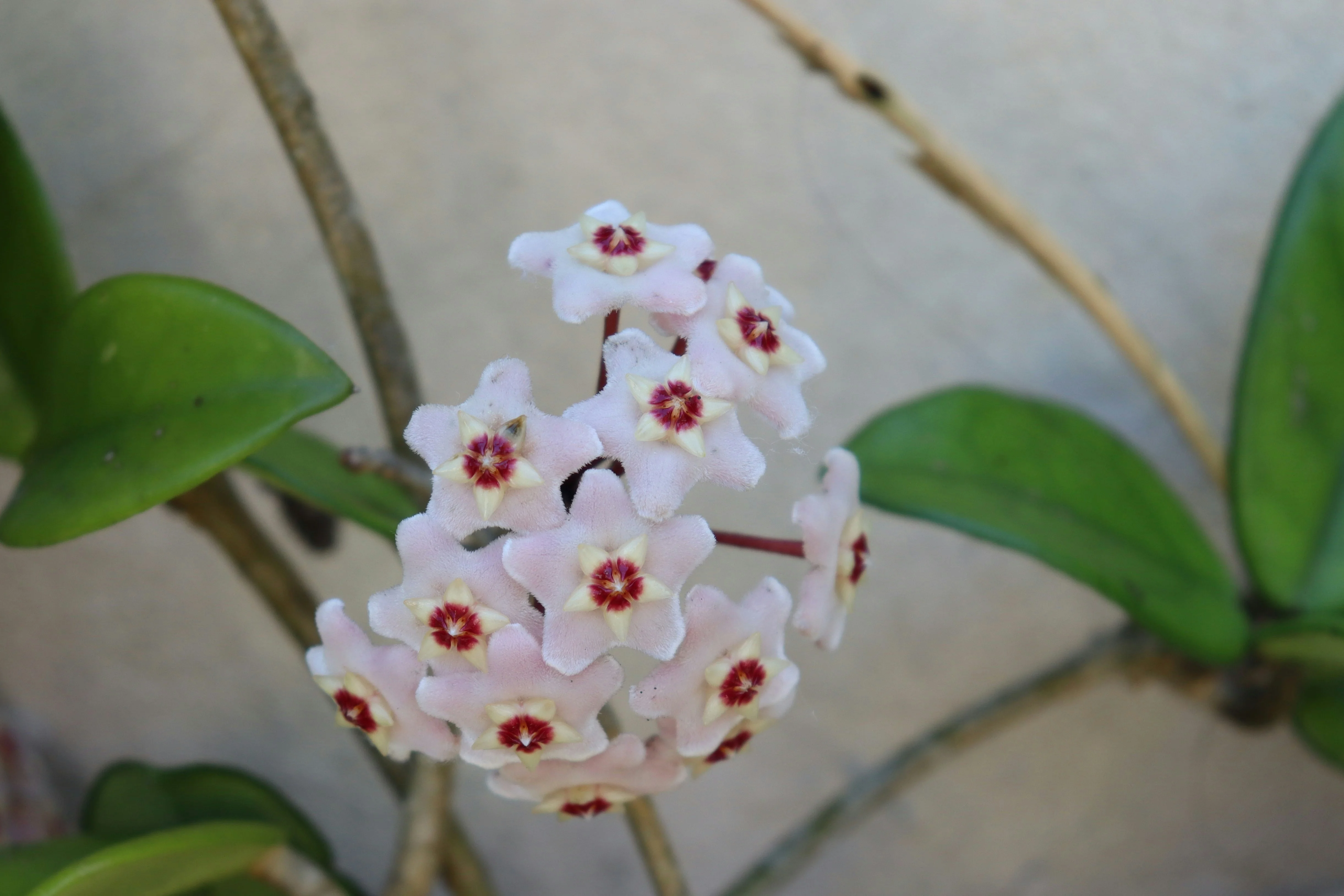
When your Hoya finally blooms, it will produce a cluster of small, fuzzy, pinkish-purple, star-shaped flowers from a tiny spur called a peduncle. These flowers are highly fragrant, especially at night. Once the flowers die and fall off, do not cut the peduncle off. A Hoya will re-bloom from the exact same peduncle year after year. The older a peduncle gets, the more flowers it will produce!
Recommended next actions
Next Best Actions
Use calculators and guides to turn this plant profile into a practical care routine.
Topic Guide
Watering
Learn everything about watering for your indoor and aquarium plants. Expert care tips, troubleshooting, and related guides.
Plant Guide
Hoya Carnosa
After growing and propagating over 40 Hoya carnosa plants and coaxing them to bloom year after year, we have mastered the 'epiphyte-style' care routine required to keep these waxy vines thriving.
Plant Guide
Hoya Kerrii
The Sweetheart Hoya is famous for its thick, heart-shaped leaves. However, millions of people buy the single-leaf cuttings without realizing they are 'zombie plants' that will never grow into a vine.
Topic Guide
Root Rot
Learn how to identify and treat root rot in houseplants. Discover causes, symptoms, and step-by-step solutions to save your plants from overwatering.
Structured Plant Data
Plant Data Profile
The following data is extracted directly from our botanical knowledge graph for accuracy and transparency.
Growth Characteristics
Growth Rate
fast
Mature Height
Vines up to 10+ feet long
Mature Spread
2-3 feet wide
Life Cycle
Perennial
Flowering Season
Summer (produces spherical clusters of fuzzy, fragrant, pinkish-purple star-shaped flowers)
Container Friendly
yes
Indoor Capable
yes
Environmental Parameters
| Parameter | Recommended | Survivable |
|---|---|---|
| Temperature | 65°F - 85°F (18°C - 29°C) | 50°F - 95°F (10°C - 35°C) |
| Humidity | 40% - 60% | 20% - 80% |
| Soil PH | 6.0 - 7.0 | 5.5 - 7.5 |
Lighting
Description
Requires high levels of bright, indirect light to grow rapidly and eventually bloom. Can handle a few hours of direct morning sun. Low light will result in no flowers.
Nutrients
Nitrogen Demand
low
Phosphate Demand
moderate
Potassium Demand
low
Micronutrient Notes
Requires a fertilizer high in phosphorus during the spring and summer to trigger blooming.
Fertilizer Frequency
Once a month during spring and summer with a diluted orchid or bloom-boosting fertilizer.
Organic Options
Orchid spray fertilizer applied directly to the foliage.
Relationships
-
Root Rot
Vulnerability | Strength 9
As an epiphyte, it has very delicate, shallow roots that will instantly suffocate and rot in heavy, dense potting soil.
Hoya Variety Comparison
| Variety | Leaf Shape | Growth Speed |
|---|---|---|
| Pubicalyx | Long, narrow, silver splash | Fast |
| Carnosa | Flat, wide, almond-shaped | Moderate |
| Kerrii | Perfectly heart-shaped | Slow |
Troubleshooting & Diagnostics Guide
1 Why is my Hoya Pubicalyx shooting out long, bare vines with no leaves?
Diagnosis: Normal exploratory tendrils; flowers form on these vines
Treatment: Do not cut; provide support; leaves and flowers will develop.
Prevention: Offer a trellis.
2 Why are the leaves turning yellow and mushy?
Diagnosis: Overwatering – root rot
Treatment: Stop watering; allow dry; repot if needed.
Prevention: Water only when soil is dry.
Authoritative Resources
For additional peer-reviewed information on plant diseases, toxicity, and care, consult these trusted botanical and agricultural extensions:
Glossary of Terms
- Peduncle
- A small, spur-like stalk from which Hoya flowers bloom. A Hoya will re-bloom from the exact same peduncle every year, so they should never be cut off.
- Splash
- The silvery-white speckling on the leaves of certain plants. In Hoyas, splash is actually tiny air pockets trapped beneath the outermost layer of the leaf.
Frequently Asked Questions
Why is my Hoya Pubicalyx shooting out long, bare vines with no leaves?
How do I get my Hoya to bloom?
Why are the leaves turning yellow and mushy?
What is the silver splashing on the leaves?
Is the Hoya Pubicalyx toxic to pets?
Sources & References
-
Source: powo.science.kew.org
-
Source: edis.ifas.ufl.edu
Explore More