Ficus Tineke Indoor Guide: Protect Brown Edges on White Leaves
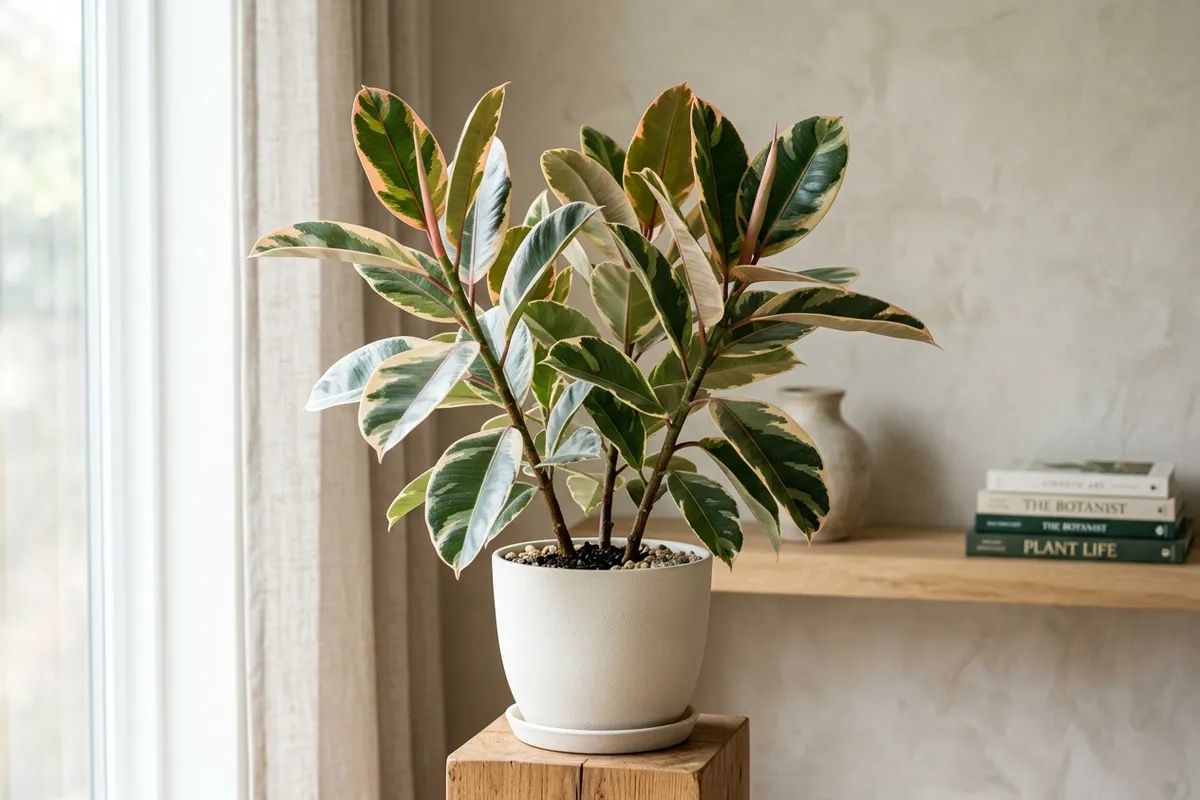
The Ficus Tineke is a spectacular variegated Rubber Tree featuring leaves painted in shades of green, cream, and pink. It requires significantly more sunlight than its solid-green cousins.
-
Difficulty
intermediate
-
Light
Because the white parts of the leaf contain no chlorophyll, it requires significantly more light than a standard green Rubber Tree. Direct sun is required to maintain the pink/red tints.
-
Temperature
65°F - 85°F (18°C - 29°C)
-
Growth
moderate
-
Humidity
40% - 60%
-
pH range
6.0 - 6.5
-
Biggest Owner Mistake
Placing it in low light, which causes the variegated sections to stop being produced—new leaves come in solid green because the plant ramps up chlorophyll when light is scarce, overriding the variegation pattern. Bright indirect light is needed to maintain the cream-and-green pattern.
-
What Nobody Tells You
New leaves unfurl with a distinctive pink blush that fades to cream as they mature—this color shift is normal and not a sign of stress or reversion. The pink is a temporary pigment in young tissue that disappears as the leaf hardens.
-
Real Home Conditions
In dry indoor air, brown spots appear specifically on the white variegated sections because those areas have less structural integrity and desiccate faster than the green portions. It requires higher humidity than solid green rubber trees for the same reason.
Quick Answer
The Variegated Rubber Tree (Tineke) requires intense, direct sunlight to maintain its pink and white colors. Water only when the top 3-4 inches of soil are dry, and never place it near a cold draft or heating vent. We recommend observing the plant closely over a few weeks to ensure it adjusts well to its environment.
Key Takeaways
- Provide bright, indirect light with gentle morning sun to maintain pink and cream variegation.
- Allow the top 2 to 3 inches of soil to dry out before watering thoroughly.
- Avoid low-light conditions, which cause variegated leaf margins to turn brown.
- Shield from sudden cold drafts and maintain stable ambient temperatures.
Overview
The Variegated Rubber Tree (Ficus elastica 'Tineke') is a breathtaking cultivar that has rapidly become a centerpiece in modern interior design. While the standard Rubber Tree features solid, dark-burgundy or dark-green leaves, the Tineke boasts a stunning watercolor pattern. Each large, glossy leaf is splashed with shades of olive green, bordered by thick, creamy-white margins. When given enough sunlight, the new leaves and the main veins blush with a brilliant, vibrant pink.
However, that beautiful variegation comes with a steep price: a massive reduction in the plant's ability to photosynthesize. The white sections of the leaf contain zero chlorophyll. Because it has far less green surface area than a standard Rubber Tree, the Tineke requires dramatically more sunlight to survive. Placing this plant in a dim corner drastically increases the risk of severe root rot, usually resulting in the white edges turning brown and rotting away.
Light Requirements: Maximize the Sun
If you want a Ficus Tineke to thrive, maintain its bright white edges, and flush with pink, you must place it directly in front of the brightest window in your house. A south-facing or west-facing window is mandatory. It can and should receive several hours of direct, unfiltered sunlight every day (though if it has been kept in a dark store, you must acclimate it to the sun slowly over a few weeks to prevent sunburn).
If the plant does not receive enough light, two things will happen: the plant will stop growing entirely, and the stunning white variegation on the edges will slowly turn brown, crispy, and eventually mushy as the leaf dies.
Watering Strategy
Watering a Tineke requires restraint. The thick, rubbery leaves store water, meaning it can tolerate drought far better than it can tolerate a swamp. Allow the top 3 to 4 inches of the potting soil to dry out completely before watering. Stick your finger deep into the pot; if you feel any moisture, do not water.
When it is time, soak the pot thoroughly until water flows out the drainage holes. Never let the pot sit in a saucer of standing water. Overwatering will instantly cause the white margins of the leaves to turn brown and rot.
Temperature and Humidity
As a tropical tree, it requires warm temperatures between 65°F and 85°F (18°C - 29°C). Like all Ficus trees (including the Fiddle Leaf Fig), it is incredibly dramatic regarding temperature shifts. If you place it near a drafty winter window or an air conditioning vent, it will go into shock and drop all of its healthy lower leaves overnight. Keep the temperature stable. It is highly adaptable to standard indoor humidity (40-50%) and does not require a humidifier.
Soil and Potting
Standard potting soil is too heavy and will suffocate the roots. You must use a chunky, fast-draining mix. Combine standard indoor potting soil with 30-40% perlite and coarse orchid bark. This ensures that excess water drains away instantly, protecting the roots from rot.
Maintenance: Wiping the Leaves
Because the leaves are massive and sit horizontally, they collect dust rapidly. A layer of dust blocks the already-limited sunlight from reaching the green chlorophyll in the center of the leaves. You must wipe the leaves down with a soft, damp cloth every two weeks to keep the plant healthy and photosynthesizing efficiently.
Toxicity Warning
The Ficus Tineke is toxic to cats, dogs, and humans. The plant contains a thick, milky white latex sap. If a leaf is torn or the trunk is scratched, this sap will bleed heavily. The sap causes severe contact dermatitis (skin rashes) and, if ingested by pets, leads to intense oral irritation, drooling, and vomiting. Always wash your hands after pruning or wiping the leaves.
Recommended next actions
Next Best Actions
Use calculators and guides to turn this plant profile into a practical care routine.
Topic Guide
Watering
Learn everything about watering for your indoor and aquarium plants. Expert care tips, troubleshooting, and related guides.
Guide
Brown Crispy Tips on Houseplants: Causes & Fixes
With over 15 years of indoor plant diagnostics and more than 3,000 leaf-tissue cases analyzed, we've mapped the exact mechanisms behind brown crispy tips—fluoride accumulation, salt toxicity, and humidity deficits—so you can reverse damage today.
Topic Guide
Root Rot
Learn how to identify and treat root rot in houseplants. Discover causes, symptoms, and step-by-step solutions to save your plants from overwatering.
Structured Plant Data
Plant Data Profile
The following data is extracted directly from our botanical knowledge graph for accuracy and transparency.
Growth Characteristics
Growth Rate
moderate
Mature Height
6-10 feet indoors
Mature Spread
2-3 feet
Life Cycle
Perennial
Flowering Season
Rarely flowers indoors
Container Friendly
yes
Indoor Capable
yes
Environmental Parameters
| Parameter | Recommended | Survivable |
|---|---|---|
| Temperature | 65°F - 85°F (18°C - 29°C) | 60°F - 95°F (15°C - 35°C) |
| Humidity | 40% - 60% | 20% - 80% |
| Soil PH | 6.0 - 6.5 | 5.5 - 7.5 |
Lighting
Description
Because the white parts of the leaf contain no chlorophyll, it requires significantly more light than a standard green Rubber Tree. Direct sun is required to maintain the pink/red tints.
Nutrients
Nitrogen Demand
moderate
Phosphate Demand
low
Potassium Demand
moderate
Micronutrient Notes
Do not over-fertilize, as excess salt buildup will burn the delicate white leaf margins.
Fertilizer Frequency
Once a month during spring and summer with a balanced fertilizer diluted to half strength.
Organic Options
Monthly top dressing of worm castings.
Relationships
-
Root Rot
Vulnerability | Strength 8
Highly susceptible to root rot if left in heavy, water-logged potting soil.
Ficus Elastica Variety Comparison
| Variety | Leaf Color | Light Need |
|---|---|---|
| Tineke | Green, Cream, Pink | Very High / Direct Sun |
| Ruby | Intense Red, Pink, Dark Green | Very High / Direct Sun |
| Burgundy | Nearly Black / Dark Red | Medium to High Indirect |
Authoritative Resources
For additional peer-reviewed information on plant diseases, toxicity, and care, consult these trusted botanical and agricultural extensions:
Glossary of Terms
- Variegation
- The appearance of differently colored zones in the leaves and sometimes the stems of plants. In the Tineke, this is caused by a genetic mutation resulting in a lack of chlorophyll on the leaf edges.
- Latex
- A milky fluid found in many plants, such as Ficus and Euphorbias, which exudes when the plant is cut. It is often highly irritating or toxic.
Frequently Asked Questions
Why are the white edges of my Ficus Tineke turning brown and crispy?
Why is my Ficus Tineke losing its pink color?
Why is my Variegated Rubber Tree dropping leaves?
Is the Ficus Tineke toxic to cats?
How do I make my Rubber Tree branch out?
Sources & References
-
Source: powo.science.kew.org
-
Source: edis.ifas.ufl.edu
Explore More