Curly Spider Plant Care: Keeping the Curls & Fixing Brown Tips
The 'Bonnie' Curly Spider Plant adds a whimsical twist to a classic houseplant. We explain how to maintain those tight curls and how to manage tap water to prevent brown tips.
-
Difficulty
beginner
-
Light
Requires bright indirect light to maintain the tight curls and bright white stripes. In low light, the leaves will lose their curl and become more solid green.
-
Temperature
65°F - 80°F (18°C - 27°C)
-
Growth
fast
-
Humidity
40% - 60%
-
pH range
6.0 - 7.2
-
Biggest Owner Mistake
Overwatering because the curled leaves make owners assume the plant is dehydrated—but the curls are a genetic trait, not a sign of thirst. Like standard spider plants, it has thick tuberous roots that store water, so let the top inch of soil dry out between waterings.
-
What Nobody Tells You
The tight spirals loosen and the leaves straighten out in low light as the plant grows longer leaves reaching for the light source—bright indirect light is what keeps those compact curls looking dramatic. In shade it becomes nearly indistinguishable from a regular spider plant.
-
Real Home Conditions
In dry indoor air, the leaf tips reliably turn brown regardless of watering—this is a fluoride sensitivity common to all spider plants, not a humidity problem. Switching to distilled or filtered water prevents new tip browning.
Quick Answer
The Curly Spider Plant needs bright, indirect light to maintain its bouncy curls. It is highly sensitive to fluoride in tap water, which causes brown tips, so use filtered or distilled water instead. For best results, we suggest keeping an eye on the plant's response throughout the active growing season.
Key Takeaways
- Provide bright, indirect sunlight to maintain tight, curled variegated foliage.
- Allow the top 2 inches of soil to dry before watering thoroughly.
- Use fluoride-free filtered or distilled water to eliminate brown leaf tips.
- Propagate readily by rooting hanging plantlets (spiderettes) in water or soil.
Overview
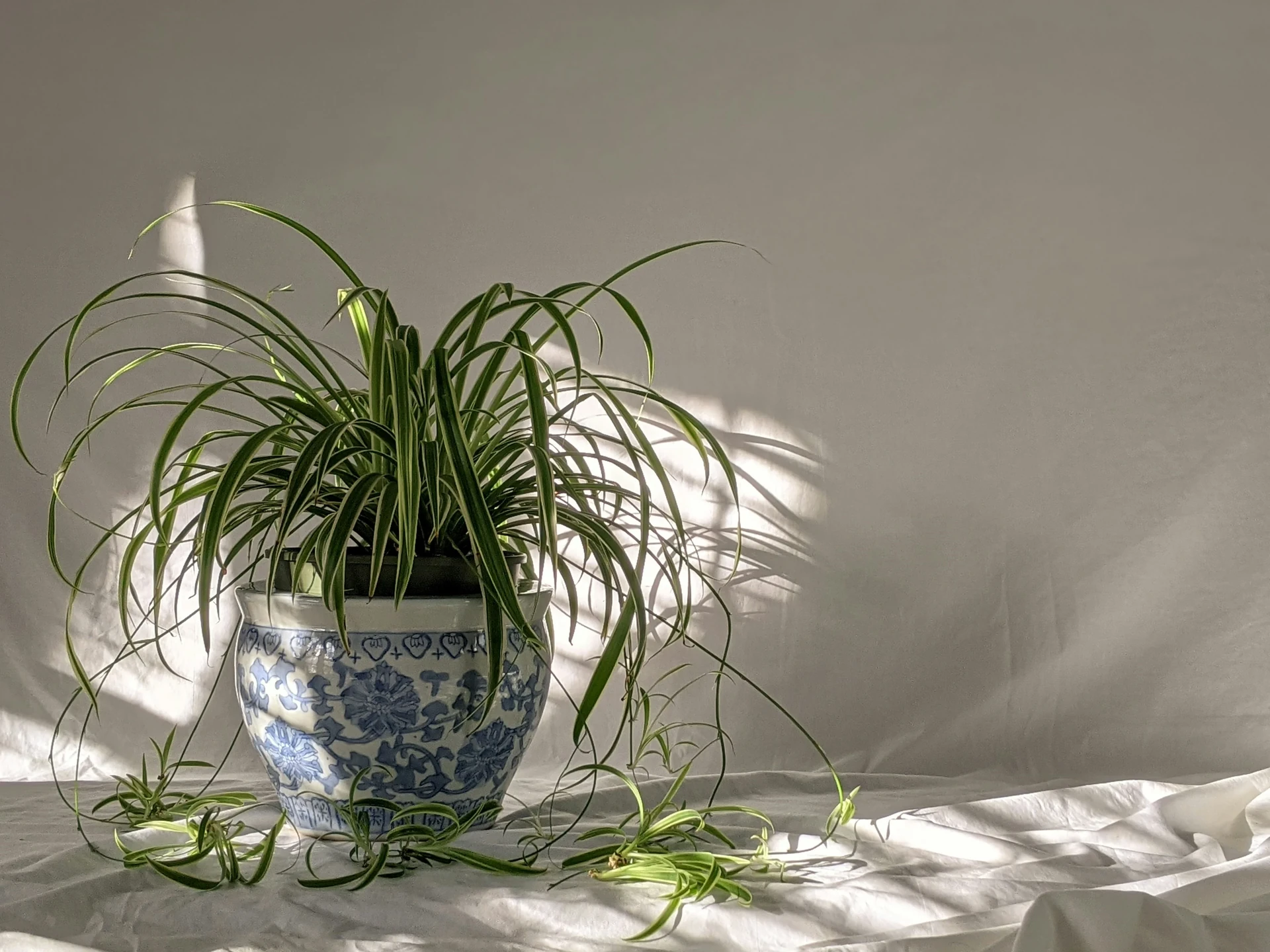
The Curly Spider Plant (Chlorophytum comosum 'Bonnie') is a delightful, modern twist on one of the most classic and enduring houseplants in history. It boasts the exact same vibrant green and white stripes and prolific baby-producing capabilities as the traditional Spider Plant, but its leaves grow in tight, whimsical curls, giving it a much more compact, bouncy appearance. While it is famous for being incredibly easy to grow and propagate, many owners struggle with two cosmetic issues: the leaves losing their curl, and the tips turning brown and crispy. This guide will help you solve both.
Native to the coastal and riverine regions of Southern Africa, the Spider Plant evolved as a groundcover beneath the canopy of larger trees. It is accustomed to bright, dappled sunlight and periods of heavy rain. To survive, it developed thick, fleshy, almost tuberous roots that store large amounts of water. Because it has built-in water reserves, it is quite tolerant of forgetful watering, making it an ideal beginner plant.
Light: The Secret to the Curl
Light is the key to maintaining the 'Bonnie's unique appearance. It requires bright, indirect light (such as an east or west-facing window) to maintain its tight curls and the sharp contrast of its white stripes. If you place a Curly Spider Plant in a low-light corner, it will adapt by producing more chlorophyll (turning greener) and flattening its leaves out to catch as much light as possible. Over time, a low-light 'Bonnie' will look almost identical to a standard, straight-leaved Spider Plant. However, avoid harsh, direct afternoon sun, which will rapidly scorch and bleach the foliage.
Temperature
This resilient plant adapts well to almost any standard household temperature between 65°F and 80°F (18°C - 27°C). It can tolerate cooler temperatures down to 50°F (10°C) during the winter, but it is not frost-hardy.
Humidity
Curly Spider Plants are perfectly happy in average indoor humidity (40% to 50%). They do not require a humidifier. However, in exceptionally dry homes during the winter, the lack of humidity can contribute to brown leaf tips.
Watering and Water Quality
This is where most cosmetic issues arise. Spider Plants are notoriously sensitive to the fluoride and chlorine added to municipal tap water. Over time, these chemicals build up in the tips of the leaves, causing them to turn brown and crispy. To prevent this, water your plant with distilled water, rainwater, or tap water that has been left sitting out for 24 hours (which allows the chlorine, but not the fluoride, to evaporate). When watering, allow the top 2 inches of the potting mix to dry out completely before giving the plant a thorough soak. Because of their thick, water-storing roots, they prefer to dry out slightly rather than sit in constantly soggy soil. If the leaves look pale and are drooping dramatically, the plant is thirsty.
Soil
A standard, well-draining indoor potting mix is perfect. You do not need a specialized soil, but ensuring the pot has drainage holes is non-negotiable to prevent root rot.
Fertilizer
Spider Plants are moderate feeders but are very sensitive to fertilizer salt buildup (which also causes brown tips). Feed them only once a month during the spring and summer using a balanced liquid houseplant fertilizer diluted to quarter strength. Do not fertilize in the fall and winter.
Propagation: The 'Babies'
Propagation is where the Spider Plant shines. As it matures and receives enough light, it will send out long, arching stalks (stolons) that produce small white flowers and miniature clones of the mother plant, known as "spiderettes" or "pups." To propagate, simply wait until a pup has developed small root nubs on its base. Snip the pup off the stalk and place it in a small glass of water until the roots are an inch long, then plant it in soil. Alternatively, you can place a small pot of soil next to the mother plant, pin the pup into the new soil while it is still attached to the stalk, and cut the stalk only after the pup has rooted. Producing dozens of pups requires immense energy; if your mother plant looks exhausted and pale, prune the pups off to let it recover.
Repotting
Spider Plants have incredibly aggressive, thick roots that grow rapidly. They need repotting every 1 to 2 years. They are famous for growing so many roots that they physically push the plant up and out of the pot, or even crack plastic nursery pots. When you repot, go up one pot size and use fresh soil.
Toxicity
The Curly Spider Plant is completely non-toxic to cats, dogs, and humans. However, pet owners should be aware that the plant contains compounds that are mildly hallucinogenic to cats, acting somewhat like catnip. Cats are often obsessed with chewing on the long, dangling leaves. While it won't poison them, they will likely destroy the plant and may vomit up the undigested leaves.
Common Problems
Brown, crispy leaf tips are almost unavoidable unless you use pure distilled water. You can safely snip the brown tips off with sterilized scissors, cutting them into a natural point. If the plant is losing its curl, move it to a brighter location. If the center of the plant is turning yellow and mushy, it is suffering from crown rot due to severe overwatering.
Calculator
Interactive Calculators for Curly Spider Plant
Recommended next actions
Next Best Actions
Use calculators and guides to turn this plant profile into a practical care routine.
Topic Guide
Watering
Learn everything about watering for your indoor and aquarium plants. Expert care tips, troubleshooting, and related guides.
Guide
Tap Water vs Filtered Water for Houseplants: Which Is Better?
Most houseplants tolerate tap water without issue — but a specific group of fluoride-sensitive and mineral-sensitive plants develop brown leaf tips from ordinary municipal water. This guide compares tap water vs filtered water, identifies which plants are actually at risk, and gives you the cheapest effective fix for each scenario.
Topic Guide
Root Rot
Learn how to identify and treat root rot in houseplants. Discover causes, symptoms, and step-by-step solutions to save your plants from overwatering.
Structured Plant Data
Plant Data Profile
The following data is extracted directly from our botanical knowledge graph for accuracy and transparency.
Growth Characteristics
Growth Rate
fast
Mature Height
1-2 feet indoors (cascading 'babies' reach 3+ feet)
Mature Spread
1-2 feet
Life Cycle
Perennial
Flowering Season
Spring/Summer indoors (small white star-shaped flowers)
Container Friendly
yes
Indoor Capable
yes
Environmental Parameters
| Parameter | Recommended | Survivable |
|---|---|---|
| Temperature | 65°F - 80°F (18°C - 27°C) | 50°F - 90°F (10°C - 32°C) |
| Humidity | 40% - 60% | 30% - 80% |
| Soil PH | 6.0 - 7.2 | 5.5 - 7.5 |
Lighting
Description
Requires bright indirect light to maintain the tight curls and bright white stripes. In low light, the leaves will lose their curl and become more solid green.
Nutrients
Nitrogen Demand
moderate
Phosphate Demand
low
Potassium Demand
low
Micronutrient Notes
Extremely sensitive to fluoride and fertilizer salt buildup.
Fertilizer Frequency
Once a month during spring and summer at quarter strength.
Organic Options
Standard liquid houseplant fertilizer or worm tea.
Relationships
-
Root Rot
Vulnerability | Strength 6
Relatively hardy, but the thick, tuberous roots will rot if kept in constantly soggy soil.
Spider Plant Variety Comparison
| Variety | Leaf Pattern | Leaf Shape |
|---|---|---|
| Vittatum | Green edges with a wide white stripe down the center | Straight, long and arching |
| Variegatum | White edges with a green stripe down the center | Straight, long and arching |
| Bonnie | Green edges with a wide white stripe down the center | Tightly curled and wavy |
Troubleshooting & Diagnostics Guide
1 Tips of the leaves are turning brown and crispy
Diagnosis: Fluoride/chemical toxicity from tap water, or allowing the soil to get too dry.
Treatment: Switch to watering exclusively with distilled or rainwater. You can trim the brown tips off with scissors.
Prevention: Maintain optimal care conditions.
Authoritative Resources
For additional peer-reviewed information on plant diseases, toxicity, and care, consult these trusted botanical and agricultural extensions:
Glossary of Terms
- Stolon
- A creeping horizontal plant stem or runner that takes root at points along its length to form new plants. In the Spider plant, these are the long stalks holding the babies.
- Pup / Spiderette
- The miniature, clonal offspring produced by the mother Spider Plant at the ends of its stolons.
Frequently Asked Questions
Why are the tips of my Curly Spider Plant turning brown?
Is the Curly Spider Plant safe for cats?
Why are the leaves on my 'Bonnie' losing their curl?
How do I propagate the Spider Plant babies?
How often should I water my Spider Plant?
Why is my Spider Plant looking pale and droopy?
Should I cut off the long stems with the babies on them?
Can I put my Spider Plant outside?
Sources & References
-
Source: powo.science.kew.org
-
Source: missouribotanicalgarden.org
-
Source: plants.ces.ncsu.edu
-
Source: edis.ifas.ufl.edu
-
Source: worldfloraonline.org
Explore More