Ctenanthe Burle-Marxii Indoor Guide: Fix Crispy Edges
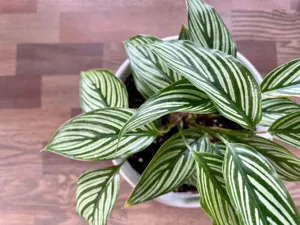
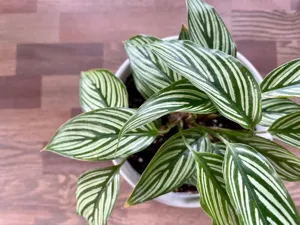
The Ctenanthe burle-marxii is a stunning, pet-safe prayer plant featuring a dark green 'fishbone' pattern on pale silver-green leaves. It demands high humidity and distilled water to thrive.
-
Difficulty
advanced
-
Light
Requires bright, indirect light to keep its intricate fishbone pattern bold. Direct sun will bleach the pale green leaves and scorch them brown.
-
Temperature
65°F - 80°F (18°C - 27°C)
-
Growth
moderate
-
Humidity
60% - 80%
-
pH range
5.5 - 6.5
-
Biggest Owner Mistake
Using tap water—it's even more chemically sensitive than calatheas, and a single watering with chlorinated tap water causes immediate browning along the leaf edges that is permanent. Use only distilled, rainwater, or water left out for 24 hours.
-
What Nobody Tells You
Most owners stake it upright, but it's naturally a trailing and spreading plant that looks far more graceful allowed to cascade from a hanging basket. Fighting its natural growth habit by staking it just causes bent stems and a cramped appearance.
-
Real Home Conditions
In dry homes, the signature leaf movement (folding upward at night) stops entirely—this is an early warning sign the plant is stressed before visible damage appears. Humidity below 50% is the most common culprit in typical indoor environments.
Quick Answer
The Ctenanthe needs evenly moist soil, bright, indirect light, and high humidity. It must be watered with distilled or rainwater; tap water will cause the leaf edges to burn and turn crispy brown over time. Monitoring the plant regularly helps catch early signs of stress before they cause any lasting damage.
Key Takeaways
- Provide bright, indirect sunlight to maintain silver fishbone leaf patterning.
- Maintain relative humidity above 60% and water exclusively with pure water.
- Keep potting substrate consistently moist without leaving the pot in standing water.
- Observe normal nyctinastic movement as leaves fold vertically each evening.
Overview
The Ctenanthe burle-marxii, often called the Fishbone Prayer Plant or the Never Never Plant, is a breathtaking, low-growing tropical native to Brazil. It features pale, silvery-green, oval leaves painted with striking, dark green alternating stripes that perfectly resemble a fish skeleton. When it folds its leaves up at night, it reveals a gorgeous deep burgundy-purple underside.
Because it is a member of the Marantaceae family (along with Calatheas, Marantas, and Stromanthes), it is completely pet-safe. However, it also shares the family's notorious reputation for being a high-maintenance diva. If you do not provide it with high humidity and pure, filtered water, it will quickly develop ugly, crispy brown edges that ruin its pristine appearance.
The Tap Water Ban
The absolute fastest way to ruin a Ctenanthe is by watering it from the sink. Municipal tap water contains heavy salts, chlorine, and fluoride. This plant has no biological mechanism to filter out these chemicals. As it drinks, it pushes the chemicals to the extreme edges of the leaves, where they build up and cause severe chemical burns. This manifests as brown, dry, crispy edges.
To prevent this, you must water the plant exclusively with distilled water, reverse-osmosis water, or rainwater. Furthermore, it is highly sensitive to synthetic fertilizer salts. If you fertilize, dilute it to 1/4 of the recommended strength to prevent fertilizer burn.
Watering: The Damp Sponge
Unlike succulents that want to dry out completely, the Ctenanthe needs its soil kept consistently, evenly moist—much like a wrung-out damp sponge. When the top half-inch of soil feels dry to the touch, water it thoroughly.
If you allow the pot to completely dry out, the plant will violently curl its leaves inward into tight tubes to prevent moisture loss, and the edges will crisp up immediately. Conversely, if you leave the pot sitting in a saucer of stagnant water, the rhizomes will rot. Consistency is the key to success.
Humidity and Temperature
Native to the humid rainforest understory, the Ctenanthe demands humidity levels between 60% and 80%. Standard indoor heating drops humidity to 30%, which will rapidly suck the moisture out of the thin leaves. You must run a dedicated room humidifier nearby. Misting the plant does not work and often leads to fungal leaf spot diseases.
Keep the plant in a warm room between 65°F and 80°F (18°C - 27°C). It is highly susceptible to cold drafts; a blast of cold air from an exterior door or an AC vent will cause the leaves to wilt dramatically.
Light Requirements
In the wild, the Ctenanthe lives on the forest floor, completely shaded by the canopy above. Indoors, it requires bright, indirect light to maintain the stark contrast of its fishbone pattern. An east or north-facing window is ideal.
Never place this plant in direct sunlight. The thin, delicate leaves will instantly scorch, and the pale silver-green sections will bleach out to a sickly, pale yellow.
The Prayer Movement
One of the most rewarding aspects of owning a Ctenanthe is watching it move. Thanks to a specialized joint at the base of each leaf called the pulvinus, the plant tracks the sun. In the morning, the leaves lay completely flat to absorb maximum light. As the sun sets, the plant folds its leaves straight upward, resembling hands in prayer. This circadian rhythm (nyctinasty) is a sign of a perfectly healthy, happy plant.
Recommended next actions
Next Best Actions
Use calculators and guides to turn this plant profile into a practical care routine.
Topic Guide
Humidity
Learn everything about humidity for your indoor and aquarium plants. Expert care tips, troubleshooting, and related guides.
Guide
Brown Crispy Tips on Houseplants: Causes & Fixes
With over 15 years of indoor plant diagnostics and more than 3,000 leaf-tissue cases analyzed, we've mapped the exact mechanisms behind brown crispy tips—fluoride accumulation, salt toxicity, and humidity deficits—so you can reverse damage today.
Plant Guide
Maranta Prayer Plant Care
After nurturing and propagating over 120 Maranta specimens in dry, centrally heated indoor environments over the past 8 years, we have cracked the code on preventing the notorious curled brown leaves and restoring the nightly prayer movement.
Calculator
Plant Watering Calculator: How Often to Water
Calculate the correct watering frequency for your plant based on species, pot size, soil type, season, and climate.
Structured Plant Data
Plant Data Profile
The following data is extracted directly from our botanical knowledge graph for accuracy and transparency.
Growth Characteristics
Growth Rate
moderate
Mature Height
1-2 feet indoors
Mature Spread
1-2 feet wide
Life Cycle
Perennial
Flowering Season
Rarely flowers indoors
Container Friendly
yes
Indoor Capable
yes
Environmental Parameters
| Parameter | Recommended | Survivable |
|---|---|---|
| Temperature | 65°F - 80°F (18°C - 27°C) | 60°F - 85°F (15°C - 29°C) |
| Humidity | 60% - 80% | 40% - 90% |
| Soil PH | 5.5 - 6.5 | 5.0 - 7.0 |
Lighting
Description
Requires bright, indirect light to keep its intricate fishbone pattern bold. Direct sun will bleach the pale green leaves and scorch them brown.
Nutrients
Nitrogen Demand
moderate
Phosphate Demand
low
Potassium Demand
moderate
Micronutrient Notes
Extremely sensitive to fertilizer burn. Dilute to 1/4 strength.
Fertilizer Frequency
Once a month during spring and summer with a highly diluted liquid fertilizer.
Organic Options
A light top dressing of worm castings.
Relationships
-
Fluoride Toxicity
Vulnerability | Strength 9
Like all prayer plants, it cannot filter out fluoride and chlorine from tap water, which causes severe brown, crispy leaf edges.
Prayer Plant Family Comparison
| Genus | Growth Habit | Difficulty |
|---|---|---|
| Ctenanthe | Clumping, upright stems | Advanced |
| Maranta | Low, trailing vines | Moderate |
| Calathea | Tall, upright stalks | Very Advanced |
Troubleshooting & Diagnostics Guide
1 Why are the edges of my Ctenanthe turning brown and crispy?
Diagnosis: Low humidity or fluoride/chlorine toxicity
Treatment: Increase humidity (humidifier); switch to distilled/rainwater; trim crispy edges.
Prevention: Maintain high humidity and use purified water.
2 Why do the leaves fold up at night?
Diagnosis: Nyctinasty – natural prayer plant movement
Treatment: No action; it indicates a healthy plant.
Prevention: Continue normal care.
3 Why are the leaves rolling inwards into tight tubes?
Diagnosis: Severe dehydration or too much direct sunlight
Treatment: Check soil; if dry, water thoroughly; if wet and rolled, move to shadier spot.
Prevention: Keep soil consistently moist and avoid direct sun.
4 Can I mist my plant to stop the brown edges?
Diagnosis: Misting is ineffective and may cause fungal issues
Treatment: Instead, use a humidifier or pebble tray; avoid misting.
Prevention: Use proper humidity methods.
Authoritative Resources
For additional peer-reviewed information on plant diseases, toxicity, and care, consult these trusted botanical and agricultural extensions:
Glossary of Terms
- Nyctinasty
- The circadian rhythmic movement of plants in response to the onset of darkness. The Ctenanthe folds its leaves up at night, hence the name 'prayer plant'.
- Pulvinus
- An enlarged, swollen joint at the base of the leaf stalk that acts like a hinge, allowing the plant to physically move its leaves throughout the day.
Frequently Asked Questions
Why are the edges of my Ctenanthe turning brown and crispy?
Why do the leaves fold up at night?
Why are the leaves rolling inwards into tight tubes?
Is the Ctenanthe toxic to cats?
Can I mist my plant to stop the brown edges?
Sources & References
-
Source: powo.science.kew.org
-
Source: edis.ifas.ufl.edu
Explore More