Plant care calculator
Potting Mix Calculator: Get the Right Perlite, Bark & Coco Coir Ratio
Calculate the ideal potting mix ratios for any plant type — from moisture-loving tropicals to drought-tolerant succulents.
Quick Answer
By factoring in your specific plant type and environmental conditions, you can precisely tailor your care routine to ensure optimal health and prevent common issues like root rot.
- Enter pot size and plant type to get a custom soil mix ratio.
- Receive component proportions like perlite, bark, and peat or coir.
- Use results to match drainage needs to each specific plant type.
- Avoid guessing mix ratios that lead to compaction or overwatering.
Enter your details
Recommended Output
Base Soil / Cocopeat
Aeration Material
Bark or Coarse Chips
Potting Mix / Worm Castings
Mix Guidance
Static Reference
Static Reference:
Visible baseline values
These baseline ratios and decision rules are included directly in the page so visitors can review core guidance before using the interactive calculator.
| Scenario | Baseline Rule | Safety Note |
|---|---|---|
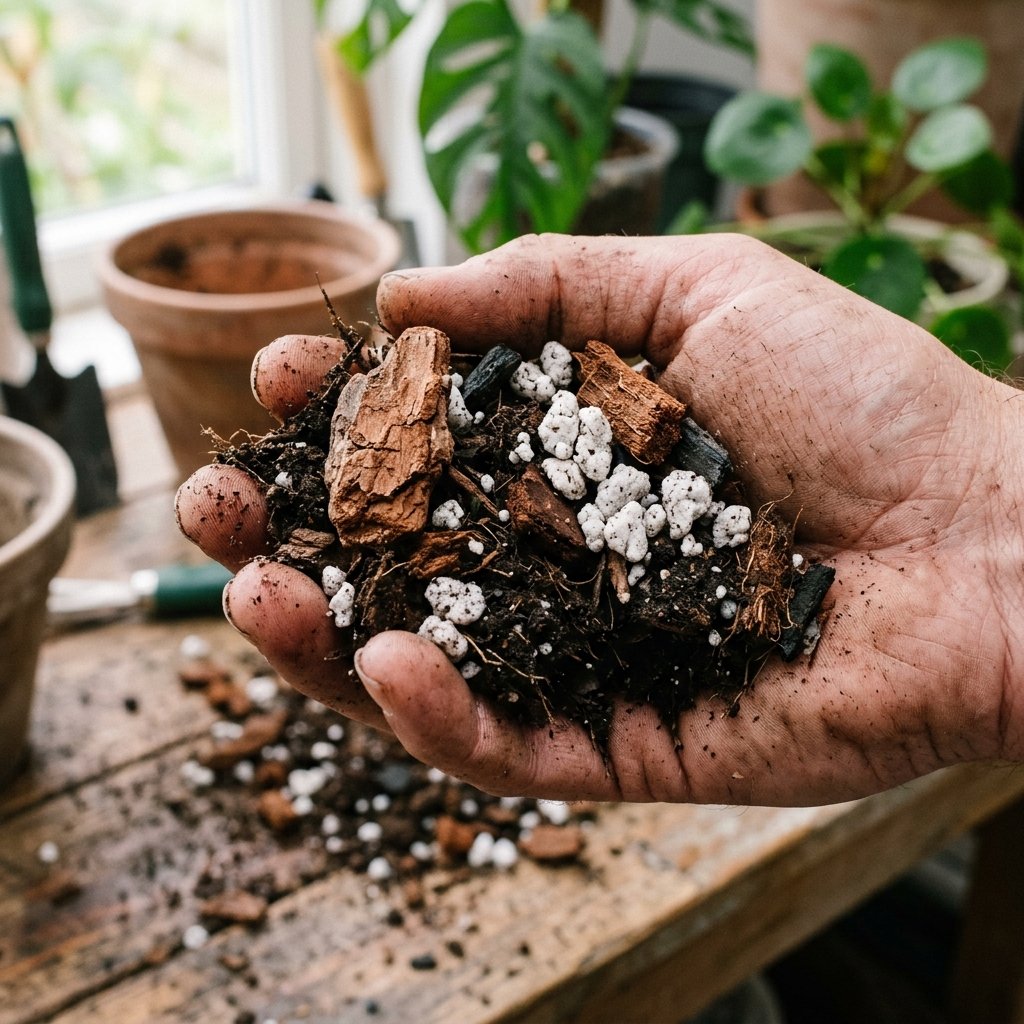
| Standard mix | 55% potting soil, 20% aeration, 10% bark, 15% compost. | Balanced for ordinary indoor plants. |
| Aroid mix | 30% potting soil, 30% aeration, 30% bark, 10% compost. | Chunky structure supports airflow around roots. |
| Succulent mix | 25% potting soil, 50% aeration, 15% bark, 10% compost. | Fast drainage reduces rot risk. |
Methodology: Potting mix outputs are volume splits from plant-specific ratios, adjusted for drainage preference and normalized to the requested total volume.
The Problem
Many plant owners guess at their care routines, leading to root rot, burned leaves, or stunted growth. Generic advice doesn't factor in specific plant species and local climate.
When to Use This Tool
Use this calculator when you bring home a new plant, when seasons change, or if your plant is showing signs of distress.
Who is this for?
- Beginner houseplant owners looking to avoid common mistakes
- Advanced collectors wanting to optimise growth rates
About this calculator
Using this calculator removes the guesswork from your plant care routine.
How to Use
- Select your plant type.
- Input your environmental conditions.
- Get your personalized recommendation.
The Importance of Precision
Every plant species has adapted to specific conditions in the wild. By mimicking those conditions in your home, you can dramatically increase the lifespan and vitality of your collection.
Visual Reference: Ideal Texture
Recommended next actions
Next Best Actions
Use the result in a real care workflow with plant profiles, guides, and personalized quizzes.
Guide
Leggy Houseplants: Causes of Etiolation & How to Fix Them
With over 13 years of plant growth diagnostics and more than 2,100 etiolation and light-deficiency cases assessed across species from compact succulents to large-leafed tropicals, we've developed a precise protocol for diagnosing the cause of leggy growth, correcting it without shocking the plant, and preventing recurrence through light and pruning management.
Guide
Best Indoor Plant Potting Soil Mix Recipes and Guide
Stop using straight potting soil from the bag. Learn how to mix chunky, aerated soil that prevents root rot.
Guide
Fiddle Leaf Fig Dropping Leaves in Summer? Fix It Fast
When my inbox fills with 'Help! My fiddle leaf fig is dropping leaves like crazy and it's only June,' I know the heat-dome panic has begun. This comprehensive triage protocol—backed by plant physiology research, comparison tables, and scientific parameters—walks panicked owners through diagnosis, emergency stabilization, and full recovery.
Plant Guide
Bougainvillea Care
The secret to vibrant Bougainvillea blooms lies in deliberate stress: intense sunlight, fast-draining soil, and infrequent watering. Learn the definitive horticultural practices to force heavy flowering and prevent leggy, bare vines.
Plant Guide
Zamioculcas Zenzi
The Zenzi is a dwarf cultivar of the indestructible ZZ Plant. It features incredibly thick stems and curled, densely packed leaves, making it perfect for small desks and low-light corners.
Plant Guide
Pilea Moon Valley
The Moon Valley Pilea is a compact, pet-safe plant famous for its deeply textured, cratered leaves that look like the surface of the moon. It requires high humidity and constantly moist soil to survive.
Potting Mix Ratio Calculator Variations & Requirements
| Variation | Light Requirement | Watering Frequency | Difficulty |
|---|---|---|---|
| Standard | Bright Indirect | Weekly | Medium |
| Variegated | High Light | Weekly | Hard |
| Dwarf | Medium Light | Bi-Weekly | Easy |
Troubleshooting & Diagnostics Guide
1 Plant is dropping leaves despite following the recommendation
Diagnosis: Drafts, sudden temperature changes, or pest issues not related to the calculator's focus area.
Treatment: Isolate the plant, check for pests, and ensure it is away from heating/cooling vents.
Glossary of Terms
- Transpiration
- The process of water movement through a plant and its evaporation from aerial parts.
- Photoperiod
- The period of time each day during which an organism receives illumination.