Rainy Season Indoor Plant Care: The Guide to Getting Your Plants Through the Wet Season
With over 15 years of tropical plant diagnostics across high-humidity coastal and inland climates — including more than 1,200 rainy-season care consultations spanning Mumbai, Chennai, Kolkata, and Bengaluru — we've mapped the exact cascade of mistakes that kills houseplants between June and September, and built the seasonal protocol that prevents every one of them.
Quick Answer
During the rainy season, reduce watering by 40–60% from your pre-monsoon schedule — lower temperatures slow transpiration and soil stays wet far longer than in summer. Suspend fertilizer for the first 3–4 weeks, increase plant spacing for airflow, and begin a preventive neem oil spray every 14 days. Overwatering, not humidity, is the primary wet season cause of plant failure.
Key Takeaways
- Reduce watering frequency by 40–60% to account for slower soil drying.
- Improve room air circulation to counter high humidity and prevent fungal mold.
- Monitor substrate surfaces closely for fungus gnat larval activity.
- Ensure all containers drain freely without standing water in saucers.
Your plants were thriving in May. You hadn't changed anything. Then the first week of June arrived — the temperature dropped 6°C overnight, the air turned thick, rain started hammering the windows — and within ten days you had yellowing leaves, soft stems, and something white and fuzzy appearing at soil level. Nothing in any plant care guide prepared you for this, because almost none of them are written for a wet rainy season climate. The adjustments that save houseplants through June to September are specific, counterintuitive, and almost entirely opposite to what humidity-focused advice tells you to do.
Why the Rainy Season Kills Plants That Survived Summer
The instinct is to assume the rainy season is good for tropical plants — after all, the high humidity and regular rainfall mimic the conditions many of them evolved in. This logic fails in an indoor context for three compounding reasons that operate simultaneously.
First, temperature-driven transpiration collapse. When rainy season storms arrive, ambient temperature in coastal cities drops from 36–40°C to 28–32°C within days. This 6–8°C drop reduces the rate at which plants transpire — the process by which water moves from roots through stems and evaporates through leaf stomata. A plant that was consuming 150 ml of water per day in May may consume only 80–90 ml per day in late June at lower temperatures. If you maintain your pre-rainy season watering schedule, the soil never fully dries between waterings, oxygen is displaced from root zones, and anaerobic conditions enable the same Pythium and Phytophthora water molds responsible for root rot to establish within 7–14 days. This is why overwatering — not fungal disease, not pests — is the number one cause of plant death during rainy seasons.
Second, light reduction from cloud cover. Rainy season cloud cover reduces effective photosynthetic light by 40–70% compared to clear-sky summer conditions. A south-facing window that delivers 2,000–3,000 lux on a clear May afternoon may deliver only 600–900 lux on a heavy overcast July day. Reduced light means reduced photosynthesis, reduced sugar production, and reduced growth rate — which in turn means the plant needs less water and fewer nutrients. Plants kept on pre-rainy season fertilizer schedules during low-light rainy season months accumulate fertilizer salts in the root zone without the metabolic throughput to use them, resulting in fertilizer burn that mimics the symptoms of nutrient deficiency.
Third, warm-wet fungal pressure. Rainy season air combines temperatures of 28–34°C with relative humidity of 80–98% RH for weeks at a time. This is the optimal growth environment for Botrytis cinerea (gray mold), Fusarium, and sooty mold fungi. These pathogens are always present in indoor air as spores; rainy season conditions simply tip the germination threshold from unfavorable to highly favorable. Any standing water on leaf surfaces, any damaged tissue, any stem base in contact with wet soil becomes a colonization site.
The Rainy Season Watering Protocol: Regional Adjustments
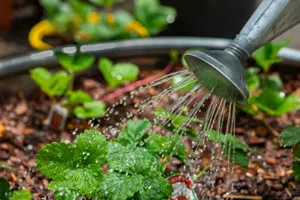
The single most important rainy season adjustment is watering frequency reduction. The exact reduction depends on your region's temperature profile during the wet season window.
| Region | Rainy Season Window | Avg Temp Drop vs May | Humidity Range | Recommended Watering Reduction | Finger-Test Depth Before Watering |
|---|---|---|---|---|---|
| Coastal Zones (high wetness) | June 10 – September 30 | 6–8°C | 85–98% RH | Reduce by 50–60% of pre-rainy season frequency | Top 4–5 cm must be dry |
| South/East Areas | October 15 – December 15 | 3–5°C | 80–92% RH | Reduce by 40–50% | Top 3–4 cm must be dry |
| Humid Valleys | June 10 – September 15 | 4–6°C | 82–95% RH | Reduce by 45–55% | Top 4 cm must be dry |
| Inland Plains | June 1 – September 30 | 2–4°C | 70–85% RH | Reduce by 30–40% | Top 3 cm must be dry |
| Dry/Brief Wet Zone | July 1 – August 31 | 2–4°C | 65–85% RH | Reduce by 30–40% | Top 3 cm must be dry |
| Subtropical Interiors | June 15 – September 30 | 3–5°C | 72–88% RH | Reduce by 35–45% | Top 3–4 cm must be dry |
The finger-test method is more reliable than any fixed schedule during the rainy season because day-to-day cloud cover variation means the same plant may need water after 6 days one week and 10 days the next. Insert your finger to the depth specified in the table; water only when the soil at that depth feels dry and pulls away from your finger. If it feels cool and slightly cohesive, the soil retains enough moisture and watering can wait another 2–3 days.
Fertilizer Schedule: What to Cut and Why
Suspend all fertilizer applications for the first 3–4 weeks of rainy season onset — the period when light levels drop most sharply and plant metabolism adjusts to the new conditions. After this adjustment window, resume at 25–30% of your pre-rainy season dose and frequency. If you were fertilizing every 14 days at full label dose in May, shift to every 21 days at one-quarter dose through July and August. Resume normal feeding when light levels recover.
The fertilizers most dangerous to maintain at full dose during the rainy season are high-nitrogen formulations — NPK ratios like 20-10-10 or 24-8-16. High nitrogen drives soft, fast foliar growth that is especially susceptible to fungal colonization in warm, humid conditions. Switch to a balanced or slightly potassium-heavy formulation (10-10-20 or similar) if you fertilize at all during peak rainy season; potassium strengthens cell walls and improves disease resistance. For context on how fertilizer chemistry interacts with plant health under stress, our guide on [fertilizer burn in houseplants] covers the salt accumulation mechanism that makes over-fertilization during low-light periods so damaging.
Airflow: The Most Underestimated Rainy Season Variable
Stagnant, humid air is more damaging to indoor plants than humidity alone. When air moves across leaf surfaces, it maintains the vapor pressure differential between the leaf interior and the surrounding air that drives transpiration — even in high-RH conditions. Without airflow, this differential collapses, transpiration stalls, and the leaves remain perpetually wet-surfaced from condensation and transpired water that cannot evaporate. Wet leaf surfaces are fungal colonization sites.
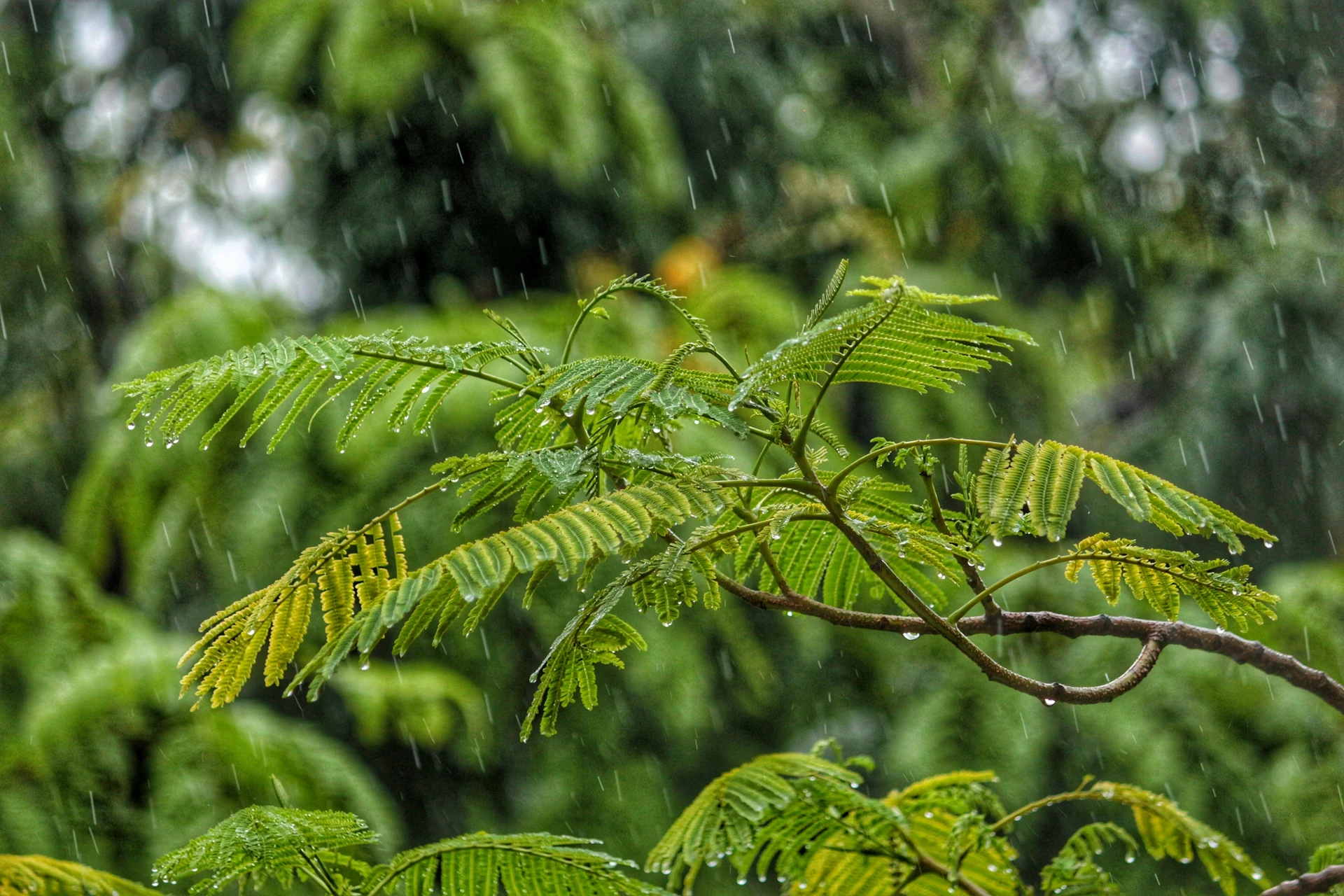
During rainy season months, close windows during heavy rainfall to prevent direct water splash onto plants and soil — standing water in leaf axils and on soil surfaces is the primary vector for Botrytis and Fusarium establishment. Between rain events, reopen windows for 2–3 hours to flush humid stagnant air with fresh air. If natural ventilation is insufficient, run a ceiling fan on its lowest setting or position a small desk fan to create gentle indirect airflow across your plant collection. The fan should not blow directly onto plants at close range; the goal is air movement in the room, not a wind tunnel effect on individual leaves.
Increase spacing between plants by 20–30% compared to your dry-season arrangement. Dense groupings trap humid air between leaf surfaces and create microclimates that exceed even the ambient humidity. While grouping plants is often recommended to raise local humidity — a valid strategy in dry summer AC conditions — during the rainy season it becomes a liability that accelerates fungal spread between plants.
Fungal Prevention: The Rainy Season Spray Protocol
Begin a preventive antifungal spray programme 1–2 weeks before your region's expected rainy season onset date. Prevention is categorically more effective than treatment: Botrytis and Fusarium establish within 24–48 hours of optimal conditions, and by the time symptoms are visible, colonization is already 5–7 days advanced.
Mix a preventive spray solution of 2 ml neem oil + 0.5 ml dish soap per 1 liter of water and apply to all leaf surfaces (top and underside), stems, and the soil surface around the stem base every 14 days through the rainy season window. Apply in the evening — neem oil applied in bright light causes photosensitivity burn on wet leaf surfaces. This schedule does not eliminate fungal risk but raises the colonization threshold enough to prevent most opportunistic infections in plants that are otherwise well cared for.
Watch for the early warning signs of fungal establishment that appear 5–7 days before a plant shows obvious distress: a faint powdery or water-soaked appearance on the lowest leaves, an unusual earthy-sweet smell from the soil surface that differs from normal petrichor, or the appearance of fine white threads at the stem base. Catching these signs triggers immediate intervention — increase airflow, reduce watering, remove affected tissue — before the infection advances to the crown or root system. Our detailed framework in the [stem rot vs root rot houseplants] guide covers how to distinguish which pathogen you are dealing with and the exact rescue steps for each once symptoms have progressed.
Which Plants Need Extra Attention During the Rainy Season
Not all houseplants respond to rainy season conditions equally. Succulents and cacti are the highest-risk group — their low transpiration rates mean soil stays wet for 2–3 weeks after a normal watering in wet conditions, and their thin-walled stems provide minimal resistance to Fusarium stem rot. Move all succulents away from any window that receives direct rain splash, reduce watering to once every 21–28 days, and ensure the pot has drainage holes that are fully unobstructed.
Aroids — Monstera, Philodendron, Alocasia, and Pothos — handle wet season humidity well structurally but are highly susceptible to root rot from overwatering at reduced transpiration rates. Their large leaves make them particularly vulnerable to Botrytis if water sits on the leaf surface overnight. Wipe large aroid leaves with a dry microfibre cloth every 5–7 days during peak rainy season to remove condensation and water deposits that accumulate overnight.
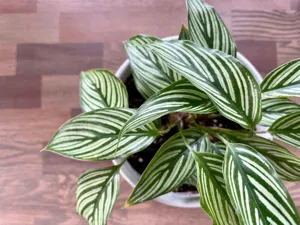
The plants that genuinely benefit from rainy season conditions with minimal intervention are ferns, Calathea, and Maranta species — humidity-lovers whose transpiration rates remain relatively constant across the temperature range and whose soil dries at a more predictable pace. These can be watered on a schedule that is only 20–25% reduced from their summer frequency rather than the 40–60% reduction required for succulents and aroids. For a complete understanding of how these humidity-dependent species respond to atmospheric moisture changes, the mechanisms covered in our [calathea humidity masterclass] remain the most relevant deep-dive available.
Recommended next actions
Next Best Actions
Move from reading to action with related calculators, plant profiles, and quiz-based recommendations.
Topic Guide
Watering
Learn everything about watering for your indoor and aquarium plants. Expert care tips, troubleshooting, and related guides.
Guide
Calathea Orbifolia Care: Tips for Big Striped Leaves
After cultivating over 50 Calatheas and maintaining high-humidity greenhouse environments for 5 years, we have mastered the art of keeping Calathea Orbifolia thriving indoors without brown edges.
Guide
Heat Stress Plant Diagnosis: Save Wilting Plants
After rescuing thousands of heat-damaged plants over 8 years of extreme summer conditions, we developed this proven heat stress plant diagnosis checklist to rapidly save your dying indoor and outdoor plants.
Topic Guide
Repotting
Learn everything about repotting for your indoor and aquarium plants. Expert care tips, troubleshooting, and related guides.
Frequently Asked Questions
Should I move my plants inside during the rainy season?
Why are my plant leaves turning yellow in the rainy season even though I haven't changed anything?
Is rainy season humidity good or bad for tropical houseplants?
How do I know if my plant is suffering from too much moisture or too little light during the rainy season?
Can I fertilize my houseplants during the rainy season?
What causes white fuzzy growth at the base of my plant during the rainy season?
My succulents survived summer but are rotting in the rainy season — why?
How do I prevent fungal problems on houseplants during the rainy season?
Explore More