Potted Olive & Patio Tree Summer Rescue: Saving Containers from Concrete Heat Scorch
When 'Is our olive tree saveable?' or 'Whats wrong with my Benji gold Gingko?' hits my inbox, I immediately ask about the patio surface. Concrete and brick can push root temps to lethal levels within hours. Here's the cooldown protocol.
Quick Answer
Yellowing leaves on a potted olive tree, peach, or ginkgo in summer are often caused by radiant heat from a concrete or brick patio baking the container, pushing root-zone temperatures above 38°C. Immediately elevate the pot on wooden blocks to allow airflow underneath, wrap the pot in reflective material, and water deeply in the early morning. Mulch the soil surface to retain moisture, and shade the pot or move it to morning-sun-only exposure.
Key Takeaways
- Elevate containers on pot feet to prevent heat transfer from baking concrete.
- Water container trees deeply in early morning before solar heat peaks.
- Provide afternoon shade or wrap pots in reflective insulation during heatwaves.
- Top-dress soil with organic mulch to conserve root-zone moisture.
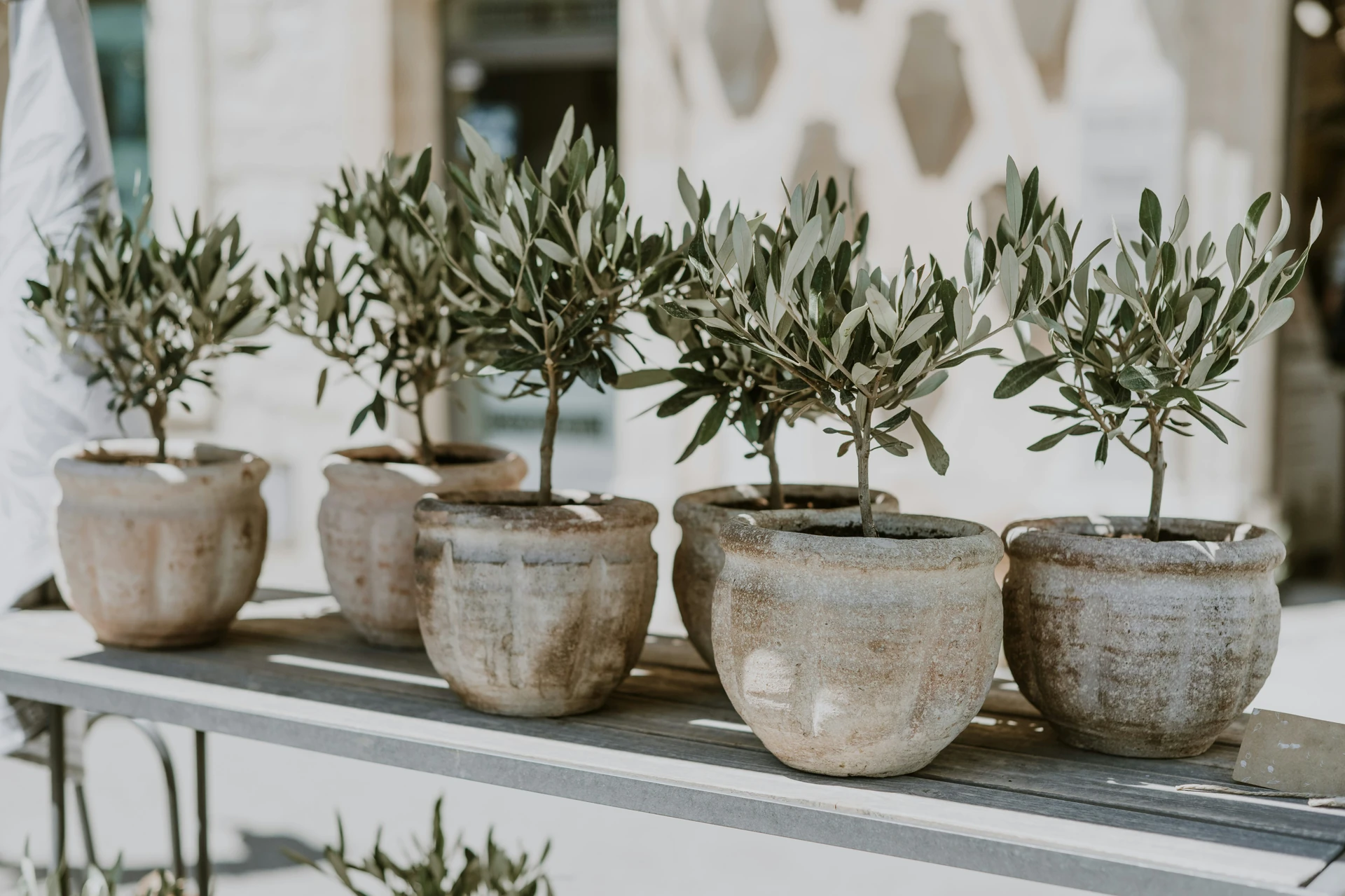
You placed your beautiful potted olive tree on the terrace for full sun, just like the nursery tag said. Now, in late June, the leaves are turning yellow, the edges are browning, and the tree looks exhausted. Your peach tree and ginkgo are showing the same symptoms. The problem isn’t the sun on the leaves—it’s the heat on the roots. A dark pot sitting directly on a concrete patio or brick terrace absorbs and radiates heat relentlessly, and on a 32°C (90°F) day, the root zone can exceed 40°C (104°F). At those temperatures, root cells die, nutrient uptake stops, and the canopy yellows. I’ve answered the “Is our olive tree saveable?” and “Peach tree needs help” panics more times than I can count. Yes, it’s saveable—if you cool the roots now.
Diagnosing Container Heat Scorch
Why are my potted olive tree leaves turning yellow in summer?
Olive trees are Mediterranean and love sun, but their roots in a container are far more vulnerable than those in the ground. When the pot sits on a surface that radiates heat—like concrete, brick, or dark tiles—the soil temperature can climb 10–15°C (18–27°F) above the air temperature. At 38°C (100°F), fine root hairs die. The tree responds by shutting down chlorophyll production in the oldest leaves, turning them yellow. Check the pot temperature with an infrared thermometer; if the pot surface is above 35°C (95°F), action is critical. First, elevate the pot at least 5 cm (2 inches) off the hot surface using wooden blocks, pot feet, or a metal stand. This single step can drop root temperature by 5–8°C (9–14°F). Use the Sunlight Calculator to measure the light intensity on your terrace; if the tree is getting direct afternoon sun on the pot itself, wrap the container in a reflective white cloth or cardboard to deflect heat. Our Watering Calculator will adjust your watering frequency—in extreme heat, you may need to water every 2–3 days with tepid water, but only if the soil is dry at 5 cm (2 inches) depth.
Immediate Insulation and Shade Tactics
How do I protect patio trees from concrete heat?
Insulate the pot physically. Wrap the outside of the container with bubble wrap, burlap, or even an old white towel; this creates an air gap that blocks radiant heat transfer. Double-potting—placing the existing pot inside a larger, light-colored container—also works well. For the soil surface, apply a 5 cm (2-inch) layer of organic mulch. PlantSolve’s Mulch Calculator can help you determine exactly how much bark or wood chips you need based on pot diameter, while our Compost Calculator can assist if you want to enrich the soil while insulating. The mulch layer acts like a roof for the soil, keeping it cooler and slowing evaporation. Shade the pot specifically, not necessarily the whole tree: a piece of white shade cloth draped over just the pot and tied loosely can reduce surface temperature by 10°C (18°F). In extreme cases, move the entire container to a location that receives morning sun only, until the heatwave passes. Water only in the early morning to avoid thermal shock. If leaves are already dropping, don’t prune them off—even yellowed leaves provide some shade for the bark. Wait until new growth appears to trim deadwood.
Recovery and Long-Term Health
Can a heat-stressed potted tree recover its leaves?
Yes, if the roots are still alive. To check, scrape a tiny piece of bark off a branch with your fingernail; if the underlying tissue is green, the branch is alive. The tree will likely drop its damaged leaves and push a new flush within 4–6 weeks once the root zone stabilizes. During this recovery, water consistently but carefully—the root mass is smaller and more sensitive to rot. Use the Watering Calculator to set a schedule based on the tree’s reduced canopy. Do not fertilize until you see new growth; a half‑strength liquid 10‑10‑10 can be applied after that. Our heat stress diagnosis guide provides a full timeline for leaf recovery and when to prune. For the future, repot into a light-colored, porous container like terracotta or a glazed ceramic in white, and always use pot feet. The larger the pot, the more thermal mass and the slower it heats—consider upsizing by 5–10 cm (2–4 inches) in diameter to buffer against temperature swings.
Patio Tree Cooling Methods Table
| Method | Temperature Reduction | Implementation |
|---|---|---|
| Elevate pot on feet/blocks | 5–8°C (9–14°F) | Wooden blocks, metal stand; minimum 5 cm (2 in) gap |
| Reflective pot wrap (white cloth) | 8–12°C (14–22°F) on pot surface | Wrap with white cardboard, burlap, or old towel; keep dry |
| Soil surface mulch (5 cm/2 in) | 3–5°C (5–9°F) in root zone | Bark, wood chips; use Mulch Calculator for quantity |
| Move to morning sun only | 10–15°C (18–27°F) peak reduction | Relocate pot; shade the pot specifically if you can't move the tree |
Recommended next actions
Next Best Actions
Move from reading to action with related calculators, plant profiles, and quiz-based recommendations.
Topic Guide
Watering
Learn everything about watering for your indoor and aquarium plants. Expert care tips, troubleshooting, and related guides.
Calculator
Plant Light Calculator: Find the Best Window for Your Plant
Determine the ideal indoor light placement for your plant based on species, window direction, and seasonal light availability.
Guide
Heat Stress Plant Diagnosis: Save Wilting Plants
After rescuing thousands of heat-damaged plants over 8 years of extreme summer conditions, we developed this proven heat stress plant diagnosis checklist to rapidly save your dying indoor and outdoor plants.
Frequently Asked Questions
Why are my potted olive tree leaves turning yellow in summer?
How do I protect patio trees from concrete heat?
Can a heat-stressed potted tree recover its leaves?
Explore More