False Shamrock Care: Fixing the Drooping & Managing Dormancy
The False Shamrock is a spectacular, deep-purple indoor plant famous for its 'dancing' leaves that open during the day and close at night. Understanding its dramatic dormancy cycle is key.
-
Difficulty
moderate
-
Light
Requires bright, indirect light to maintain its deep purple color. However, harsh afternoon sun will scorch the delicate leaves and cause the plant to collapse from heat stress.
-
Temperature
60°F - 75°F (15°C - 24°C)
-
Growth
fast
-
Humidity
40% - 60%
-
pH range
6.0 - 6.5
-
Biggest Owner Mistake
Continuing to water when the plant dies back in winter—oxalis naturally goes fully dormant even indoors, and the bulbs need a dry rest period to recharge. Watering dormant bulbs causes them to rot, destroying what would otherwise reliably regrow each spring.
-
What Nobody Tells You
The leaves close up at night and open during daylight as part of a circadian rhythm tied to light and temperature changes. If leaves stay closed during the day, it's a reliable signal of too-bright direct sun burning the tissue or of severe drought stress.
-
Real Home Conditions
In low indoor light, the rich purple color fades to a washed-out greenish hue and the leaf production slows significantly. Bright indirect light is what keeps the foliage a deep, saturated purple and the plant bushy.
Quick Answer
The False Shamrock is a dynamic plant whose leaves open in the sun and close at night. Keep it in bright indirect light, water when the top inch of soil is dry, and don't throw it away if it goes dormant.
Key Takeaways
- Provide bright, indirect sunlight to maintain deep purple leaf coloration.
- Allow the top inch of soil to dry out between thorough waterings.
- Observe normal nyctinastic movement as leaves fold down like umbrellas at night.
- Withhold water if the plant enters winter dormancy, resuming care when new shoots emerge.
Overview
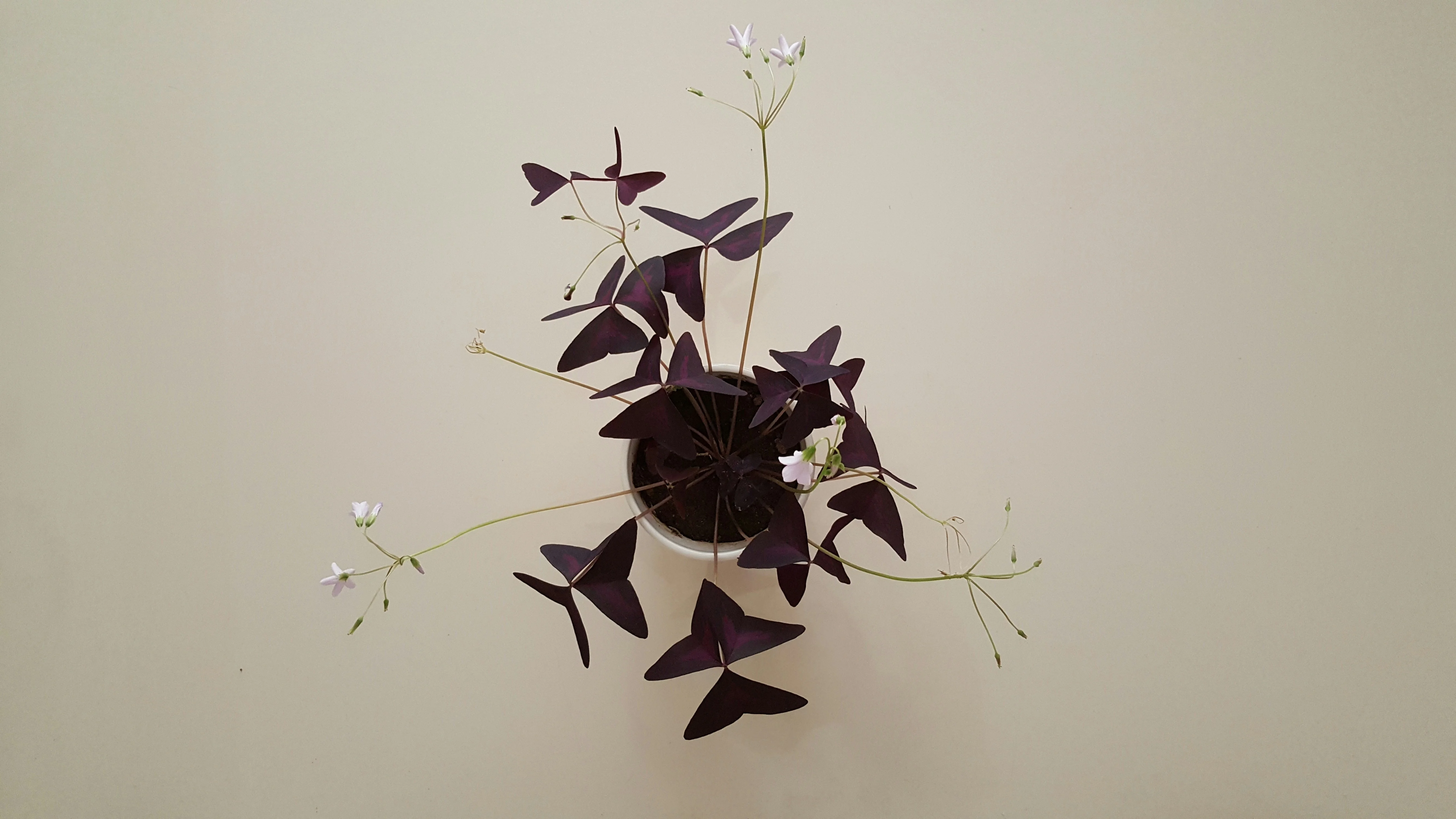
The False Shamrock (Oxalis triangularis), commonly known as the Purple Shamrock, is a truly captivating indoor plant. Native to the subtropical woodlands of Brazil, it features striking, deep-purple, triangular leaves that look like a flock of butterflies hovering over the pot.
Its most famous trait is its daily "dance." Through a process called nyctinasty, the plant is highly reactive to light. During the day, the leaves open wide to catch the sun; at night (or on very cloudy days), they fold down like closed umbrellas. While it is incredibly rewarding to grow, it frequently terrifies beginners due to its dramatic fainting spells and its habit of suddenly dying back to the soil line when stressed.
Light Requirements
To maintain that intense, dark purple color, the False Shamrock requires bright, indirect light. An east-facing window is ideal, as it will receive gentle morning sun but avoid the harsh afternoon rays. If you place it in a dim room, the stems will stretch out (become leggy), and the leaves will revert to a dull green color. Conversely, if you place it in a scorching, south-facing window without a sheer curtain, the delicate leaves will burn and collapse from heat stress.
Watering: The Dramatic Droop
Watering is a delicate balance. Allow the top inch of the soil to dry out before watering. If you forget to water it, the Oxalis will violently droop, collapsing over the edge of the pot. As long as you catch it within a day, a thorough soaking will cause the stems to stand back up within a few hours. However, do not overwater. The plant grows from small underground bulbs (corms), which will quickly rot if left sitting in stagnant, wet soil.
Temperature and Humidity
Unlike many tropical houseplants, Oxalis prefers it slightly cool. Ideal indoor temperatures range from 60°F to 75°F (15°C - 24°C). If the temperature regularly exceeds 80°F, the plant may assume it is experiencing a summer drought and trigger a dormancy phase, dropping all its leaves. It is not fussy about humidity and will do perfectly well in the standard dry air of centrally heated or air-conditioned homes.
Soil and Potting
A standard, rich indoor potting mix works perfectly. Ensure the pot has adequate drainage holes. Because the plant grows from small bulbs that multiply quickly beneath the soil, it looks best when many bulbs are crowded together in a wide, shallow pot. You only need to repot every few years when the bulbs completely fill the container.
The Dormancy Cycle: Don't Throw It Away!
The number one mistake people make with the False Shamrock is throwing it in the trash when it "dies." Oxalis is a bulbous perennial. In response to stress—whether that is intense heat, cold drafts, or a missed watering schedule—the plant will shut down. The stems will collapse, the leaves will shrivel, and the pot will look completely dead.
This is normal dormancy. If this happens, stop watering immediately. Cut away the dead foliage. Move the pot to a cool, dark place (like a closet or basement) and ignore it for 3 to 4 weeks. After it has rested, bring the pot back into the light and resume normal watering. Within days, you will see fresh new purple sprouts emerging from the soil.
Toxicity Warning
Oxalis triangularis is toxic to cats, dogs, and horses. It contains soluble calcium oxalates. While the bitter taste usually deters pets from eating large quantities, ingestion causes severe drooling, vomiting, and tremors. In massive quantities, it can lead to kidney failure. Keep it elevated and completely out of reach of curious pets.
Recommended next actions
Next Best Actions
Use calculators and guides to turn this plant profile into a practical care routine.
Topic Guide
Watering
Learn everything about watering for your indoor and aquarium plants. Expert care tips, troubleshooting, and related guides.
Plant Guide
Maranta Prayer Plant Care
After nurturing and propagating over 120 Maranta specimens in dry, centrally heated indoor environments over the past 8 years, we have cracked the code on preventing the notorious curled brown leaves and restoring the nightly prayer movement.
Guide
Wilting Houseplants: Is it Thirsty, Drowning, or Dying?
As horticulturists, we've found that the biggest mistake indoor gardeners make when seeing a wilted plant is blindly reaching for the watering can. We use a simple diagnostic matrix based on turgor pressure to determine exactly why a plant has collapsed.
Topic Guide
Heat Stress
Learn everything about heat stress for your indoor and aquarium plants. Expert care tips, troubleshooting, and related guides.
Structured Plant Data
Plant Data Profile
The following data is extracted directly from our botanical knowledge graph for accuracy and transparency.
Growth Characteristics
Growth Rate
fast
Mature Height
6-12 inches
Mature Spread
1-2 feet
Life Cycle
Perennial (goes dormant)
Flowering Season
Spring/Summer (produces delicate white or pale pink trumpet flowers)
Container Friendly
yes
Indoor Capable
yes
Environmental Parameters
| Parameter | Recommended | Survivable |
|---|---|---|
| Temperature | 60°F - 75°F (15°C - 24°C) | 50°F - 85°F (10°C - 29°C) |
| Humidity | 40% - 60% | 20% - 80% |
| Soil PH | 6.0 - 6.5 | 5.5 - 7.0 |
Lighting
Description
Requires bright, indirect light to maintain its deep purple color. However, harsh afternoon sun will scorch the delicate leaves and cause the plant to collapse from heat stress.
Nutrients
Nitrogen Demand
moderate
Phosphate Demand
high
Potassium Demand
moderate
Micronutrient Notes
Requires regular feeding during its active growth phase to support its massive leaf turnover.
Fertilizer Frequency
Every two weeks during spring and summer with a balanced liquid fertilizer.
Organic Options
Bone meal mixed into the soil during spring repotting.
Relationships
-
Heat Stress
Vulnerability | Strength 8
Oxalis prefers cooler indoor temperatures. If placed near a hot radiator or in blazing afternoon sun, it will completely collapse.
Plants That Move at Night Comparison
| Plant | Movement Type | Toxicity |
|---|---|---|
| False Shamrock (Oxalis) | Folds down like an umbrella | Toxic |
| Prayer Plant (Maranta) | Folds upward like praying hands | Non-Toxic |
| Calathea | Folds upward to reveal undersides | Non-Toxic |
Troubleshooting & Diagnostics Guide
1 Why does my Purple Shamrock close its leaves at night?
Diagnosis: Nyctinasty – normal movement
Treatment: No action; indicates health.
Prevention: None.
2 Why did my False Shamrock suddenly die?
Diagnosis: Dormancy – plant drops leaves in response to stress or seasonal change
Treatment: Stop watering; place in a cool, dark spot for a month; resume watering to restart growth.
Prevention: Allow dormancy; don't throw away.
3 Why is my plant completely flat and drooping during the day?
Diagnosis: Thirst or heat stress – not nyctinasty
Treatment: Water if soil is dry; move away from hot window.
Prevention: Maintain consistent moisture and avoid heat extremes.
4 Why are the purple leaves turning green?
Diagnosis: Low light – increased chlorophyll
Treatment: Move to brighter indirect light; new leaves will be purple.
Prevention: Provide bright indirect light.
Authoritative Resources
For additional peer-reviewed information on plant diseases, toxicity, and care, consult these trusted botanical and agricultural extensions:
Glossary of Terms
- Nyctinasty
- The circadian rhythmic nastic movement of higher plants in response to the onset of darkness. Famous in Prayer Plants and Oxalis.
- Corm
- A short, vertical, swollen underground plant stem that serves as a storage organ used by some plants to survive winter or summer drought.
Frequently Asked Questions
Why does my Purple Shamrock close its leaves at night?
Why did my False Shamrock suddenly die?
Is the Purple Shamrock toxic to cats and dogs?
Why is my plant completely flat and drooping during the day?
Why are the purple leaves turning green?
Sources & References
-
Source: powo.science.kew.org
-
Source: edis.ifas.ufl.edu
Explore More