How to Clean Houseplant Leaves: Maximizing Transpiration in Peak Growth Season
After reviving countless dull, dusty houseplants in western homes, I’ll show you exactly how to wipe, rinse, or mist leaves for a 20–30% photosynthesis boost—without damaging delicate surfaces.
Quick Answer
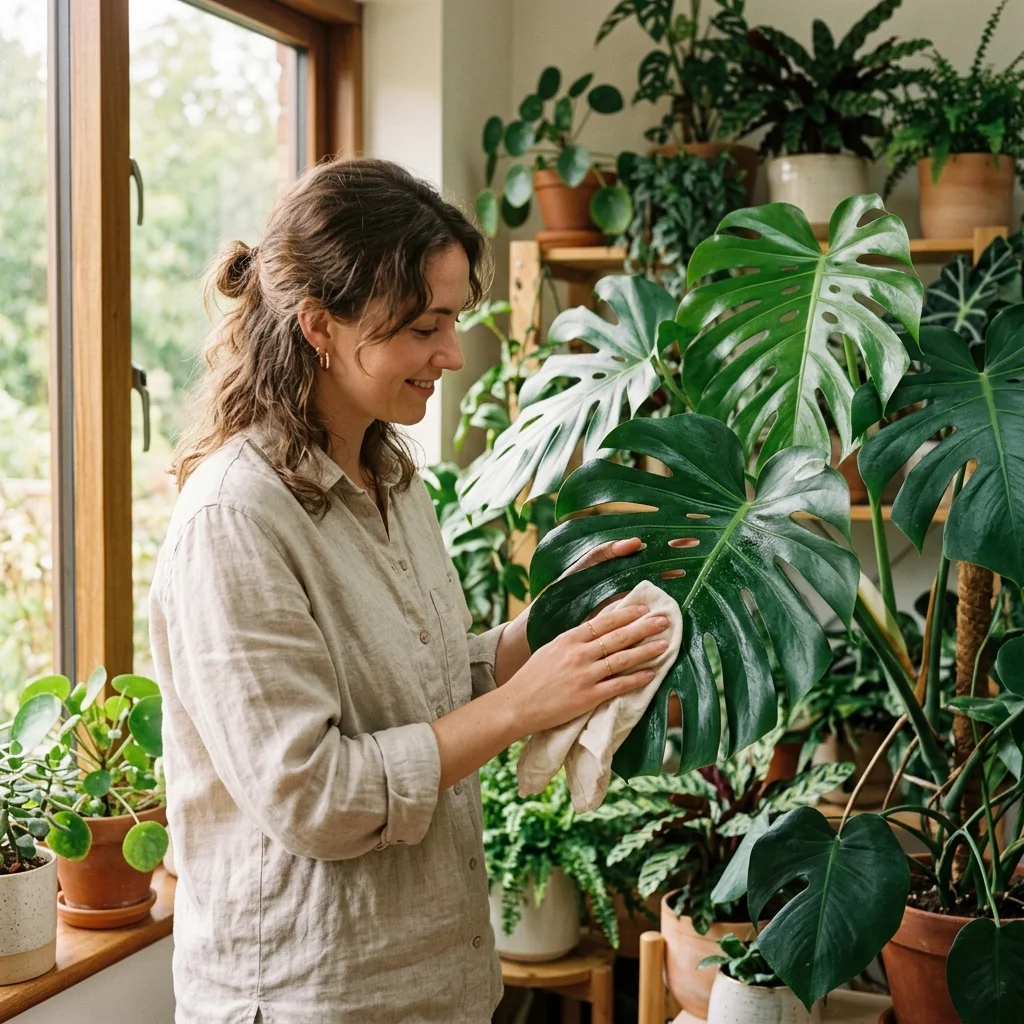
Clean houseplant leaves every 2–4 weeks in summer by gently wiping both sides with a damp microfiber cloth, supporting the leaf from underneath. For large plants, use a lukewarm shower spray (22°C/72°F) and let the pot drain fully. Avoid commercial leaf shine sprays—they clog stomata with silicones. A diluted neem oil solution (5 ml per liter) removes stubborn residue and repels pests. Clean leaves can increase photosynthesis by 20–30%.
Key Takeaways
- Wipe foliage gently with damp microfiber cloths to clear dust from stomata.
- Rinse large specimens under lukewarm shower sprays during active growth.
- Avoid commercial mineral oil and leaf-shine products that clog leaf pores.
- Support undersides of leaves during wiping to prevent mechanical stem tearing.
You haven’t dusted your Fiddle Leaf Fig in months, and it shows—the leaves look dull, growth has stalled, and you’re wondering why it’s dropping lower leaves even though you water perfectly. A layer of dust 0.5 mm thick can block 20–30% of photosynthetically active radiation, choking off the plant’s ability to cool itself through transpiration when it needs it most. I’ve measured light levels before and after cleaning in hundreds of homes: a clean leaf can receive 200–300 more foot‑candles of usable light than a dusty one. In summer, when stomata are wide open and water demand peaks, that difference is the gap between thriving and barely surviving. Here’s exactly how to clean every type of leaf safely and frequently enough to keep respiration at its peak.
The Science of Leaf Dust and Transpiration
How much does dust really reduce plant growth?
Dust blocks light, plugs stomata, and slows gas exchange. Research shows that a dust layer of just 1 g/m² can reduce photosynthesis by 25–30%. In an apartment with open summer windows, road dust, construction particulates, and HVAC fibers accumulate rapidly on the horizontal leaf surfaces of Ficus, Monstera, and Philodendron. Use the Sunlight Calculator to measure light at leaf level before and after cleaning—you’ll often see an increase of 150–300 fc. For a plant already light‑starved in a 100 fc corner, that boost can mean the difference between slow decline and active growth. A clean leaf also transpires more efficiently, pulling water and nutrients from the roots and cooling itself during heatwaves.
Cleaning Methods and Tools
What's the best cloth to clean plant leaves?
A soft, lint‑free microfiber cloth, slightly dampened with distilled or filtered water, is the gold standard. Microfiber traps dust without scratching the waxy cuticle. Always support the leaf with your free hand behind it to avoid bending or cracking. Wipe from the stem outward, then follow with a dry microfiber to buff. For textured or ridged leaves like those of Alocasia or Bird of Paradise, a soft‑bristled paintbrush or makeup brush dipped in water can reach crevices. Never use paper towels—they leave microscopic fibers that trap dust faster. If you’re dealing with sticky sap residue or hard water spots, a solution of 5 ml pure neem oil per liter of warm water works as a gentle solvent and adds a pest‑repelling bonus. Wipe away any excess oil to prevent light magnification.
Can I use a shower to clean large plants?
Yes, and it’s the most efficient method for large floor plants. Place the pot in a bathtub or shower stall. Use a handheld showerhead set to lukewarm (22°C/72°F) with gentle pressure. Tilt the pot at a 45‑degree angle so the water runs off the leaves and out of the pot, not into the soil. Rotate the plant to hit all angles. Afterward, let it drain in the tub for 30 minutes. Avoid doing this with plants in heavy, moisture‑retentive soil that will stay waterlogged; if the pot has no drainage, don’t shower it. This method also dislodges spider mites and their webbing. For a plant profile that benefits greatly from regular leaf cleaning, our Fiddle Leaf Fig care guide details how its broad leaves are dust magnets.
Avoiding Leaf Damage and Shine Products
Is leaf shine spray safe for houseplants?
No. Most commercial leaf shine products contain silicones, oils, or waxes that create an impermeable film. While they make leaves look glossy, they physically block the stomata—the tiny pores that regulate transpiration and gas exchange. A plant coated in leaf shine may look healthy for weeks but will gradually suffocate and stop growing. If you want a natural shine, after dusting with a damp cloth, buff gently with a dry microfiber. For an organic gloss, a very light mist of a water‑and‑neem oil solution (2 ml neem per liter) buffed dry gives a subtle lustre without clogging. And if you see tiny moving dots or webbing while cleaning, refer to our spider mites on houseplants guide for pest control methods that won’t harm leaves.
Seasonal Cleaning Schedule Table
| Plant Type | Summer Cleaning Frequency | Winter Frequency | Best Method |
|---|---|---|---|
| Large, broad leaves (Ficus, Monstera) | Every 2 weeks | Monthly | Microfiber cloth, both sides |
| Small leaves (Pothos, Philodendron) | Every 3–4 weeks | Every 6 weeks | Shower or gentle spray bottle |
| Fuzzy leaves (African Violet, Peperomia) | Light brush every 4 weeks | Minimal | Soft dry brush, no water |
| Spiky/succulents (Snake, Aloe) | Every 4 weeks | Monthly | Damp microfiber, careful of tips |
How often should I clean leaves in summer vs winter?
In summer, when windows are open, AC is running, and construction dust is airborne, clean broad‑leaved plants every 2 weeks. In winter, when windows are shut and dust is primarily from fabric and skin cells, monthly cleaning suffices. However, if your home uses forced‑air heating, winter dust can be just as bad—check leaves by running a finger across the surface. If you can see dust on your fingertip, it’s time. Regular cleaning also lets you inspect for early pest signs; catching spider mites before webbing appears is the key to a quick, no‑chemical fix.
Recommended next actions
Next Best Actions
Move from reading to action with related calculators, plant profiles, and quiz-based recommendations.
Calculator
Plant Light Calculator: Find the Best Window for Your Plant
Determine the ideal indoor light placement for your plant based on species, window direction, and seasonal light availability.
Guide
Fiddle Leaf Fig Care Guide: Stop the Leaf Drop for Good
After growing and recovering fiddle leaf figs across eight years — including plants that dropped half their leaves the week after purchase — we've identified the exact triggers behind leaf drop and the straightforward conditions that keep Ficus lyrata thriving long-term.
Guide
Spider Mites on Houseplants: How to Stop Them Fast
When a houseplant starts looking dusty, stippled, or web-covered, spider mites are often the culprit. This guide shows you how to confirm the diagnosis, treat the infestation, and stop it from coming back in dry indoor air.
Frequently Asked Questions
How much does dust really reduce plant growth?
What's the best cloth to clean plant leaves?
Can I use a shower to clean large plants?
Is leaf shine spray safe for houseplants?
How often should I clean leaves in summer vs winter?
Explore More