How Long Can a Plant Go Without Water? Species-by-Species Breakdown
Clear timeframes for every major houseplant category, explaining how long your species can survive unwatered and how to stretch those limits while away.
Quick Answer
Most houseplants can go 1–2 weeks without water. Snake plants and ZZ plants last 3–4 weeks, pothos and spider plants 10–14 days, and calatheas and peace lilies only 3–7 days. Heating and AC shorten all of these.
Key Takeaways
- Expect succulent and rhizomatous species like Snake Plants and ZZ Plants to survive 3 to 4 weeks unwatered.
- Recognize that thin-leaved tropicals may wilt permanently within 3 to 7 days.
- Move plants away from hot windows to slow down overall transpiration rates.
- Saturate root zones completely before leaving for short travel trips.
How Long Can Houseplants Go Without Water?
Most houseplants can go 1–2 weeks without water. Snake plants and ZZ plants last 3–4 weeks, pothos and spider plants 10–14 days, and calatheas and peace lilies only 3–7 days. Heating and AC shorten all of these.
| Time without water (stable home) | Typical plants | What to do before you leave |
|---|---|---|
| 3–7 days | Calathea, Maranta, Peace Lily, Maidenhair and Boston ferns | Arrange a plant sitter or a tested self-watering spike, and move pots well away from airflow vents |
| 10–14 days | Pothos, Monstera, Philodendron, Spider Plant, Fiddle Leaf Fig | Water thoroughly until drainage runs clear, group pots together to boost local humidity, and pull them 3–5 feet back from bright glass |
| 3–4 weeks | ZZ Plant, Snake Plant (Sansevieria), Jade Plant, succulents and desert cacti | Water deeply 24 hours prior, position in moderate indirect light, and avoid self-watering spikes that risk overwatering |
These are practical planning estimates for healthy plants watered thoroughly before departure. To determine your container's exact dry-down timeline based on pot size, soil composition, and seasonal room climate, use our interactive Plant Watering Frequency Calculator.
The most dangerous factor when leaving houseplants unattended is not simply that they might dry out — it is that environmental conditions during your absence can shift dramatically. When central AC or heating runs continuously while blinds remain shut and fans stay off, a plant that normally thrives on a 7-day watering cycle can become completely depleted in 4 days. Conversely, over-compensating with standing water before leaving frequently causes anaerobic root suffocation (see our guide on how to fix an overwatered plant). The survival windows below reflect how different species store moisture in their stems, leaves and root systems, tempered by real-world indoor microclimates.
Survival Windows by Plant Type
How long can a snake plant go without water?
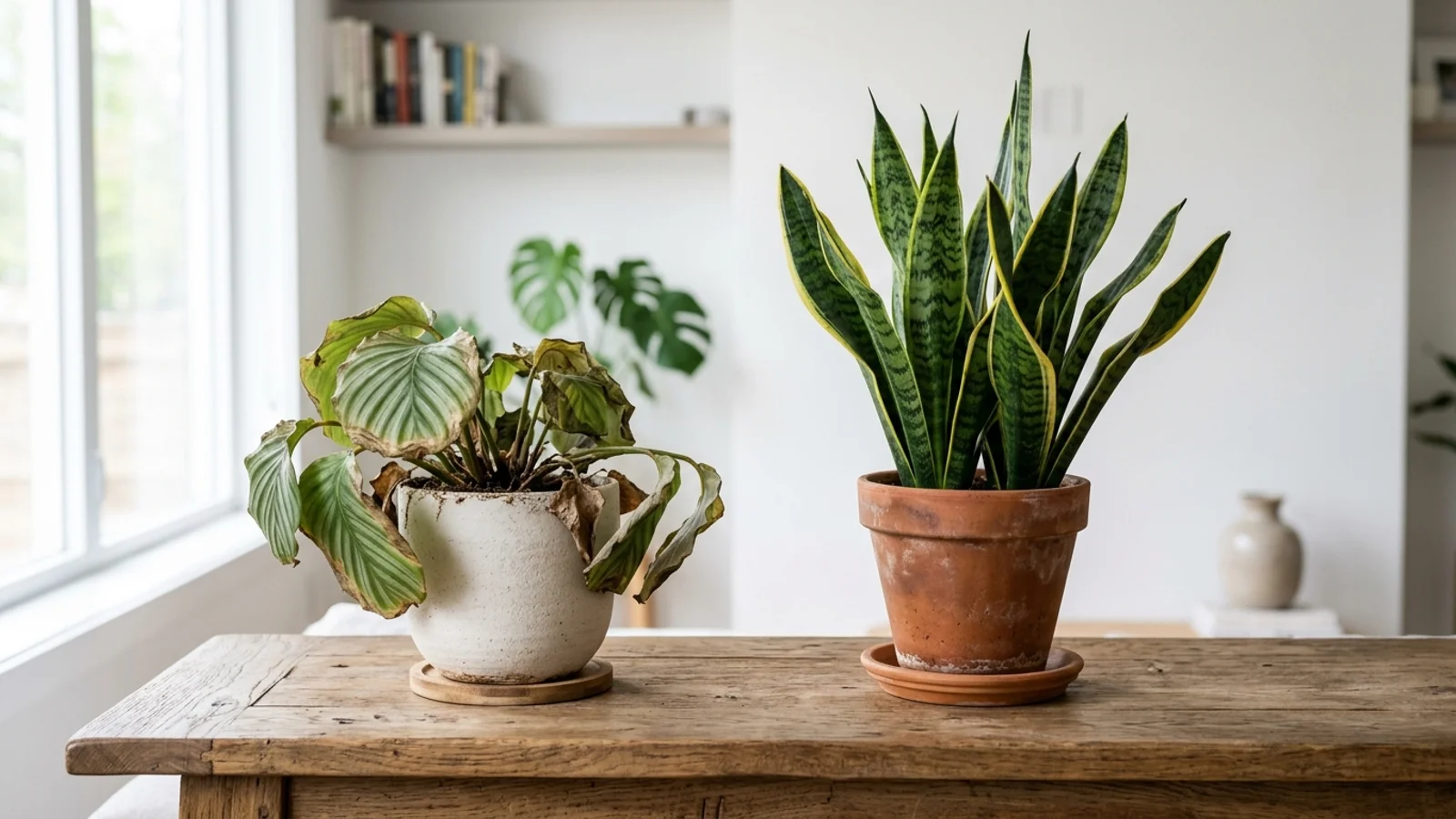
A snake plant (Sansevieria / Dracaena trifasciata) can go 3–4 weeks without water in stable indoor conditions, and 2–3 weeks in a heated or air-conditioned home. Its thick leaves store water, so overwatering is a bigger risk than drought. Water deeply before you leave and skip self-watering spikes.
How long can a ZZ plant go without water?
A ZZ plant (Zamioculcas zamiifolia) can go 3–4 weeks without water, and up to 5 in cool, shaded rooms. It stores moisture in thick underground rhizomes and fleshy stems, so a trip under two weeks needs no preparation beyond a good watering beforehand.
Which indoor plants struggle most quickly without water?
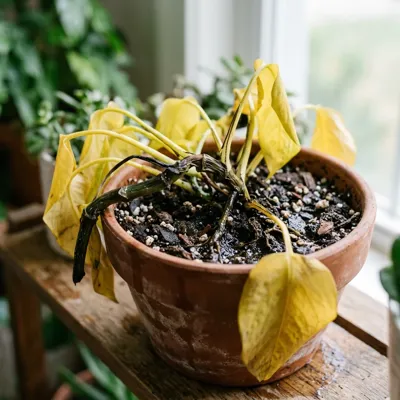
Calathea and Maranta prayer plants display severe foliage curl, wilting and crispy brown margins within 4–6 days without water, and sooner in low-humidity air-conditioned spaces. Peace Lilies (Spathiphyllum) are famous for dramatic, rapid foliage collapse within 5–7 days without moisture, though they generally revive if rehydrated before tissue necrosis sets in. Maidenhair Ferns (Adiantum) are among the most delicate houseplants: their ultra-fine fronds can suffer irreversible desiccation and dieback within 48 hours of their potting medium drying out.
How does central heating or AC change these survival windows?
Winter heating systems frequently drive relative indoor humidity down from a baseline of 45–50% to an arid 20–30%, which accelerates transpiration rates and cuts soil drying times in half. A vigorous Pothos or Philodendron that needs water every 7–8 days in temperate weather may dry out completely in just 4 days during peak heating months. Summer air conditioning produces a comparable drying draft. Always evaluate ambient HVAC airflow and relative humidity rather than thermostat temperature alone when estimating unattended survival limits.
Survival Windows by Species
| Plant | Stable Conditions | AC/Heated Home | Near a Vent | Emergency Tip |
|---|---|---|---|---|
| Snake Plant | 3–4 weeks | 2–3 weeks | 10–14 days | Glazed ceramic or plastic nursery pots slow evaporation; unglazed terracotta dries significantly faster |
| ZZ Plant | 3–4 weeks | 2–3 weeks | 10–14 days | Virtually zero intervention required; keep out of direct sun |
| Pothos | 10–14 days | 7–10 days | 5–7 days | Group with neighboring plants on a pebble humidity tray |
| Spider Plant | 10–14 days | 7–10 days | 4–6 days | Expect brown leaf tips if it dries out; use filtered or rainwater if you can |
| Monstera | 10–14 days | 7–10 days | 5–7 days | Pull back from bright glass and water thoroughly before leaving |
| Peace Lily | 5–7 days | 3–5 days | 2–3 days | Set up a calibrated capillary wick or terracotta watering cone |
| Calathea | 4–6 days | 3–4 days | 1–2 days | Isolate away from draft corridors and shield with sheer curtains |
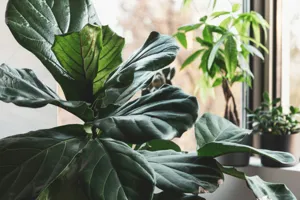
| Fiddle Leaf Fig | 7–10 days | 5–7 days | 4–5 days | Step back 3 feet from direct window glare; avoid relocating to dark hallways |
How to Extend Survival Before You Leave
Does grouping plants together actually help?
Yes, significantly. Clustering multiple leafy houseplants close together creates a shared microclimate. As foliage transpires, localized relative humidity rises around the cluster, slowing the rate at which surrounding air pulls moisture from leaves and topsoil. Setting grouped pots atop a wide, pebble-filled tray filled with water (keeping container drainage holes safely above the water line) provides additional passive humidity, buying moisture-sensitive species like Calatheas and ferns several critical extra days.
What is the most effective self-watering method for travel?
Sub-irrigation terracotta cones attached to water reservoirs provide reliable passive delivery for trips lasting 7–14 days. Delivery rates vary based on soil porosity, reservoir head height and pot diameter, so larger pots (10 inches or wider) may require dual cones or a slow-release gravity bottle system. Braided cotton wicking cords routed from an elevated water vessel offer an economical DIY alternative for small-to-midsize collections. Whichever mechanism you choose, test the system 5–7 days before your departure to confirm water flow matches plant uptake without flooding the root zone. If your potting soil has become too dense or waterlogged, check our Custom Potting Mix Calculator to mix in proper perlite or pumice aeration.
Is there a counterintuitive approach to plant survival that most people miss?
Yes — pulling your houseplants back from bright windows is one of the most effective yet frequently overlooked travel tactics. Direct solar irradiance elevates leaf temperatures and sharply accelerates soil evaporation. Moving containers 3 to 6 feet back into the interior of the room or pulling a sheer curtain reduces light intensity just enough to slow photosynthetic transpiration without plunging the plant into stress-inducing dark shock. This is particularly vital along south- and west-facing exposures where afternoon thermal gain can bake root zones dry in unmonitored rooms.
Recommended next actions
Next Best Actions
Move from reading to action with related calculators, plant profiles, and quiz-based recommendations.
Topic Guide
Watering
Learn everything about watering for your indoor and aquarium plants. Expert care tips, troubleshooting, and related guides.
Plant Guide
ZZ Plant
Is your ZZ plant turning yellow this summer? Learn how excess moisture trapped in rhizomes during heat causes yellowing — and how to diagnose and fix it.
Plant Guide
Snake Plant
Expert care guide and diagnostic data for the Snake Plant. Learn how to properly water, light, and troubleshoot common issues.
Guide
Yellow Houseplant Leaves: Diagnose & Fix Guide 2026
After diagnosing hundreds of yellow-leaf cases across dozens of plant species, we've mapped the ten distinct causes that look nearly identical at first glance — and built the only systematic guide that tells you not just what's wrong, but exactly how to confirm it and fix it.
Frequently Asked Questions
How long can a snake plant go without water?
How long can a ZZ plant go without water?
How long can a spider plant go without water?
How long can a pothos go without water?
Can indoor plants survive 2 weeks without water?
What happens to indoor plants without water for a month?
How do I keep plants alive for 3 weeks without a sitter?
Does the type of pot affect how long plants survive without water?
Explore More