Coffee Grounds for Houseplants: Do They Actually Work?
Are coffee grounds good for houseplants? Learn what used coffee grounds actually add, why thick layers can cause problems, and safer ways to reuse them.
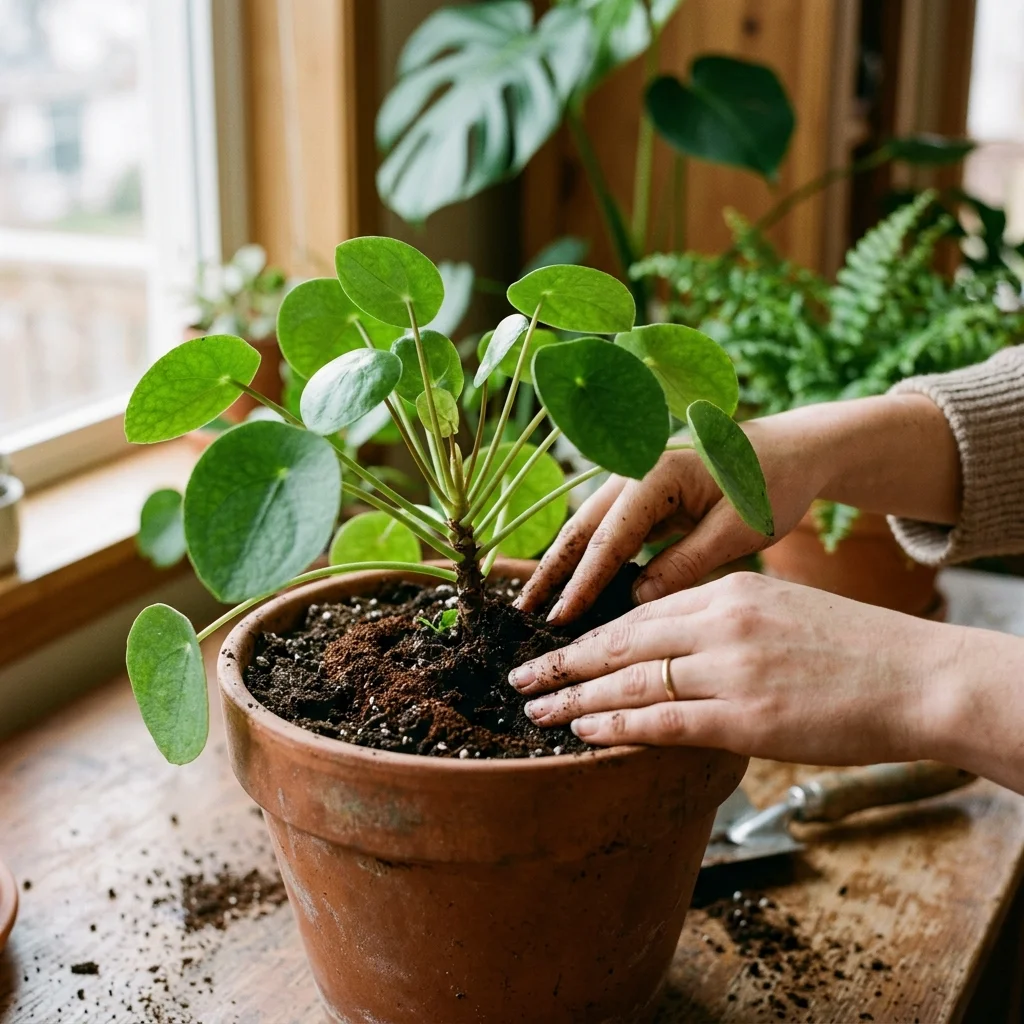
Quick Answer
Used coffee grounds are not a complete houseplant fertilizer and should not be applied as a thick, wet layer to indoor potting mix. They contain organic matter and some nutrients, released gradually as the grounds decompose. Thick layers can stay wet, reduce air exchange, and encourage mold or fungus gnats. For indoor plants, finished compost containing coffee grounds is a safer amendment; if used directly, mix a small amount thoroughly into the medium rather than leaving it on the surface.
Key Takeaways
- Used coffee grounds contain organic matter and some nutrients, but they are not a complete or immediately available houseplant fertilizer.
- Do not apply a thick layer of wet coffee grounds to the surface of indoor potting mix.
- Coffee grounds are not reliably acidic enough to be used as a method for lowering potting-soil pH.
- Composting coffee grounds with other organic materials is generally a better way to recycle them for later use as a soil amendment.
- If used directly, apply only a small amount and mix it into an appropriate growing medium rather than creating a surface crust.
Quick Facts
- Nutrient value Used coffee grounds contain organic matter and nutrients, including nitrogen, but are not a complete fertilizer
- Best indoor use Use finished compost containing coffee grounds as a soil amendment rather than relying on raw grounds as fertilizer
- Surface application Avoid thick layers of wet grounds because they can stay moist, form a dense surface layer, and encourage mold or fungus gnats
- Soil pH Used coffee grounds are generally not acidic enough to reliably lower potting-mix pH
- Fertilizer replacement Coffee grounds should not replace a complete houseplant fertilizer when plants require supplemental nutrients
- Safer approach Compost coffee grounds with other organic materials before using the finished compost around plants
What Should I Do?
You want to put used coffee grounds directly on indoor potting soil
You want to recycle a large quantity of coffee grounds
Your houseplant appears nutrient deficient
You are trying to make potting soil more acidic
You already added a thick layer of wet coffee grounds and see mold or fungus gnats
You want a natural fertilizer for regular houseplant feeding
Coffee Grounds for Houseplants: Which Approach Is Best?
| Method | Best Use | Main Benefit | Main Risk | Recommendation |
|---|---|---|---|---|
| Thick layer of wet grounds | Not recommended for indoor containers | Adds organic material | Can remain wet, form a dense surface layer, and encourage mold or fungus gnats | Avoid |
| Small amount mixed into potting mix | Occasional soil amendment when appropriate | Adds organic material gradually as it decomposes | Excess can affect physical properties of the growing medium | Use sparingly |
| Finished compost containing coffee grounds | Organic-matter amendment | Grounds have already decomposed with other compost materials | Excess compost can alter drainage and nutrient balance | Preferred approach |
| Diluted brewed coffee | Not a routine fertilizer substitute | Provides some soluble compounds | Nutrient concentration is inconsistent and unsuitable as a complete fertilizer | Do not rely on it for plant nutrition |
| Complete houseplant fertilizer | Plants requiring supplemental nutrition | Provides nutrients in a predictable formulation | Overfertilization can damage roots | Best choice when fertilization is needed |
Are Coffee Grounds Actually Good for Houseplants?
Used coffee grounds are often described as a free nitrogen-rich fertilizer, but that description is misleading. Coffee grounds contain organic matter and nutrients, including nitrogen, but much of that nitrogen is part of organic compounds that must decompose before nutrients become available to plants. Used grounds therefore should not be treated as a complete, immediately available fertilizer.
For indoor container plants, the biggest problem is often not the nutrient content but how the grounds are applied. A thick layer of wet grounds can remain moist, form a dense surface layer, interfere with air exchange at the soil surface, and create conditions favorable to mold and fungus gnats.
What Coffee Grounds Actually Add
Used coffee grounds contribute organic matter and contain measurable amounts of nutrients. However, the exact nutrient contribution depends on the coffee, brewing process, and how the grounds are used. They do not provide a predictable balance of essential nutrients comparable to a formulated houseplant fertilizer.
Because the nutrients are released as organic material decomposes, coffee grounds are better viewed as an organic soil amendment than as a fast-acting fertilizer.
Why Thick Layers Can Cause Problems Indoors
Applying a thick layer of wet grounds to the surface of a container is particularly problematic.
- Surface compaction: A dense layer can reduce air exchange at the surface of the growing medium.
- Excess moisture: Wet organic material can stay damp for an extended period, especially in low-light indoor conditions.
- Mold: Fungi can colonize decomposing organic material. Surface mold is usually a sign of favorable moisture and organic-matter conditions rather than evidence that coffee is feeding the plant.
- Fungus gnats: Persistently moist organic material can contribute to conditions that favor fungus gnat activity.
- Unpredictable nutrition: The nutrient contribution is not consistent enough to replace a balanced fertilizer.
Do Coffee Grounds Make Soil Acidic?
Used coffee grounds are often assumed to be strongly acidic because brewed coffee is acidic. However, most of the acidity is extracted during brewing. Used grounds are generally only mildly acidic to near neutral, depending on the material and brewing process, and they should not be relied upon to substantially lower the pH of potting mix.
If a plant requires a particular soil pH, test the growing medium and use an appropriate amendment rather than guessing with coffee grounds.
Better Option: Compost the Coffee Grounds
Composting is one of the most useful ways to recycle used coffee grounds. Combine them with a balanced mixture of other compostable materials and allow the material to decompose properly. The finished compost can then be incorporated into an appropriate growing medium or used as an amendment where suitable.
Compost should still be used in moderation in containers. Too much organic amendment can alter drainage, aeration, and moisture retention, which are especially important for houseplants.
What About Coffee Ground Tea?
Brewing used coffee grounds in water and applying the resulting liquid is sometimes promoted as a fertilizer. However, the nutrient concentration is variable and there is no reliable standard concentration that makes homemade coffee-ground tea equivalent to a complete fertilizer.
If your goal is to provide predictable nutrition, a properly formulated houseplant fertilizer is a more dependable option. If your goal is simply to recycle coffee waste, composting is generally more useful than repeatedly making a homemade fertilizer from the grounds.
If You Still Want to Use Coffee Grounds Directly
If you choose to use used coffee grounds directly, avoid dumping a thick layer onto the soil surface. Use a small amount and incorporate it thoroughly into a suitable growing medium rather than creating a concentrated layer around the plant's stem.
Do not assume that more grounds means more nutrition. Container plants have limited root volume, and excessive organic material can change the physical properties of the growing medium.
Coffee Grounds vs. Houseplant Fertilizer
Coffee grounds and fertilizer serve different purposes. Coffee grounds are an organic material whose nutrients become available gradually as they decompose. A complete houseplant fertilizer is formulated to provide essential nutrients in known proportions and is therefore much more predictable when a plant actually needs supplemental feeding.
For healthy houseplants, focus first on appropriate light, watering, drainage, and growing medium. Fertilize according to the plant's needs rather than using coffee grounds simply because they are available.
What to Do If You Already Added Coffee Grounds
If you have added a thick layer of wet grounds and the surface has developed mold or remains persistently wet, remove the excess material from the surface. Then reassess the plant's watering and drainage conditions.
Do not automatically repot a healthy plant solely because a small amount of surface mold appeared. Address the moisture and organic-material conditions first, while monitoring the plant for declining growth, persistent wetness, or root problems.
Bottom Line
Coffee grounds are not a miracle houseplant fertilizer. Used grounds can contribute organic matter and nutrients, but their nutrient release is slow and unpredictable. For indoor plants, thick layers of wet grounds can create moisture and aeration problems and may encourage mold or fungus gnats. Composting the grounds first is generally the better recycling strategy, while a complete houseplant fertilizer is the more reliable choice when a plant actually needs supplemental nutrients.
Frequently Asked Questions
Are coffee grounds good for houseplants?
Can I put coffee grounds directly on houseplant soil?
Do coffee grounds make houseplant soil acidic?
Do coffee grounds provide nitrogen to plants?
Can coffee grounds cause mold on houseplant soil?
Do coffee grounds attract fungus gnats?
Can I use coffee grounds instead of houseplant fertilizer?
Is composted coffee grounds better than fresh coffee grounds for houseplants?
Sources & References
-
Source: extension.oregonstate.edu
Type: extension
-
Source: extension.unh.edu
Type: extension