Triangle Fig Care: Prevent Leaf Drop
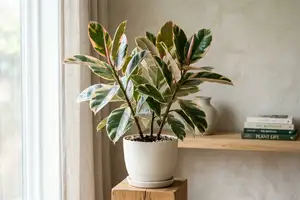
The Variegated Triangle Fig is a stunning, slow-growing tree famous for its perfectly triangular, deeply variegated leaves. However, it is an extreme diva that will drop all its leaves if moved.
-
Difficulty
advanced
-
Light
Requires massive amounts of bright, indirect light to maintain its heavy white variegation. Low light is an absolute death sentence and will cause the tree to drop every single leaf.
-
Temperature
65°F - 85°F (18°C - 29°C)
-
Growth
slow
-
Humidity
50% - 70%
-
pH range
6.0 - 6.5
-
Biggest Owner Mistake
Overwatering because the unusual triangular leaves make owners curious and attentive—but those thick leaves store water, and the tree drops leaves rapidly when roots sit in soggy soil. Let the top half of the soil dry out before watering again.
-
What Nobody Tells You
It's an exceptionally slow grower that can remain in the same pot comfortably for several years—frequent repotting disrupts the roots unnecessarily and often triggers a leaf-dropping response. Only repot when roots are visibly circling or escaping the drainage holes.
-
Real Home Conditions
In low light, the stiff triangular leaves lose their firmness and become noticeably floppy, and the plant's sculptural quality disappears. Bright indirect light is what keeps the leaves rigid and the unusual shape well-defined.
Quick Answer
The Variegated Triangle Fig drops its leaves anytime it is moved or watered inconsistently. Find a spot with intense bright light, water when the top 2-3 inches of soil are dry, and never move the pot once settled. For best results, we suggest keeping an eye on the plant's response throughout the active growing season.
Key Takeaways
- Provide bright, indirect sunlight to protect unique triangular foliage.
- Allow the top 2 inches of potting mix to dry before watering thoroughly.
- Avoid relocating the plant, which often triggers rapid acclimation leaf drop.
- Shield variegated forms from intense midday sun to prevent foliar scorch.
Overview
If you love the drama of a Fiddle Leaf Fig but want something smaller and more uniquely shaped, the Variegated Triangle Fig (Ficus triangularis 'Variegata') is the perfect candidate. Native to South Africa, it produces a dense canopy of thick, perfectly triangular, heart-shaped leaves. In the variegated form, the deep green centers are heavily bordered with stunning, irregular splashes of bright white and cream.
However, this beauty comes at a high cost. It is arguably one of the most dramatic, unforgiving plants you can bring into your home. It demands stability above all else. A slight change in watering, a cold draft, or simply moving the pot a few feet across the room will trigger a massive stress response, causing the tree to instantly drop all of its leaves. Growing it successfully requires finding the perfect, incredibly bright spot, and then leaving it alone forever.
The Leaf Drop Phenomenon: Don't Panic!
If you just bought a Triangle Fig and brought it home, it is going to drop leaves. This is unavoidable. Ficus trees calibrate their leaves to perfectly match the exact angle and intensity of the light they receive.
When you move the tree, the light hits the leaves differently. The tree realizes the old leaves are no longer operating at peak efficiency, so it ruthlessly severs them. Do not panic, and do not overwater it in an attempt to "save" it. Leave the bare tree exactly where it is. Within 3 to 4 weeks, the tree will acclimate and grow a completely new set of leaves adapted for its new home.
Light Requirements: Maximum Brightness
Because the leaves are heavily variegated with white (which contains zero chlorophyll), the green sections must work overtime to feed the plant. The Triangle Fig requires massive amounts of bright, indirect light. It should be placed directly in front of a large, unobstructed south or west-facing window.
If you place this tree in a dark corner, the canopy will rapidly thin out. The tree simply cannot support leaves if it is not receiving enough solar energy. However, be careful with blazing, direct afternoon sun, as it can scorch the delicate white sections of the leaves.
Watering: Consistency is Key
While moving the plant causes green leaves to drop, watering mistakes cause yellow leaves to drop. The Triangle Fig likes its soil to be kept evenly moist but never soggy. Allow the top 2 to 3 inches of the soil to dry out completely before watering.
When you water, soak the pot thoroughly until water drains out the bottom. Do not let the tree sit in a tray of standing water. Consistency is critical. If you let the tree become bone-dry, it will drop leaves. If you overwater it and drown the roots, it will drop leaves.
Temperature and Drafts
This is a tropical tree that requires temperatures between 65°F and 85°F (18°C - 29°C). Keep it away from exterior doors, drafty windows, and especially air conditioning vents. A sudden blast of cold air will trigger immediate leaf drop.
Soil and Potting
A fast-draining potting mix is essential. Use a high-quality indoor potting soil heavily amended with perlite and some orchid bark to ensure excellent drainage. Triangle Figs grow very slowly indoors, so only repot every 2 to 3 years into a pot that is only 1-2 inches wider than the previous one.
Toxicity Warning
Like all plants in the Ficus genus, when a leaf is pulled off or a branch is cut, the tree bleeds a thick, milky white latex sap. This sap is toxic to cats and dogs, causing intense oral irritation and vomiting. It is also highly irritating to human skin. If you get the sap on your hands while pruning, wash it off immediately with soap and hot water to prevent a rash.
Recommended next actions
Next Best Actions
Use calculators and guides to turn this plant profile into a practical care routine.
Topic Guide
Watering
Learn everything about watering for your indoor and aquarium plants. Expert care tips, troubleshooting, and related guides.
Guide
Yellow Houseplant Leaves: Diagnose & Fix Guide 2026
After diagnosing hundreds of yellow-leaf cases across dozens of plant species, we've mapped the ten distinct causes that look nearly identical at first glance — and built the only systematic guide that tells you not just what's wrong, but exactly how to confirm it and fix it.
Topic Guide
Root Rot
Learn how to identify and treat root rot in houseplants. Discover causes, symptoms, and step-by-step solutions to save your plants from overwatering.
Structured Plant Data
Plant Data Profile
The following data is extracted directly from our botanical knowledge graph for accuracy and transparency.
Growth Characteristics
Growth Rate
slow
Mature Height
3-6 feet indoors
Mature Spread
2-3 feet wide
Life Cycle
Perennial
Flowering Season
Rarely flowers indoors (produces tiny, inedible figs in the wild)
Container Friendly
yes
Indoor Capable
yes
Environmental Parameters
| Parameter | Recommended | Survivable |
|---|---|---|
| Temperature | 65°F - 85°F (18°C - 29°C) | 60°F - 95°F (15°C - 35°C) |
| Humidity | 50% - 70% | 30% - 80% |
| Soil PH | 6.0 - 6.5 | 5.5 - 7.5 |
Lighting
Description
Requires massive amounts of bright, indirect light to maintain its heavy white variegation. Low light is an absolute death sentence and will cause the tree to drop every single leaf.
Nutrients
Nitrogen Demand
moderate
Phosphate Demand
low
Potassium Demand
moderate
Micronutrient Notes
Requires very little fertilizer due to its slow growth rate.
Fertilizer Frequency
Once a month during spring and summer with a diluted liquid fertilizer.
Organic Options
Monthly top dressing of worm castings.
Relationships
-
Root Rot
Vulnerability | Strength 8
Highly susceptible to root rot if potted in heavy, dense soil that holds water for too long.
Indoor Ficus Tree Comparison
| Variety | Leaf Shape | Temperament |
|---|---|---|
| Triangle Fig | Small, triangular, variegated | Extremely Dramatic |
| Weeping Fig | Small, tear-shaped | Extremely Dramatic |
| Rubber Tree | Large, thick, oval | Moderately Forgiving |
Troubleshooting & Diagnostics Guide
1 Why did my Triangle Fig drop all of its leaves overnight?
Diagnosis: Ficus stress response – change in environment
Treatment: Place in stable location; avoid moving; provide consistent care; new leaves will regrow.
Prevention: Avoid relocating; keep away from drafts.
2 Why are the leaves turning yellow before dropping?
Diagnosis: Overwatering – root rot
Treatment: Allow soil to dry; reduce watering; check roots if necessary.
Prevention: Water only when top 2 inches are dry.
3 Why are the white sections of the leaves turning brown?
Diagnosis: Dry air or direct sun scorching variegated areas
Treatment: Increase humidity; move to indirect light.
Prevention: Maintain moderate humidity and avoid direct sun.
Authoritative Resources
For additional peer-reviewed information on plant diseases, toxicity, and care, consult these trusted botanical and agricultural extensions:
Glossary of Terms
- Leaf Drop
- A severe stress response in plants (especially Ficus trees) where they rapidly shed their foliage due to sudden changes in light, temperature, or moisture.
- Variegation
- The appearance of differently colored zones in the leaves. The white variegation on the Triangle Fig lacks chlorophyll, making the plant dependent on high light.
Frequently Asked Questions
Why did my Triangle Fig drop all of its leaves overnight?
Will the dropped leaves grow back?
Why are the leaves turning yellow before dropping?
Why are the white sections of the leaves turning brown?
Is the Triangle Fig toxic to pets?
Sources & References
-
Source: powo.science.kew.org
-
Source: edis.ifas.ufl.edu
Explore More