Marble Queen Pothos Care: Preventing Reversion to Green
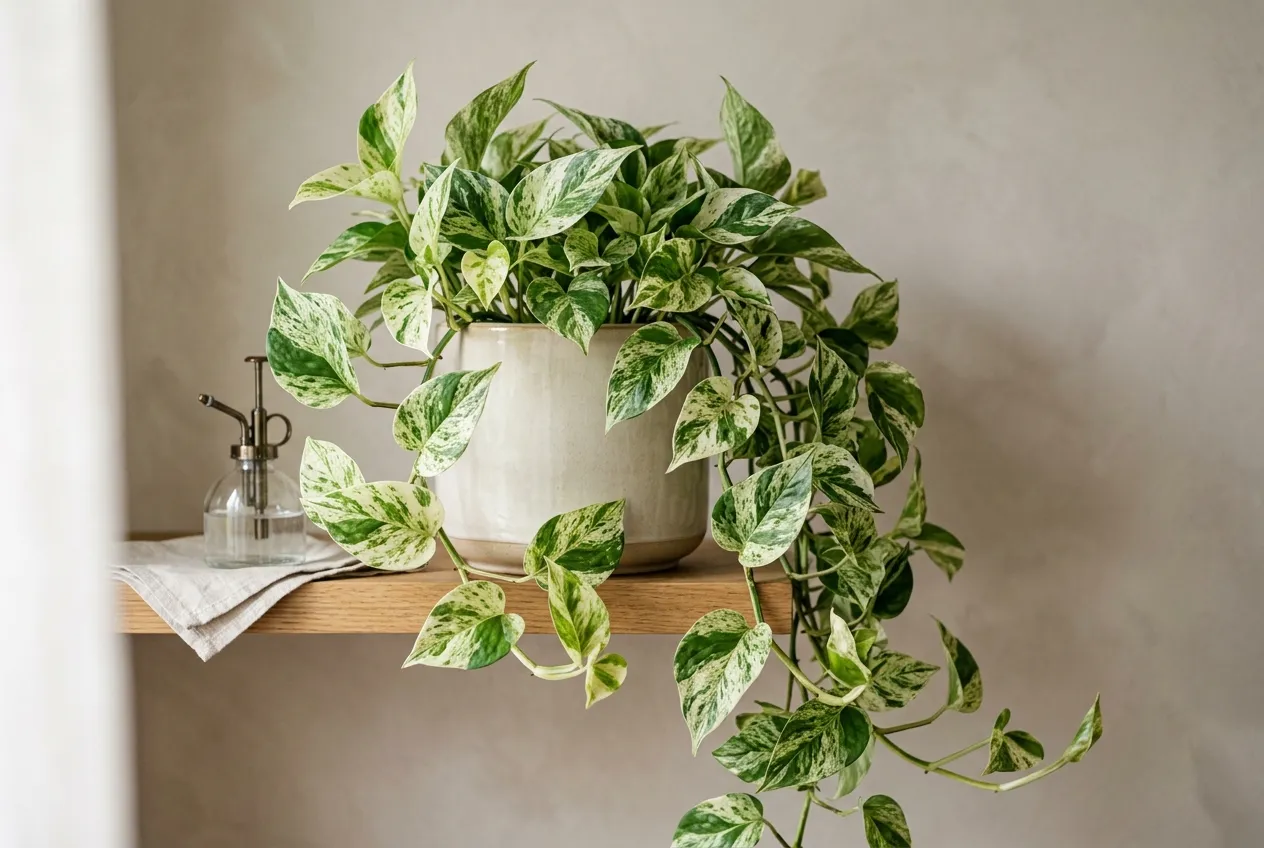
The Marble Queen Pothos is a spectacular, heavily variegated vine featuring leaves splattered in brilliant white and cream. However, without intense bright light, it will rapidly lose its white coloring.
-
Difficulty
easy
-
Light
Requires high amounts of bright, indirect light. Because the white sections of the leaf contain no chlorophyll, it needs intense light to survive and keep producing white leaves.
-
Temperature
65°F - 85°F (18°C - 29°C)
-
Growth
moderate
-
Humidity
40% - 60%
-
pH range
6.0 - 6.5
-
Biggest Owner Mistake
Placing it in low light because pothos have a general reputation as shade tolerants—but the white variegation of Marble Queen requires bright indirect light to be maintained. In low light, the white sections stop being produced and new leaves come in solid green.
-
What Nobody Tells You
The white portions of the leaf contain no chlorophyll and cannot photosynthesize, which is why heavily variegated varieties like Marble Queen grow noticeably slower than golden pothos. The more white on the leaf, the less energy the plant can produce.
-
Real Home Conditions
In dry indoor air, older leaves develop brown edges and drop, making trailing vines look sparse over time. It tolerates average humidity but benefits from occasional misting or grouping with other plants to slow leaf loss.
Quick Answer
The Marble Queen Pothos requires extremely bright, indirect light to maintain its brilliant white variegation. If kept in low light, the plant will revert to solid green to survive. Water only when the top 3 inches of soil are dry.
Key Takeaways
- Provide bright, indirect sunlight to sustain high-contrast white variegation.
- Allow the top 2 inches of potting mix to dry out before watering thoroughly.
- Move to brighter light if new foliage begins reverting to solid green.
- Prune trailing vines regularly above leaf nodes to stimulate bushier pot growth.
Overview
The Marble Queen Pothos (Epipremnum aureum 'Marble Queen') is one of the oldest and most beloved pothos cultivars in existence. It is instantly recognizable by its spectacular variegation: every single heart-shaped leaf is heavily splashed, speckled, and marbled with brilliant white and cream against a green background.
While the standard Golden Pothos is famous for being an indestructible low-light plant that can survive in a windowless office, the Marble Queen plays by different rules. Because so much of the leaf surface is pure white, the plant has a massive reduction in chlorophyll. It requires significantly more care and vastly more sunlight to thrive. If you treat a Marble Queen exactly like a standard pothos, you will quickly lose all the beautiful white variegation that made you buy it in the first place.
Light Requirements: Stop the Reversion
Light is the single most important factor in keeping a Marble Queen alive and white. The white sections of the leaf contain zero chlorophyll and cannot photosynthesize; only the green sections can create energy for the plant.
If you place a Marble Queen in a dim corner, the plant realizes it is starving. In a survival response, it will completely stop producing white variegation and push out solid green leaves to maximize photosynthesis. This is called "reverting." To keep the plant highly variegated (often sold under the marketing name "Snow Queen"), you must place it directly in front of the brightest window in your home. An east-facing or south-facing window with a sheer curtain is ideal. However, avoid harsh, direct afternoon sun, which will scorch the delicate white sections.
Watering Strategy: Watch for Brown Spots
The white, variegated sections are the weakest part of the plant and are highly sensitive to watering issues. If you overwater the plant, the root system begins to suffocate. The very first place the plant will show stress is on the white edges of the leaves, which will rapidly turn brown, mushy, and translucent.
Allow the top 3 inches of the soil to dry out completely before watering. Stick your finger deep into the soil—if it feels damp, wait a few more days. When it is time to water, soak the pot thoroughly until water flows out the drainage holes, ensuring the entire root ball is hydrated. Never let the pot sit in a saucer of standing water.
Temperature and Humidity
Typical household temperatures between 65°F and 85°F (18°C - 29°C) are perfect. Protect it from freezing winter drafts or hot blasts from radiators, both of which will instantly crisp the white leaves. While it is native to the tropical rainforest and appreciates high humidity, the Marble Queen is highly adaptable and will grow happily in the standard 40% to 50% humidity found in most Western homes.
Soil and Potting
A well-draining, airy potting mix is essential. Standard indoor potting soil works, but it is highly recommended to amend it with 30% perlite and a handful of orchid bark. This provides the roots with pockets of oxygen and ensures excess water drains away rapidly, protecting the sensitive white leaves from rot.
Pruning: Saving the White Vines
If a vine begins to revert and produces two or three completely solid green leaves in a row, it will likely never produce white leaves on that vine again. The green section is too genetically dominant. To save the variegation, you must use sterile scissors to cut the vine all the way back to the last leaf that had good white marbling. This forces the plant to branch out from a variegated node.
Toxicity
Like all members of the Araceae family, the Marble Queen contains insoluble calcium oxalate crystals. If chewed by cats, dogs, or humans, the crystals embed in the soft tissues of the mouth and throat, causing severe burning, swelling, drooling, and vomiting. Keep the trailing vines out of reach of curious pets.
Recommended next actions
Next Best Actions
Use calculators and guides to turn this plant profile into a practical care routine.
Topic Guide
Watering
Learn everything about watering for your indoor and aquarium plants. Expert care tips, troubleshooting, and related guides.
Plant Guide
Golden Pothos
The ultimate beginner-friendly trailing vine. Valued for its air-purifying qualities, rapid growth, and ability to thrive in almost any indoor environment.
Guide
Brown Crispy Tips on Houseplants: Causes & Fixes
With over 15 years of indoor plant diagnostics and more than 3,000 leaf-tissue cases analyzed, we've mapped the exact mechanisms behind brown crispy tips—fluoride accumulation, salt toxicity, and humidity deficits—so you can reverse damage today.
Topic Guide
Root Rot
Learn how to identify and treat root rot in houseplants. Discover causes, symptoms, and step-by-step solutions to save your plants from overwatering.
Structured Plant Data
Plant Data Profile
The following data is extracted directly from our botanical knowledge graph for accuracy and transparency.
Growth Characteristics
Growth Rate
moderate
Mature Height
Trailing vines up to 10+ feet
Mature Spread
1-2 feet wide
Life Cycle
Perennial
Flowering Season
Rarely flowers indoors
Container Friendly
yes
Indoor Capable
yes
Environmental Parameters
| Parameter | Recommended | Survivable |
|---|---|---|
| Temperature | 65°F - 85°F (18°C - 29°C) | 55°F - 95°F (13°C - 35°C) |
| Humidity | 40% - 60% | 20% - 80% |
| Soil PH | 6.0 - 6.5 | 5.5 - 7.0 |
Lighting
Description
Requires high amounts of bright, indirect light. Because the white sections of the leaf contain no chlorophyll, it needs intense light to survive and keep producing white leaves.
Nutrients
Nitrogen Demand
moderate
Phosphate Demand
low
Potassium Demand
moderate
Micronutrient Notes
Do not over-fertilize, as excess salt buildup will burn the delicate white leaf margins.
Fertilizer Frequency
Once a month during spring and summer with a balanced fertilizer diluted to half strength.
Organic Options
Monthly top dressing of worm castings.
Relationships
-
Root Rot
Vulnerability | Strength 6
Susceptible to root rot if overwatered, which instantly turns the white variegated leaves brown and mushy.
Variegated Pothos Cultivar Comparison
| Variety | Variegation Color | Light Need |
|---|---|---|
| Marble Queen | Heavy White / Cream | Very High Indirect |
| Golden Pothos | Light Yellow Splashes | Low to Medium |
| Manjula | Swirling White, Cream, Green | Very High Indirect |
Troubleshooting & Diagnostics Guide
1 Why is my Marble Queen Pothos turning solid green?
Diagnosis: Reverting due to low light
Treatment: Move to brighter indirect light; prune solid green stems to encourage variegated growth.
Prevention: Provide bright indirect light; rotate plant regularly.
2 Why are the white sections of the leaves turning brown and crispy?
Diagnosis: Stress from over/underwatering or dry air
Treatment: Check moisture; water when top inch is dry; increase humidity; trim damaged edges.
Prevention: Maintain consistent moisture and moderate humidity.
Authoritative Resources
For additional peer-reviewed information on plant diseases, toxicity, and care, consult these trusted botanical and agricultural extensions:
Glossary of Terms
- Reversion
- The process by which a variegated plant stops producing patterned/colored leaves and returns to a solid green state, usually as a survival response to low light.
- Chlorophyll
- The green pigment in plants responsible for the absorption of light to provide energy for photosynthesis. White sections of leaves contain zero chlorophyll.
Frequently Asked Questions
Why is my Marble Queen Pothos turning solid green?
What is the difference between a Marble Queen and a Snow Queen Pothos?
Why are the white sections of the leaves turning brown and crispy?
Is the Marble Queen toxic to cats and dogs?
Can I put my Marble Queen outside in the sun?
Sources & References
-
Source: powo.science.kew.org
-
Source: aroid.org
Explore More