Plant First Aid: How to Save a Houseplant After a Fall or Snapped Stem
Every time I see a panicked 'it fell! is it going to be ok?!' message, I know it's triage time. I'll walk you through exactly how to splint, stabilize, and salvage your plant so it doesn't just survive—it thrives.
Quick Answer
If a stem is partially snapped but still attached, immediately splint it with a clean stick and soft plant tape, supporting it gently without crushing tissue. If completely severed, trim the broken end cleanly below a node and place it in tepid water or damp perlite to root. For a plant that has fallen, check roots for shaking loose; repot if the root ball is dislodged, and hold off fertilizing for 3–4 weeks.
Key Takeaways
- Splint partially snapped stems using clean supports and soft garden tape.
- Trim cleanly below a node to root fully severed branches in water or perlite.
- Check fallen pots for dislodged root balls and repack with fresh mix.
- Withhold fertilizer for 3 to 4 weeks while the plant recovers from trauma.
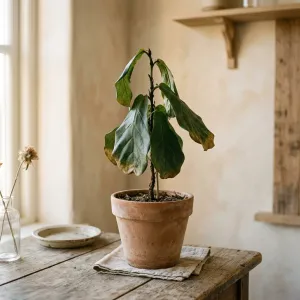
Your cat just parkoured off the bookshelf, taking your prized Monstera down with it. The main stem is cracked and bent at a sickening angle, a leaf lies on the floor, and the pot has vomited soil across the rug. Your first instinct is panic—but this is salvageable. I’ve triaged hundreds of these “it fell!” emergencies, and the difference between a plant that bounces back and one that dies is the speed and precision of your response. There are three scenarios: the partial snap that can be splinted, the clean break that becomes a propagation opportunity, and the full pot-dive that dislodges the roots. Here’s how to handle each one, quickly and correctly.
Scenario 1: The Partial Snap (Splinting)
What do I do if my plant stem is bent and partially broken?
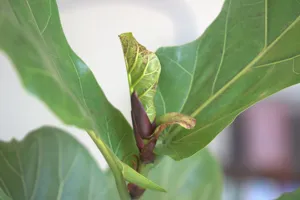
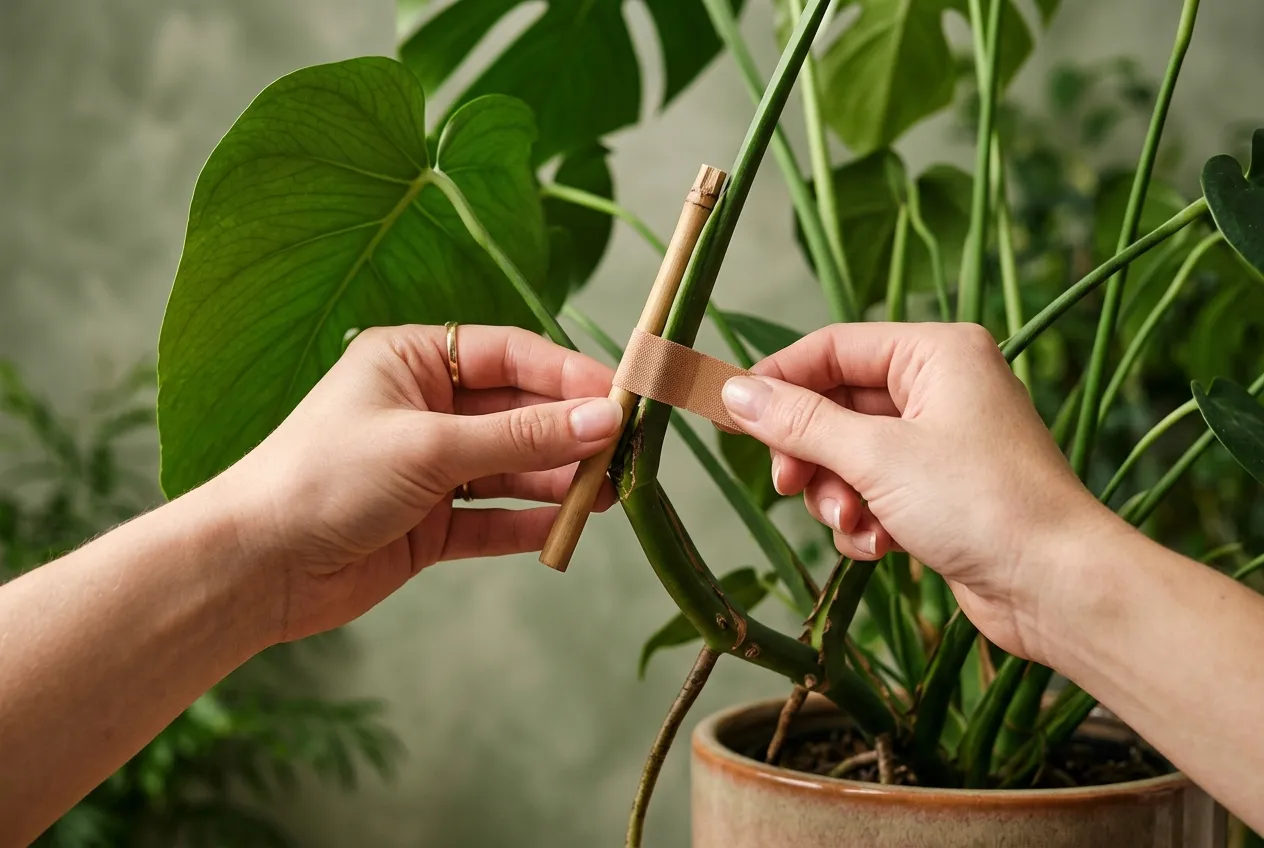
If the stem is cracked but still connected by at least 30–40% of its tissue, it can often heal with a splint. Straighten the stem gently to its original orientation—do not force it. Cut a bamboo skewer or a clean twig to a length that extends 2–3 cm (approx. 1 inch) above and below the break. Place the splint alongside the stem and wrap it loosely with soft plant tape, old nylon stocking strips, or even a strip of plastic wrap. The goal is support, not constriction; you want to keep the broken edges in contact so the cambium can fuse. Water the plant with tepid water and add a few drops of liquid seaweed extract (1 ml per liter) to the watering can to boost auxin levels. Our Watering Calculator will help you maintain consistent moisture without overwatering while the plant heals. For the next 4–6 weeks, keep the plant in bright indirect light (300–500 fc) and avoid moving it. Check the splint weekly; if the stem above the break stays firm and doesn't wilt, the graft is taking. After about 6 weeks, the stem will have formed a callus knot; you can carefully remove the splint.
Scenario 2: The Clean Break (Propagation)
Can I save a plant if the stem is completely snapped off?
Absolutely—this is nature’s way of giving you a free cutting. Retrieve the severed piece. With a sterilized knife or pruners, recut the broken end just 6 mm (¼ inch) below the nearest node, at a 45° angle to increase the surface area for water uptake. Remove any leaves that would sit below the water line. Place the cutting in a dark glass vessel of tepid water (22°C (72°F)) with a small piece of activated charcoal. Place it in bright indirect light (300–500 fc) and change the water every 2–3 days. Roots will emerge from the node within 2–4 weeks. The stump remaining in the pot will also likely branch; trim the broken stem back to a node just above the soil, and new shoots will appear. For large, heavy stems like a mature Monstera, rooting in damp perlite rather than water can provide better stability; our Monstera deliciosa care guide covers this technique in detail.
Scenario 3: Root Disturbance from a Fall
How do I stop a fallen plant from going into shock?
When a pot hits the floor, the root ball can crack, tear fine root hairs, and separate from the soil. If the plant has toppled but the stems are intact, gently lift it, collect any spilled soil, and reposition the root ball in the pot. If more than 20% of the soil has spilled, top it up with a mix of 60% potting soil and 40% perlite to maintain drainage. Water thoroughly with tepid water until it runs from the drainage holes, then let it drain completely. Do not press the soil down hard; you want to settle it, not compact it. Use our Watering Calculator to adjust your watering frequency for the next few weeks: the damaged roots will take up less water, and the risk of rot is higher. Place the plant in a stable, shadier spot (200–300 fc) for 5–7 days to reduce transpiration stress while the roots recover. A seaweed solution (1 ml per liter) at the first watering provides cytokinins that help root repair. If the stem base was deeply buried and is now exposed, it may be vulnerable to rot; our root rot rescue guide explains how to spot early trouble. Do not fertilize for at least 3–4 weeks—the plant needs to rebuild roots, not push foliage.
First Aid Action Table
| Injury | Immediate Action | Follow-up |
|---|---|---|
| Partially snapped stem | Splint with skewer and soft tape; water with seaweed solution | Keep in bright indirect light; check for fusion in 6 weeks |
| Completely severed stem | Recut below node; place in water with charcoal | Change water every 2–3 days; pot when roots are 2–3 cm (1 in) |
| Dislodged root ball | Reposition, top up soil, water thoroughly, move to shade | Reduce watering frequency; no fertilizer for 4 weeks |
Recommended next actions
Next Best Actions
Move from reading to action with related calculators, plant profiles, and quiz-based recommendations.
Topic Guide
Watering
Learn everything about watering for your indoor and aquarium plants. Expert care tips, troubleshooting, and related guides.
Guide
Monstera Deliciosa Care: Watering, Light & Growth Tips
After growing and troubleshooting Monstera deliciosa plants across nine years and multiple home environments, we've mapped out exactly what this iconic climbing aroid needs to produce large, dramatically split leaves indoors.
Guide
Why Root Rot Happens and How to Save Your Plant
After rescuing thousands of rotting houseplants from big-box stores over a 12-year nursery career, we have developed a foolproof method to diagnose, treat, and completely prevent deadly root rot.
Frequently Asked Questions
What do I do if my plant stem is bent and partially broken?
Can I save a plant if the stem is completely snapped off?
How do I stop a fallen plant from going into shock?
Explore More