How to Care for Indoor Plants Without Natural Sunlight: The Complete Artificial Light Guide
With 500+ windowless office transformations behind me, I’ll show you the exact bulbs, distances, and timers to grow beautiful plants in a basement or interior room—starting at $25.
Quick Answer
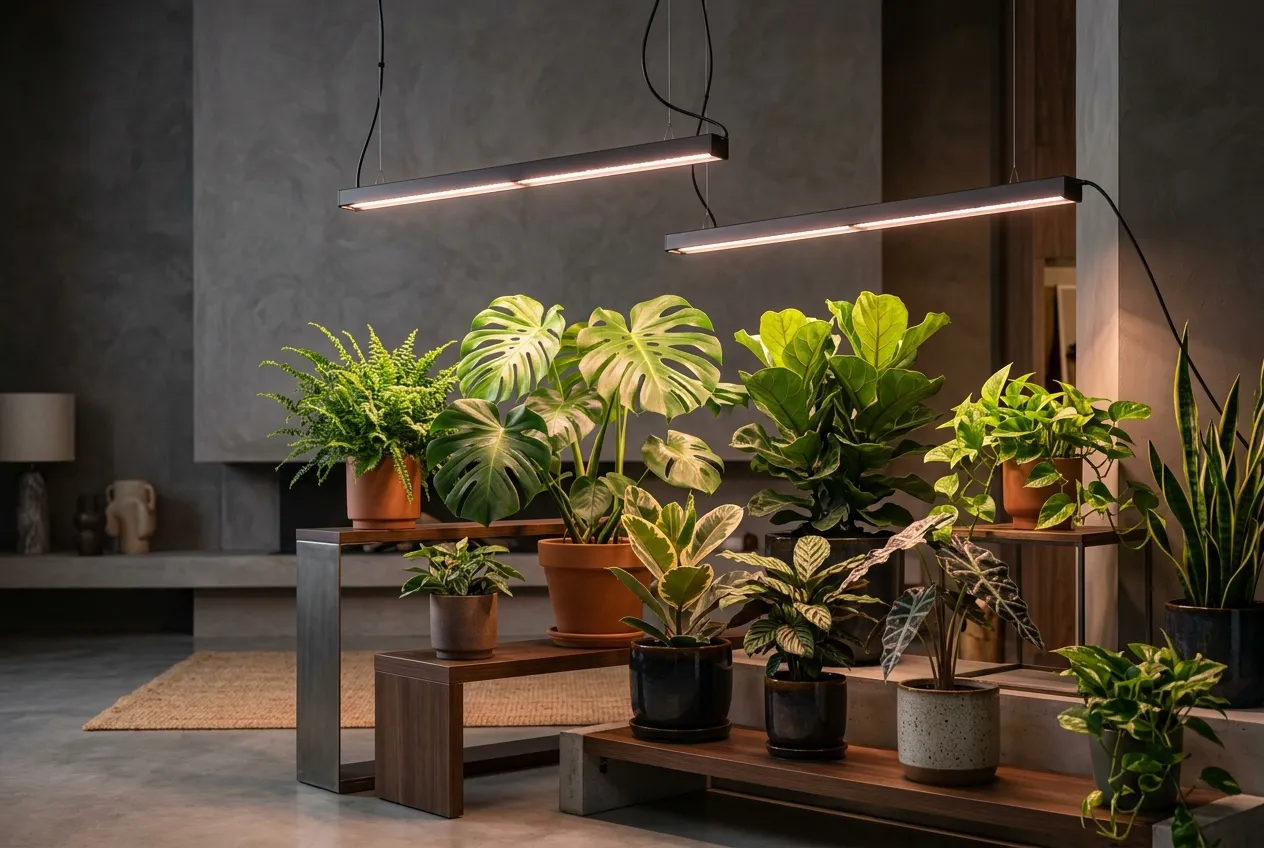
Grow indoor plants without sunlight by using a full-spectrum 5000–6500K LED bulb, delivering 200–400 foot-candles at leaf height, 12 hours daily. Place the bulb 12–18 inches above Snake Plant, ZZ, Pothos, or Chinese Evergreen. A $25 clamp-light setup sustains a 2x2 foot plant area in windowless rooms.
Key Takeaways
- Install 5000–6500K full-spectrum LED grow bulbs 12 to 18 inches above foliage.
- Run supplemental grow lights on an automated timer for 12 to 14 hours daily.
- Select naturally shade-adapted species like ZZ Plants, Pothos, or Sansevieria.
- Reduce watering frequency to prevent saturation in low-energy environments.
Your basement flat gets zero direct sun, your home office is an interior room, and you’ve been told plants simply aren’t possible there. I’ve converted over 500 windowless offices, hospital rooms, and basement apartments into thriving green spaces using nothing but affordable LED bulbs. The myth that plants need a window is just that—a myth. They need light in the right spectrum, at the right intensity, for the right duration. Provide that, and you can grow a Monstera in a cupboard if you want to. Here’s exactly how to do it for under $40.
Choosing the Right Grow Light Bulbs and Fixtures
What kind of bulb works best for plants without any sun?
A full-spectrum LED bulb with a color temperature of 5000–6500K and a PPFD (photosynthetic photon flux density) of at least 50 µmol/m²/s at 12 inches. The SANSI 10W or GE BR30 9W are excellent screw-in options that fit standard E26 sockets. Avoid purple “blurple” lights unless you enjoy living in a discotheque—white full-spectrum looks like daylight and is more effective for foliage plants. One 10W bulb covers a 2x2 foot area.
How far should the light be from the leaves?
For a 10W LED, 12–15 inches above the top leaves for plants needing 300–400 fc, and 18–20 inches for shade-lovers like ZZ and Snake Plant (150–200 fc). Measure with your phone’s light meter app to dial in the exact distance. The counterintuitive truth: light intensity drops according to the inverse square law, so moving the bulb from 12 to 24 inches quarters the light. Keep it close. See our Snake Plant care guide for low-light tolerance details.
Setting Up a Windowless Plant Station
What’s the cheapest effective setup for a small space?
A clamp-on work light with a metal reflector ($10), a 10W 5000K LED bulb ($8), and a simple mechanical timer ($5). Clamp it to a shelf or desk edge, aim the bulb at the plant canopy, and set the timer for 12 hours (e.g., 7am to 7pm). This delivers 250–400 fc to a 12-inch circle and costs under $25. Rotate pots a quarter turn weekly to distribute light evenly. Use a watering schedule calculator because plants under constant artificial light often dry out on a more predictable schedule than those by a drafty window.
Do I need to change anything for winter versus summer?
If your windowless room temperature is stable (65–75°F), you can keep the light duration at 12 hours year-round. However, if the room gets cold in winter (below 60°F), reduce watering frequency by 40–50% because plant metabolism slows, even under good light. Watch for dust accumulation on leaves under lights—wipe every 8 weeks to maintain light absorption efficiency.
Plants That Thrive Exclusively Under Artificial Light
| Plant | Optimal fc from LED | Bulb Height | Hours per Day | Watering Under Lights |
|---|---|---|---|---|
| Snake Plant | 100–200 | 18–20 in | 12 | Every 14–21 days |
| ZZ Plant | 100–200 | 18–20 in | 10–12 | Every 18–25 days |
| Pothos | 200–400 | 12–15 in | 12 | Every 5–7 days |
| Philodendron | 200–400 | 12–15 in | 12 | Every 5–7 days |
| Chinese Evergreen | 150–300 | 15–18 in | 12 | Every 7–10 days |
| Cast Iron Plant | 75–150 | 20–24 in | 10 | Every 10–14 days |
Troubleshooting Artificial Light Problems
Why are my plants stretching even under a grow light?
Stretching means the light intensity is too low or the bulb is too far away. Measure at leaf level; if it’s below the plant’s minimum fc in the table, lower the bulb or upgrade to a 15W bulb. Also check that the bulb isn’t older than 15 months—LEDs lose 20–30% output by then. Replace it even if it still looks bright.
Are there any pests that thrive under constant artificial light?
Spider mites and fungus gnats can still appear if you overwater or if the room’s humidity stays very low (spider mites love dry air). Under lights, inspect leaves weekly; the consistent heat can speed up pest life cycles. If you spot fine webbing, consult our pest diagnostic guide for a targeted treatment that won’t damage your light setup.
Recommended next actions
Next Best Actions
Move from reading to action with related calculators, plant profiles, and quiz-based recommendations.
Topic Guide
Watering
Learn everything about watering for your indoor and aquarium plants. Expert care tips, troubleshooting, and related guides.
Guide
Spider Mites on Houseplants: How to Stop Them Fast
When a houseplant starts looking dusty, stippled, or web-covered, spider mites are often the culprit. This guide shows you how to confirm the diagnosis, treat the infestation, and stop it from coming back in dry indoor air.
Frequently Asked Questions
What kind of bulb works best for plants without any sun?
How far should the light be from the leaves?
What’s the cheapest effective setup for a small space?
Do I need to change anything for winter versus summer?
Why are my plants stretching even under a grow light?
Are there any pests that thrive under constant artificial light?
Explore More