How to Arrange Multiple Plants in One Room: The Designer's Principles for Any Collection Size
Having arranged plant collections for over 200 residential interiors, we give you the exact framework — height variation, visual weight, light zoning — that makes a room full of plants look designed rather than accumulated.
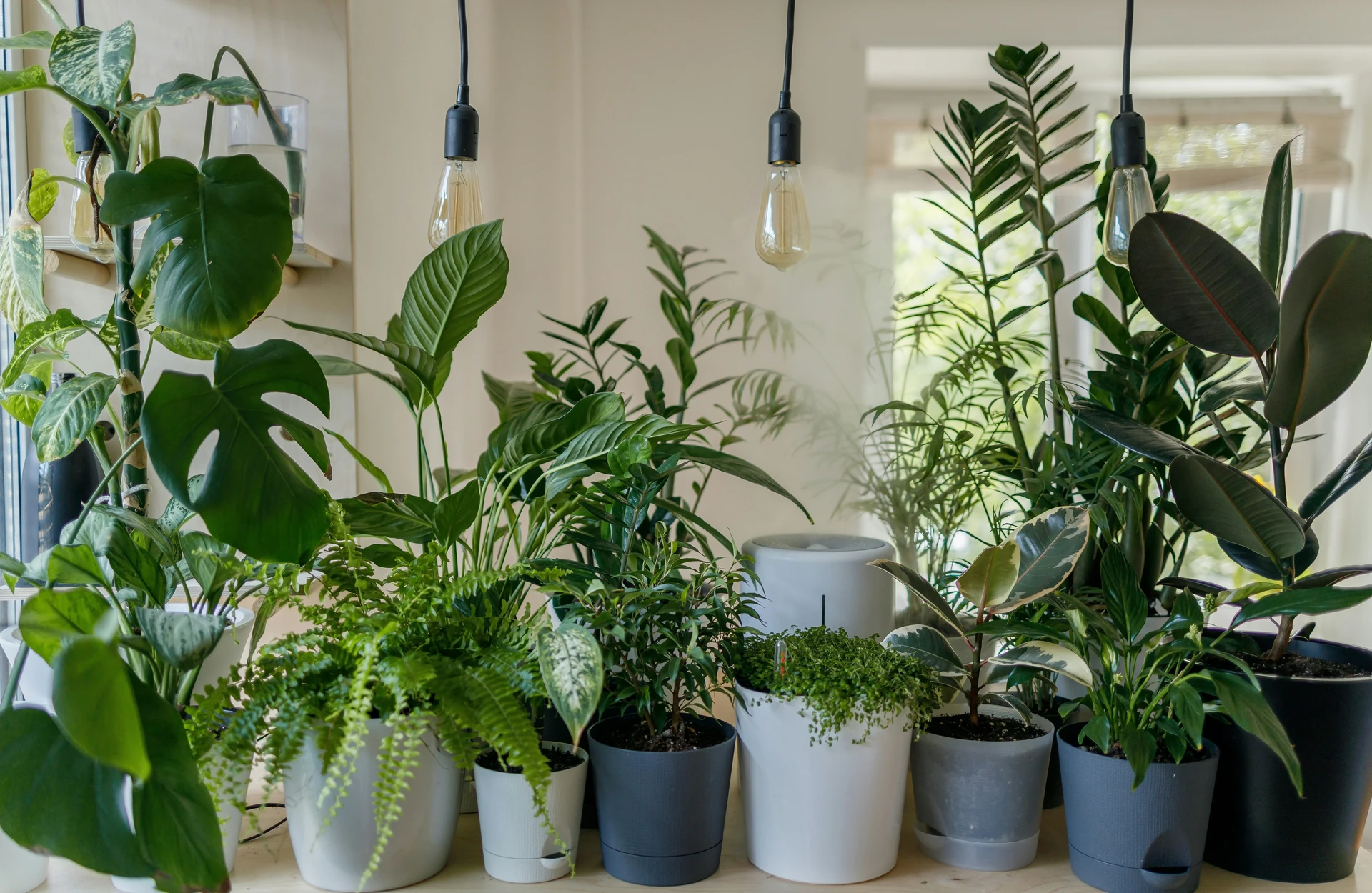
Quick Answer
Use three vertical planes (floor, surface, hanging), group by odd numbers (3 or 5 plants per cluster), place your largest architectural plant as the visual anchor first, and leave 30% of every surface empty to create breathing room between groupings.
Key Takeaways
- Group plants with identical light and humidity requirements together.
- Vary vertical planes using floor planters, plant stands, and hanging baskets.
- Maintain spacing between foliage to ensure adequate passive air circulation.
- Position large floor specimens away from active footpaths and draft zones.
A room full of plants looks either like a carefully curated living space or like a collection that just grew there accidentally. The difference is almost always arrangement logic, not the plants themselves. After arranging plant collections for over 200 residential interiors across the US and UK, I can tell you that the underlying principles are simple and apply to any collection size from 5 to 50 plants. The most common mistake is buying great plants and then placing them wherever there is physical space rather than where they create visual hierarchy, care efficiency, and environmental coherence.
The Core Principles of Multi-Plant Room Arrangement
What is the height variation rule in plant arrangement?
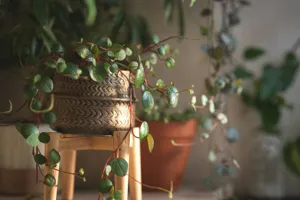
Effective multi-plant rooms use all three vertical planes: floor level (large specimen plants in pots, floor baskets), surface level (side tables, shelves, windowsills), and hanging level (macrame hangers, ceiling hooks, wall mounts). When all plants sit at one height, the room reads as flat and unintentional. A Bird of Paradise on the floor, Pothos on a shelf at mid-height, and a trailing Heartleaf Philodendron in a hanging pot creates a vertical flow that naturally draws the eye across the room rather than landing on one cluttered surface.
Why do odd-numbered groupings look better than even-numbered ones?
Odd-numbered groupings — 3 pots, 5 pots, 7 pots — create asymmetric visual tension that the eye finds more interesting and natural than symmetrical even-numbered pairings. Symmetry reads as formal and static; asymmetry reads as organic and alive, which aligns with the natural associations plants already carry. When grouping on a shelf or surface, use the "triangle rule" — position 3 pots at different heights so they form an imaginary triangle shape rather than lining up at equal intervals in a row.
Should I group plants by species or by aesthetic compatibility?
Group primarily by care needs, secondarily by aesthetic. Plants with similar watering schedules, humidity requirements, and light tolerances placed together are not only easier to maintain — they genuinely thrive better as a group because their collective transpiration creates a local humidity pocket that benefits all members. Within a care-compatible group, then consider aesthetic factors: texture contrast (smooth leaves versus textured, large leaves versus fine), color variation, and height difference to create visual interest within each cluster.
Room Arrangement Guidelines by Space Type
| Space | Anchor Plant | Supporting Plants | Key Principle | Avoid |
|---|---|---|---|---|
| Living room | Floor specimen (Monstera, Bird of Paradise) | 2–3 shelf/surface plants | One dominant visual focal point | Equal-height row of pots |
| Bedroom | 1 large plant in a corner | 1–2 bedside or windowsill plants | Calm, uncluttered feel | Too many species competing |
| Kitchen | Trailing plant above cabinets | 2–3 small herbs or succulents on sill | Functional placement near light | Large floor plants blocking flow |
| Home office | Mid-size plant in direct eyeline | 1 small plant on desk | Attention restoration in visual field | Placing plants only behind eyeline |
| Bathroom | High-humidity species (Fern, Pothos) | Small air plants or moss | Match species to humidity conditions | Drought-tolerant species that will suffer |
Practical Arrangement Execution
How do I create a plant "vignette" on a shelf or surface?
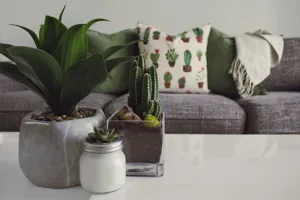
A successful plant vignette contains 3–5 elements: 1 tall plant as the visual anchor, 1–2 medium plants at varying heights, and 1–2 non-plant supporting elements (a book, a candle, a ceramic object) that share a complementary color palette. The non-plant elements provide visual breathing room — without them, an all-plant arrangement can read as densely utilitarian rather than artfully composed. Leave 20–30% of the shelf surface completely empty to give the eye a place to rest.
What is the most common arrangement mistake in plant-heavy rooms?
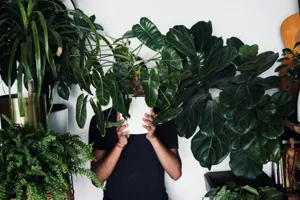
The most common mistake is distributing plants evenly throughout a room in an attempt to create balance — which actually creates visual monotony. Effective multi-plant rooms concentrate plants in deliberate clusters or zones (a corner moment, a window cluster, a shelf vignette) with clear empty space between clusters. Spreading plants evenly like wallpaper removes the focal hierarchy that makes any space feel intentional rather than casually accumulated.
How do I arrange plants to make a small room feel larger?
Use tall vertical plants — specifically columnar forms like tall Snake Plants or tree-form Ficuses — in corners to draw the eye upward and amplify ceiling height perception. Avoid large-leafed, horizontally spreading plants in small spaces as they visually reduce floor area. Mirrors behind or beside plant groupings double the perceived green mass and depth of the space — one of the most used tricks in boutique hotel plant styling that translates perfectly to small apartments.
Recommended next actions
Next Best Actions
Move from reading to action with related calculators, plant profiles, and quiz-based recommendations.
Calculator
Plant Light Calculator: Find the Best Window for Your Plant
Determine the ideal indoor light placement for your plant based on species, window direction, and seasonal light availability.
Guide
Yellow Houseplant Leaves: Diagnose & Fix Guide 2026
After diagnosing hundreds of yellow-leaf cases across dozens of plant species, we've mapped the ten distinct causes that look nearly identical at first glance — and built the only systematic guide that tells you not just what's wrong, but exactly how to confirm it and fix it.
Frequently Asked Questions
How many plants should I have in one room?
Should plants be grouped together or spread around the room?
What is the rule of three in plant arrangement?
How do I make my plant collection look less cluttered?
What plants work best in a corner arrangement?
Explore More