Bladderwort (Utricularia) Growing Guide
Bladderworts catch tiny prey with underwater or underground suction traps. Care depends entirely on type: aquatic, terrestrial or epiphytic.
There is no single way to grow a bladderwort. Utricularia is a large genus of aquatic, terrestrial and epiphytic species, and each group needs a different setup. Identify your plant's type first. Aquatics want clean, nutrient-poor, tannin-stained water in a tub or aquarium. Terrestrials are generally the easiest and grow in wet sphagnum or peat and sand. Epiphytes want a light, airy medium and humid, cool conditions. All use pure water, and soil fertilizer can harm terrestrial types.
Key Cultivation Takeaways
- ✓Utricularia is a genus, not one plant: identify whether yours is aquatic, terrestrial or epiphytic before choosing a method.
- ✓Aquatic types need clean, nutrient-poor, tannin-stained water; algae is their main competitor.
- ✓Terrestrial types are very easy in wet sphagnum or a 1:1 peat and sand mix, but can be killed by too much soil fertilizer.
- ✓Epiphytic types need a light, well-drained mix, humidity and cooler conditions; start with Utricularia alpina or U. asplundii.
- ✓Use pure water for all types.
Environmental Tolerance Matrix
Calibrated baseline thresholds for physiological stress prevention.
| TARGET PARAMETER | WARNING THRESHOLD | CRITICAL THRESHOLD |
|---|---|---|
| Ambient Temperature | Varies by species and type | Not established at genus level |
| Relative Humidity (RH) | Aquatics are submerged; epiphytes need high humidity | Not established at genus level |
| Substrate pH & Root Aeration | Not established at genus level | Not established at genus level |
Biggest Owner Mistake
Treating every bladderwort the same. An aquatic, a terrestrial and an epiphytic species need completely different water, media and conditions.
What Nobody Tells You
The traps are tiny and usually hidden, and terrestrial bladderworts spread so readily they can become weeds in a collection.
Aquatic bladderwort declining in green, algae-filled water
Diagnosis: Algae overgrowth, which aquatic bladderworts compete poorly against, often linked to nutrient-rich water or excess light
Terrestrial bladderwort weak or short-lived
Diagnosis: Ignored plants can decline, and soil can become exhausted
Terrestrial bladderwort declining after fertilizing
Diagnosis: Too much soil fertilizer can kill terrestrial bladderworts (ICPS)
Epiphytic bladderwort dying back
Diagnosis: Possibly an annual tuber dormancy, or the medium drying out or overheating
Utricularia seed not germinating
Diagnosis: Surface drying out or unsuitable coarse medium for epiphytic seed
Interactive Watering & Substrate Calculator
Calibrated hydrological and soil volume modeling for Bladderwort.
Comprehensive Species Profile & Care Guide
Aliases
- Bladderwort
- Bladderworts
- Utricularia
- Bladderwort care
- Utricularia care
- Bladderwort plant
Quick Answer: There is no single way to grow a bladderwort. Utricularia is a large genus of aquatic, terrestrial and epiphytic species, and each group needs a different setup. Identify your plant's type first. Aquatics want clean, nutrient-poor, tannin-stained water in a tub or aquarium. Terrestrials are generally the easiest and grow in wet sphagnum or peat and sand. Epiphytes want a light, airy medium and humid, cool conditions. All use pure water, and soil fertilizer can harm terrestrial types.
Summary: Utricularia, the bladderworts, are carnivorous plants that catch tiny prey with suction traps. The genus spreads across very different habitats, so care depends on whether your plant is aquatic, terrestrial or epiphytic. Matching the growing method to the type is the single most important decision. Terrestrial species are widely described as very easy and can become weeds in collections, aquatic species are easy if the boggy water habitat is matched, and epiphytic species are the most demanding. Always confirm the species before choosing a method.
Key Takeaways
- Utricularia is a genus, not one plant: identify whether yours is aquatic, terrestrial or epiphytic before choosing a method.
- Aquatic types need clean, nutrient-poor, tannin-stained water; algae is their main competitor.
- Terrestrial types are very easy in wet sphagnum or a 1:1 peat and sand mix, but can be killed by too much soil fertilizer.
- Epiphytic types need a light, well-drained mix, humidity and cooler conditions; start with Utricularia alpina or U. asplundii.
- Use pure water for all types.
References
- Growing Genlisea and terrestrial Utricularia:
Url: https://carnivorousplants.org/grow/guides/TerrestrialUtriculariaGenlisea
- Growing epiphytic Utricularia:
Url: https://carnivorousplants.org/grow/guides/epiphyticUtricularia
- Growing Tips for Aquatic Bladderworts:
Url: https://carnivorousplantnursery.com/blogs/general-growing-and-care/growing-tips-for-aquatic-bladderworts
- Utricularia gibba:
Url: https://www.nparks.gov.sg/florafaunaweb/flora/7/3/7306
- Bladderwort: The Delicate Predator of the Plant World:
Url: https://en-lifesci.tau.ac.il/news/humped_bladderwort
- Utricularia (bladderwort):
Url: https://plants.ces.ncsu.edu/plants/carnivorous-plants/utricularia
- Utricularia - The Bladderwort:
Url: https://botany.org/home/resources/carnivorous-plants-insectivorous-plants/utricularia-the-bladderwort.html
Family: Lentibulariaceae
Genus: Utricularia
Species: multiple species
Native Range: Worldwide; aquatic, terrestrial and epiphytic species in many regions
Growth Habit: Carnivorous; aquatic, terrestrial or epiphytic depending on species
Plant Type: Carnivorous perennial or annual (varies by species)
Difficulty: beginner to advanced depending on type
Light: Bright light; full sun for many aquatics, strong light for terrestrials and epiphytes
Light Min: bright
Light Max: full
Water: Pure water for all types. Aquatics live submerged in tannin-stained water; terrestrials stay wet; epiphytes are watered often in a light medium
Dormancy Shift: false
Humidity: Aquatics are submerged; epiphytes need high humidity
Temperature: Varies by species and type
Mature Size: Varies widely by species
Growth Rate: Varies by species
Soil: Type-specific: peaty water (aquatic); wet sphagnum or peat and sand (terrestrial); light airy mix or live sphagnum (epiphytic)
Fertilizer: None in soil for terrestrials; epiphytes tolerate very dilute fertilizer in water
Repotting Frequency: Varies; terrestrials benefit from periodic division and fresh soil
Pot Preference: Type-specific: tub or aquarium, undrained or tray pot, or hanging net pot
Propagation: Stem cuttings, division, seed; winter buds (turions) in temperate aquatics
Flowering: true
Native Region: Worldwide
Seasonality: varies by species
Sources
- https://carnivorousplants.org/grow/guides/TerrestrialUtriculariaGenlisea
- https://carnivorousplants.org/grow/guides/epiphyticUtricularia
- https://carnivorousplantnursery.com/blogs/general-growing-and-care/growing-tips-for-aquatic-bladderworts
- https://plants.ces.ncsu.edu/plants/carnivorous-plants/utricularia
Sections
- overview:
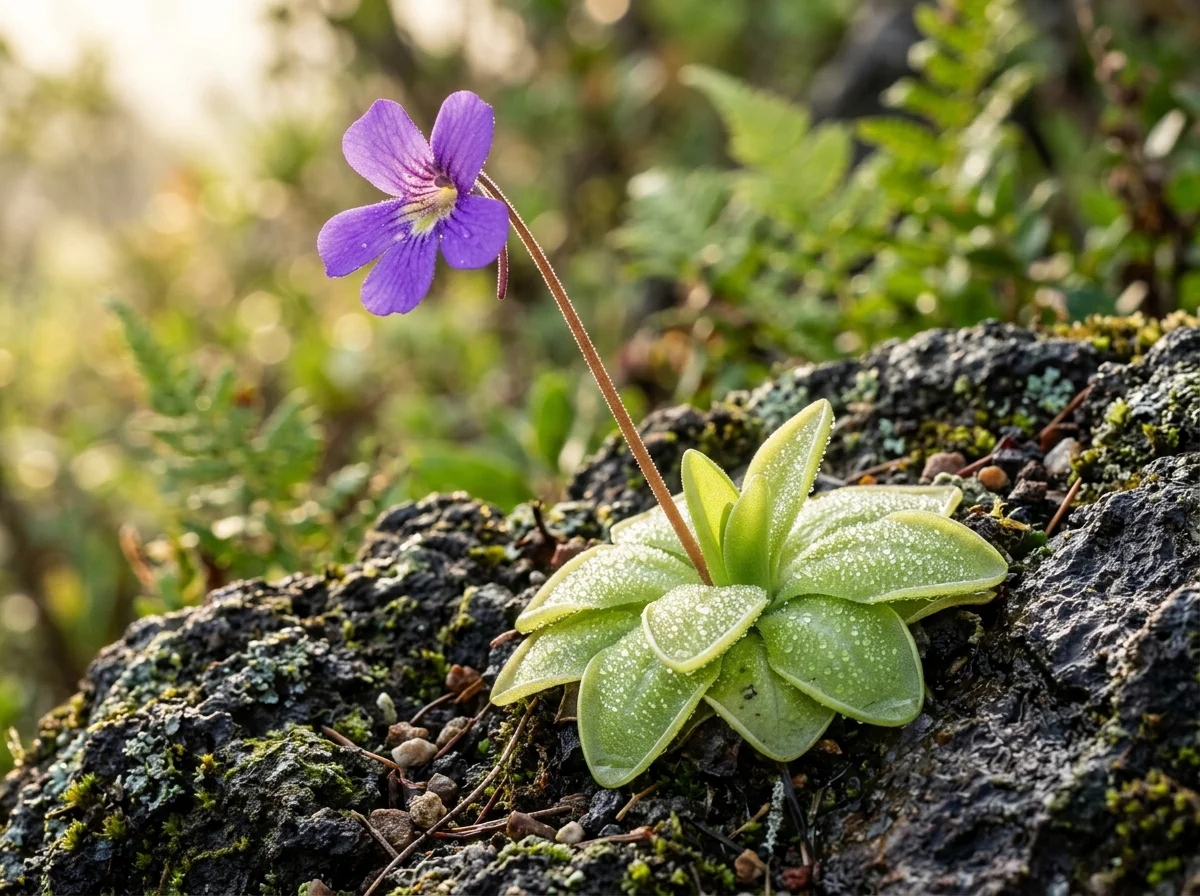
Content: Utricularia, the bladderworts, is a large genus of carnivorous plants in the family Lentibulariaceae. Its species grow as free-floating or submerged aquatics, as terrestrials in wet soil, and as epiphytes on moss, bark and bromeliad urns. Because the habitats are so different, no single growing method suits the whole genus. This page helps you identify your plant's type and then follow the matching care guidance. Bladderworts share the family Lentibulariaceae with butterworts such as Pinguicula moranensis, and the aquatic types have a close companion in the waterwheel plant (Aldrovanda).
- trapMechanism:
Content: Bladderworts catch prey with suction traps: small bladders that pump water out to create low pressure inside. When a tiny animal touches trigger hairs at the opening, a door opens, water rushes in with the prey, and the door closes again. This is different from the hinged snap trap of the Venus flytrap, the sticky tentacles of sundews, and the passive pitfall pitchers of pitcher plants. Bladderworts have no true roots: ICPS notes that the green structures that look like roots are expanded stems. In terrestrial species the traps are built from leaves and sit underground, where they catch tiny soil organisms.
- growingTypeSelector:
Content: Start here. Find out which group your plant belongs to, then use the matching section. Aquatic species float or are anchored in water. Terrestrial species grow in wet soil and have traps below ground. Epiphytic species grow on moss, bark or in bromeliad urns, and many have tubers. If you do not know the species, check the seller's label before choosing a method. Some species straddle groups: ICPS notes Utricularia longifolia is nominally terrestrial but can be grown as an epiphyte or semi-aquatic, and U. nephrophylla is a lithophyte that can be grown as a terrestrial or epiphytic plant. Never apply one method to the whole genus.
- aquaticCare:
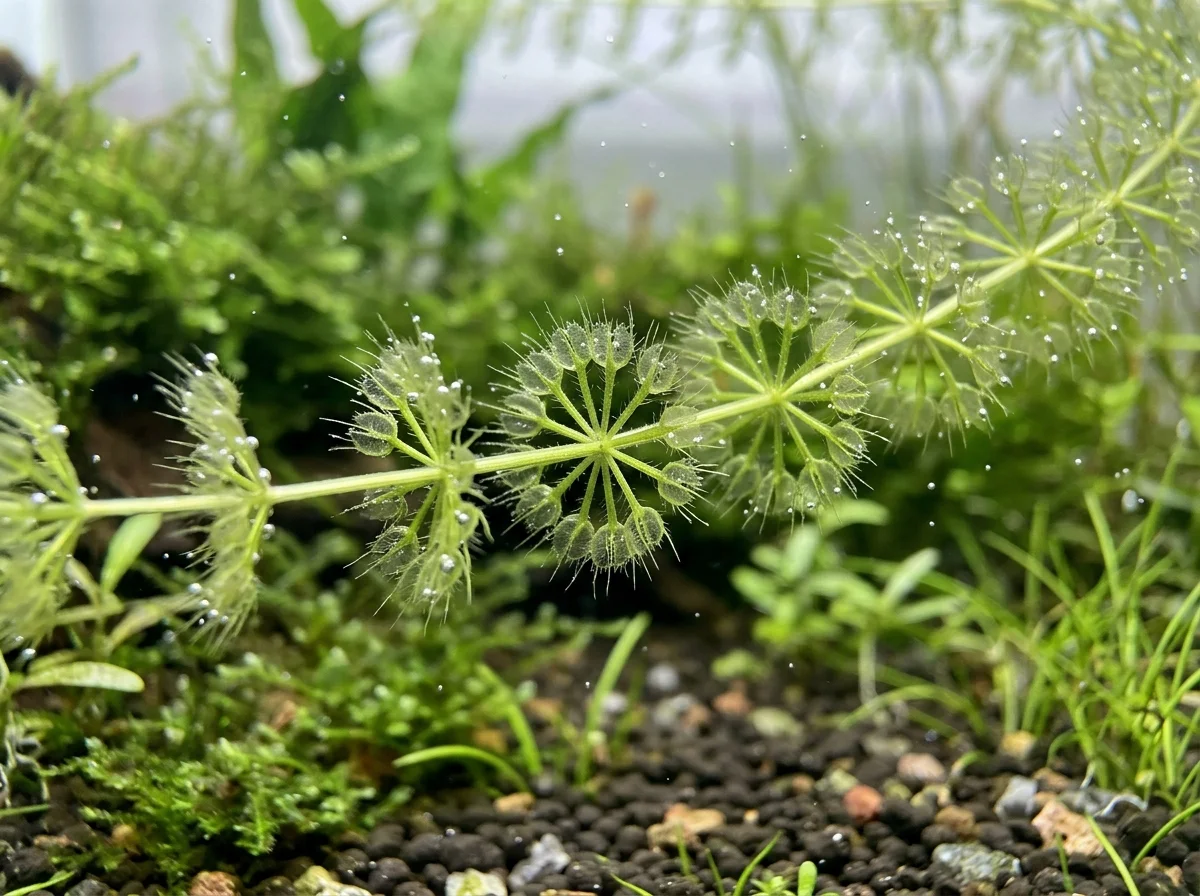
Content: Aquatic bladderworts live in dark, tea-coloured boggy water, often among floating or emergent plants such as water lilies and pickerelweed. A shallow tub or aquarium with a peat bottom works: the peat releases tannins that support good growth and discourage algae. Companion plants such as Azolla and emergent plants in pots help keep algae down and produce the leaf litter that supports the small aquatic organisms the traps feed on. Aquatic bladderworts do not compete well with algae, so keep the water clean and nutrient-poor. Utricularia gibba is described by Singapore's National Parks Board as easy to grow with lots of sun and clean water. In temperate climates, aquatic species slow down and form winter buds (turions) as days shorten and temperatures fall. Growing outdoors is often recommended.
- terrestrialCare:
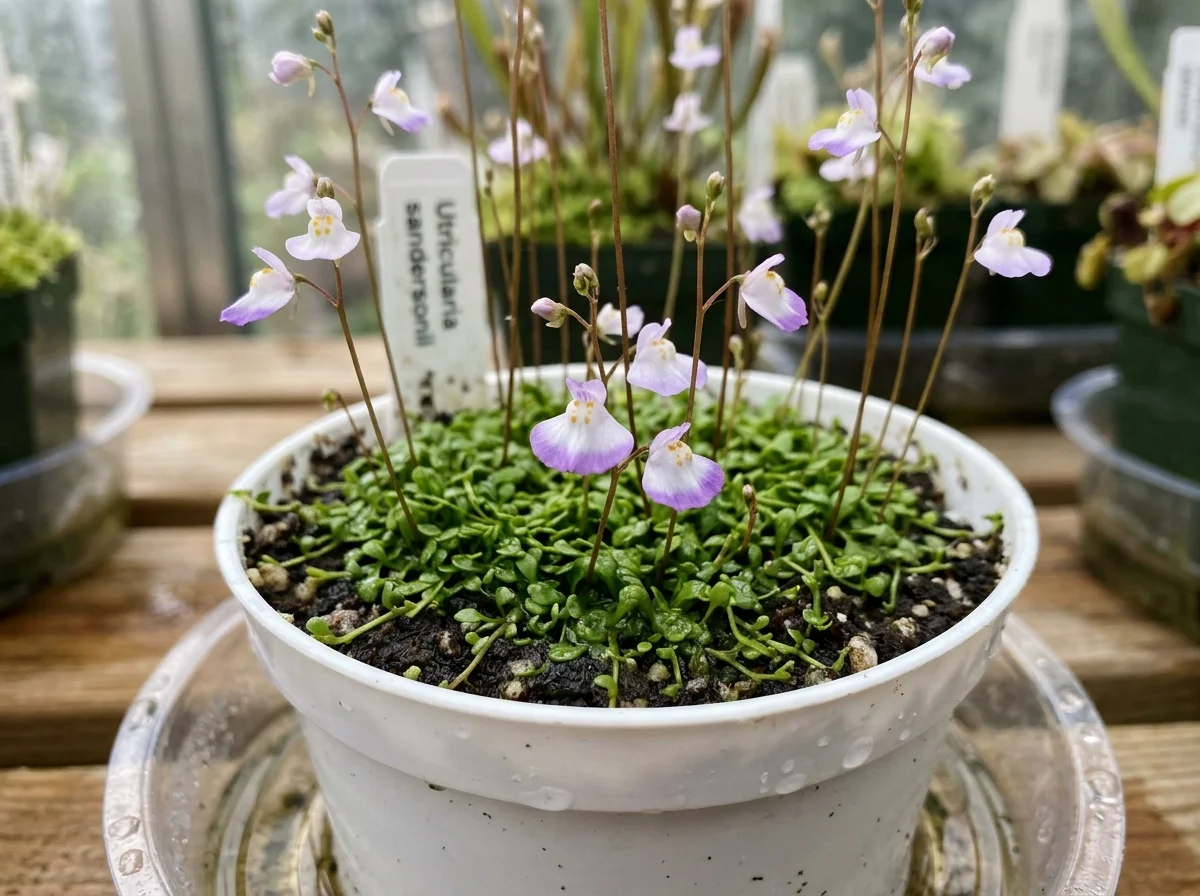
Content: ICPS describes the terrestrial Utricularia usually grown (tropical and subtropical species from South America, Africa and Australia) as very easy, and many can become weeds in collections. They are not picky about soil and grow well in pure sphagnum moss or a 1:1 peat and sand mix. Water levels in the wild are near or slightly above the soil surface. They can be grown in pots sitting in a little water, or in containers without drainage. Use pure water, and avoid heavy soil fertilizer, which can kill them. Some species are annuals or short-lived perennials, so collect seed. Because the traps are underground, consider growing them in a way that lets you observe them, such as in a net pot suspended in water. For safe peat and sand mixes, see the carnivorous plant substrate guide.
- epiphyticCare:
Content: Epiphytic Utricularia come from fog forests in the Caribbean, Central and South America and Africa, where they grow in bromeliad urns, moss, bark or decaying leaves. Many have underground tubers and may have an annual dormant period. ICPS says they suit large terrariums, bright humid windowsills, or cool humid basements and greenhouses. They need a very light, well-drained medium or live sphagnum; typical mixes are equal parts long-fibered sphagnum, perlite and pumice, or equal parts long-fibered sphagnum, fine orchid bark, peat and perlite. Some do best in hanging net pots with frequent overhead watering, while bromeliad-urn species grow in live sphagnum with a little water. Use pure water; very small amounts of fertilizer in the water are appreciated. ICPS recommends starting with Utricularia alpina or U. asplundii before trying more demanding species. Terrestrial and epiphytic bladderworts are often grown in enclosures; see the carnivorous plant terrarium build guide.
- waterQuality:
Content: All types need pure water. ICPS says terrestrial and epiphytic Utricularia require pure water, and the aquatic types are grown in clean, nutrient-poor, boggy water. Use distilled, reverse-osmosis or clean rainwater, or tap water only if its dissolved solids are very low. Avoid fertilizer in the soil of terrestrial plants, and keep aquatic setups free of added nutrients that feed algae. Read distilled water for carnivorous plants for water choices and check your water with the carnivorous water TDS calculator.
- light:
Content: Light needs follow the type. Aquatic species such as Utricularia gibba are described as needing lots of sun and clean water. Terrestrial species are commonly grown under lights in terrariums or in bright windows. Epiphytic species need bright conditions but are generally happiest cool and humid, so avoid hot, dry spots. In all cases, increase light gradually and watch for algae in aquatic setups, since extra light and nutrients favour algae.
- feeding:
Content: Bladderworts feed on tiny organisms, so most setups do not need hand-feeding. Aquatic plants depend on the small aquatic life supported by leaf litter and companion plants. Terrestrial plants catch soil organisms and should not be soil-fertilized heavily. Epiphytic species appreciate very small amounts of fertilizer in the water, per ICPS. When in doubt, under-feed rather than over-feed.
- flowering:
Content: Terrestrial and epiphytic bladderworts are often grown mainly for their flowers, and ICPS notes that epiphytic flowers can rival orchids. Self-pollination varies: for example, ICPS notes Utricularia blanchetii does not self-pollinate, while the common weedy form of U. bisquamata does. For annual or short-lived species, collecting seed is how you keep the plant going.
- propagation:
Content: Terrestrial species are easily propagated from stem cuttings, and a common technique is to remove half of the soil and plants from a pot and replace it with fresh soil, which gives you two pots. Epiphytic species propagate from stem cuttings and recover faster if a small tuber is included; keep pots apart, because epiphytes spread into adjacent pots. For seed, sow on the surface of a wet to very wet medium. For epiphytes, ICPS suggests a 1 cm layer of finely chopped long-fibered sphagnum and fine perlite over the planting mix, and keeping the surface wet by misting with pure water.
- commonProblems:
Content: Common problems depend on type. Aquatic plants can be overrun by algae when water is nutrient-rich. Terrestrial plants can become short-lived if ignored, and they invade neighbouring pots. Epiphytic plants can die back during a tuber dormancy or suffer if the medium dries out or gets too warm. Check the type, water purity and medium first.
- beginnerSuitability:
Content: Suitability for beginners depends entirely on type. Terrestrial species are widely described as very easy. Aquatic species are described as easy if the boggy water habitat is matched. Epiphytic species are the most demanding, and ICPS advises starting with Utricularia alpina or U. asplundii. A genus-level page cannot recommend one method for all plants, so confirm the species before buying. To compare bladderworts with other easy starter plants, see our best carnivorous plants for beginners guide, or browse the carnivorous plants hub.
Troubleshooting
- Aquatic bladderwort declining in green, algae-filled water:
Diagnosis: Algae overgrowth, which aquatic bladderworts compete poorly against, often linked to nutrient-rich water or excess light
Treatment: Reduce nutrients, remove algae, and add companion plants and peat to restore tea-coloured, low-nutrient water.
Prevention: Keep water nutrient-poor and add companion plants such as Azolla.
Evidence
- https://carnivorousplantnursery.com/blogs/general-growing-and-care/growing-tips-for-aquatic-bladderworts
- https://plants.ces.ncsu.edu/plants/carnivorous-plants/utricularia
- Terrestrial bladderwort weak or short-lived:
Diagnosis: Ignored plants can decline, and soil can become exhausted
Treatment: Divide and replace half of the soil with fresh medium, and check water purity and fertilizer use.
Prevention: Refresh soil periodically and save seed from annual or short-lived species.
Evidence
- https://carnivorousplants.org/grow/guides/TerrestrialUtriculariaGenlisea
- Terrestrial bladderwort declining after fertilizing:
Diagnosis: Too much soil fertilizer can kill terrestrial bladderworts (ICPS)
Treatment: Flush with pure water and stop fertilizing.
Prevention: Avoid soil fertilizer.
Evidence
- https://carnivorousplants.org/grow/guides/TerrestrialUtriculariaGenlisea
- Epiphytic bladderwort dying back:
Diagnosis: Possibly an annual tuber dormancy, or the medium drying out or overheating
Treatment: Check for firm tubers, keep the medium moist but airy, and keep plants cool and humid.
Prevention: Match the medium and watering to the species.
Evidence
- https://carnivorousplants.org/grow/guides/epiphyticUtricularia
- Utricularia seed not germinating:
Diagnosis: Surface drying out or unsuitable coarse medium for epiphytic seed
Treatment: Keep the surface wet, mist with pure water, and keep pots bagged until germination.
Prevention: Sow on a fine surface layer and keep it wet.
Evidence
- https://carnivorousplants.org/grow/guides/epiphyticUtricularia
Growth Rate: varies by species
Mature Height: varies by species
Mature Spread: varies by species
Life Cycle: Annual, short-lived or long-lived perennial depending on species
Dormancy Period: Varies: tuberous epiphytes may rest annually; temperate aquatics form turions
Foliage Texture: Fine stems and leaves with tiny bladder traps
Blooming Season: Varies by species
Container Friendly: yes
Indoor Capable: yes, depending on type
Temperature
Recommended: Varies by species and type
Survivable: Not established at genus level
Humidity
Recommended: Aquatics are submerged; epiphytes need high humidity
Survivable: Not established at genus level
Soil PH
Recommended: Not established at genus level
Survivable: Not established at genus level
Description: Bright light for all types; many aquatics want lots of sun, while epiphytes prefer cool, humid brightness.
Sunlight Hours: Varies by type
Intensity: high
Indoor Window: Bright window, terrarium or grow light, depending on type
Shade Tolerance: low
Nitrogen Demand: low
Phosphate Demand: low
Potassium Demand: low
Micronutrient Notes: Avoid heavy soil fertilizer on terrestrial types. Epiphytes appreciate very small amounts in the water.
Fertilizer Frequency: Avoid in soil; very dilute in water only for epiphytic types
Organic Options: Aquatic types benefit from leaf litter from companion plants that supports tiny aquatic prey.
Difficulty: varies by type
Pruning: Trim dead growth as needed
Best For: Growers willing to identify the species and match the growing type
Expert Insights
- Biggest Owner Mistake:
Content: Treating every bladderwort the same. An aquatic, a terrestrial and an epiphytic species need completely different water, media and conditions.
- What Nobody Tells You:
Content: The traps are tiny and usually hidden, and terrestrial bladderworts spread so readily they can become weeds in a collection.
Glossary Terms
- Bladder trap:
Definition: A small suction trap that pumps water out to create low pressure, then opens briefly to draw in tiny prey.
- Turion:
Definition: A winter bud that some temperate aquatic plants form as days shorten and temperatures fall.
- Epiphyte:
Definition: A plant that grows on another surface such as moss, bark or a bromeliad urn rather than in soil.
Choose Your Utricularia Growing Type
| Type | Where it lives | Medium and water | Beginner suitability |
|---|---|---|---|
| Aquatic | Ponds and boggy pools; floating or anchored | Clean, nutrient-poor, tea-coloured water with a peat bottom and companion plants | Easy if the habitat is matched; algae is the main problem |
| Terrestrial | Wet soils; tropical and subtropical regions | Pure sphagnum or 1:1 peat and sand, kept wet; pure water | Very easy; can become weedy |
| Epiphytic | Fog-forest moss, bark and bromeliad urns | Light airy mix or live sphagnum; pure water; very dilute fertilizer in water | Harder; start with U. alpina or U. asplundii |
Cat: true
Dog: true
Sources
- https://www.aspca.org/pet-care/animal-poison-control/toxic-and-non-toxic-plants/cats
- https://carnivorousplants.org/grow/guides/TerrestrialUtriculariaGenlisea
Frequently Asked Questions
Direct answers to the most common grower inquiries.
How do you grow bladderworts?▼
It depends on the type. Aquatic bladderworts live in clean, tannin-stained water, terrestrial ones in wet sphagnum or peat and sand, and epiphytic ones in a light, airy medium with high humidity. Identify your species first, then follow the matching guidance.
What is the easiest bladderwort to grow?▼
ICPS describes the terrestrial Utricularia usually found in cultivation as very easy, and many can become weeds in collections. Among epiphytes, ICPS recommends starting with Utricularia alpina or U. asplundii.
How do bladderwort traps work?▼
The traps are small bladders that pump water out to create low pressure inside. When prey touches trigger hairs at the opening, a door opens, water and prey rush in, and the door closes.
How are bladderwort traps different from flytraps, sundews and pitcher plants?▼
Venus flytraps use hinged snap traps, sundews use sticky tentacles, and pitcher plants use passive pitfall pitchers. Bladderworts use suction traps, which are tiny and usually hidden underwater or underground.
Do bladderworts have roots?▼
No. ICPS notes Utricularia has no true roots, and the green structures that look like roots are expanded stems.
What soil do terrestrial bladderworts need?▼
ICPS says they grow well in pure sphagnum moss or a 1:1 peat and sand mix, kept wet, in pots standing in a little water or in containers without drainage.
How do I grow aquatic bladderworts?▼
Use a shallow tub or aquarium of clean, nutrient-poor, tea-coloured water with a peat bottom, companion plants to keep algae down, and plenty of light. Aquatic bladderworts do not compete well with algae.
Can bladderworts be fertilized?▼
Avoid heavy soil fertilizer. ICPS says terrestrial types can be killed by too much, while epiphytic types appreciate very small amounts in the water.
Do bladderworts need dormancy?▼
It varies. ICPS notes many epiphytic species have underground tubers and may have an annual dormant period, and temperate aquatic species form winter buds called turions. Many tropical terrestrial species do not need a dormant period.
Are bladderworts good for beginners?▼
Some are. Terrestrial species are widely described as very easy, but epiphytic species are demanding. Confirm your plant's type before choosing a method.
Is Utricularia sandersonii a terrestrial bladderwort?▼
ICPS includes U. sandersonii among the species pictured in its guide to terrestrial Utricularia, so the terrestrial care guidance applies.
How many species of bladderwort are there?▼
NC State Extension lists 285 species worldwide, which makes Utricularia the largest genus of carnivorous plants. They are annuals or herbaceous perennials that grow as aquatic plants or in other wet environments.
Are bladderworts invasive?▼
Some can be. NC State Extension notes that some aquatic bladderwort species spread aggressively and are not suitable for small ponds. Keep aquatic species in contained tubs or tanks and never release them into natural waters.
Next Best Actions & Diagnostic Tools
Academic & Botanical Sources
- Growing Genlisea and terrestrial Utricularia (International Carnivorous Plant Society)Access Source →
- Growing epiphytic Utricularia (International Carnivorous Plant Society)Access Source →
- Growing Tips for Aquatic Bladderworts (Carnivorous Plant Nursery)Access Source →
- Utricularia gibba (National Parks Board Singapore (Flora & Fauna Web))Access Source →
- Bladderwort: The Delicate Predator of the Plant World (Tel Aviv University Botanical Garden)Access Source →
- Utricularia (bladderwort) (NC State Extension Gardener Plant Toolbox)Access Source →
- Utricularia - The Bladderwort (Botanical Society of America)Access Source →