Waterwheel Plant (Aldrovanda vesiculosa) Growing Guide
A rootless, free-floating aquatic carnivore with tiny underwater snap traps. It needs clean, nutrient-poor, peaty water and is not a beginner plant.
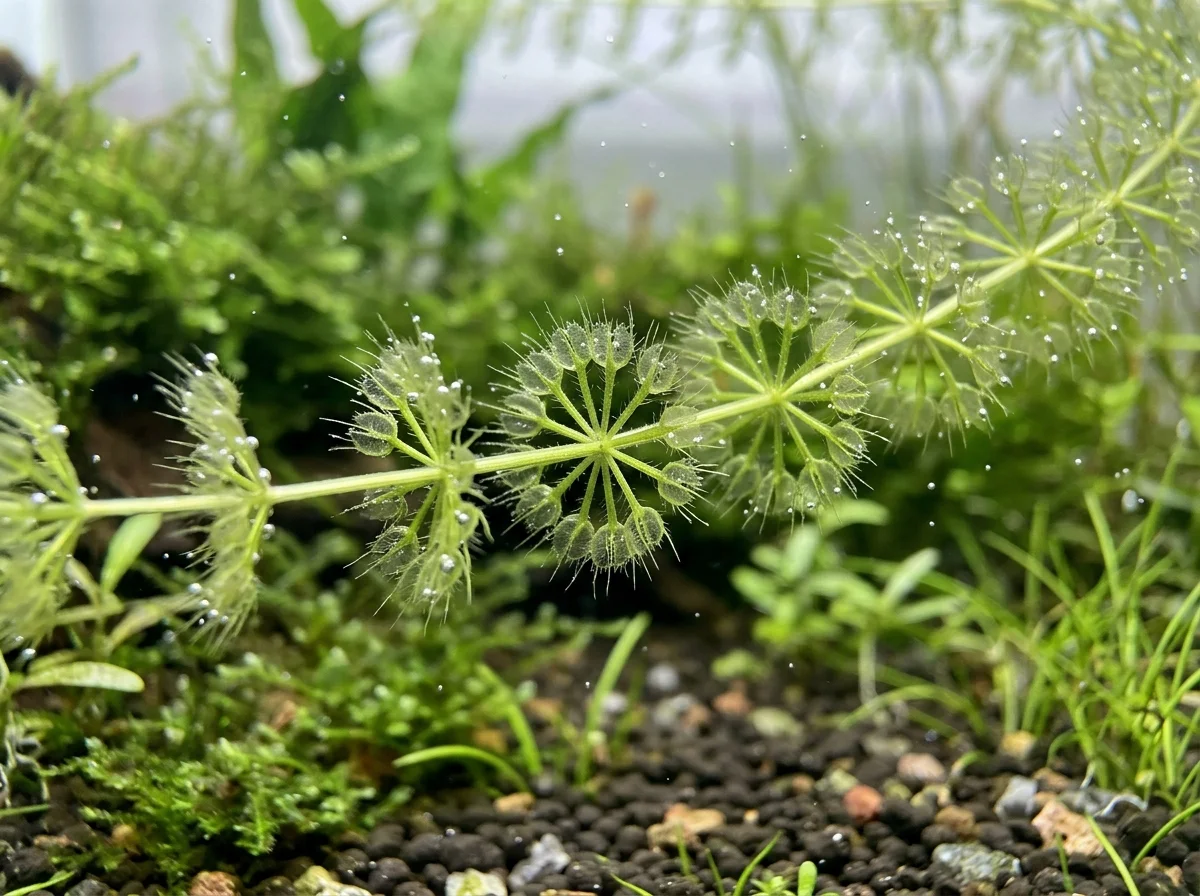
Aldrovanda vesiculosa, the waterwheel plant, is a free-floating, rootless aquatic carnivore with tiny underwater snap traps. It needs clean, nutrient-poor, slightly acidic, tannin-stained water, good light and companion plants to limit algae, and it is a specialist plant, not a typical beginner windowsill carnivore. Nurseries describe it as moderate to challenging, and it is endangered in the wild.
Key Cultivation Takeaways
- ✓This is a specialist aquatic plant, not a typical beginner windowsill carnivore.
- ✓It is free-floating and rootless; it is grown in water, not potted in soil.
- ✓It needs clean, nutrient-poor, slightly acidic, tannin-stained water and does not compete well with algae.
- ✓Temperate plants slow down and form winter buds (turions) as days shorten and temperatures fall.
- ✓It is endangered in the wild, so buy cultivated plants and never release them into natural waters.
Environmental Tolerance Matrix
Calibrated baseline thresholds for physiological stress prevention.
| TARGET PARAMETER | WARNING THRESHOLD | CRITICAL THRESHOLD |
|---|---|---|
| Ambient Temperature | Warm summer water; nursery mean about 27°C | Nursery range 2-32°C; tolerates frost if water does not freeze solid |
| Relative Humidity (RH) | Not applicable; submerged | Not applicable |
| Substrate pH & Root Aeration | Slightly acidic water (retailer suggests 5.0-6.5) | Not established in cited sources |
Biggest Owner Mistake
Treating it like a potted bog plant. It is a rootless aquatic plant that needs a managed water environment.
What Nobody Tells You
The same nutrient pollution that has driven it to extinction across much of its range is what makes it hard to keep: nutrient-rich water fuels algae.
Waterwheel plant overgrown by algae
Diagnosis: Aldrovanda does not compete well with algae; excess nutrients or light favor algae
Plant declining or poor growth
Diagnosis: Possible unsuitable water chemistry, too little light or unsuitable temperatures
Plant disappears in autumn or winter
Diagnosis: Temperate forms may form turions and sink
Traps small or not catching prey
Diagnosis: Low prey availability, low light, or poor water conditions
Interactive Watering & Substrate Calculator
Calibrated hydrological and soil volume modeling for Waterwheel Plant.
Comprehensive Species Profile & Care Guide
Aliases
- Waterwheel Plant
- Water Wheel Plant
- Aldrovanda
- Aldrovanda vesiculosa
- Waterwheel plant care
Quick Answer: Aldrovanda vesiculosa, the waterwheel plant, is a free-floating, rootless aquatic carnivore with tiny underwater snap traps. It needs clean, nutrient-poor, slightly acidic, tannin-stained water, good light and companion plants to limit algae, and it is a specialist plant, not a typical beginner windowsill carnivore. Nurseries describe it as moderate to challenging, and it is endangered in the wild.
Summary: Aldrovanda vesiculosa is a rootless, free-floating plant related to the Venus flytrap that captures small aquatic animals with underwater snap traps. It is the only living species in its genus and is listed as Endangered on the IUCN Red List. Growing it means building and maintaining a suitable aquatic environment, rather than potting it like a bog plant. Water quality, algae and temperature drive success.
Key Takeaways
- This is a specialist aquatic plant, not a typical beginner windowsill carnivore.
- It is free-floating and rootless; it is grown in water, not potted in soil.
- It needs clean, nutrient-poor, slightly acidic, tannin-stained water and does not compete well with algae.
- Temperate plants slow down and form winter buds (turions) as days shorten and temperatures fall.
- It is endangered in the wild, so buy cultivated plants and never release them into natural waters.
References
- Aldrovanda vesiculosa:
Source: Carnivorous Plant Nursery
Url: https://shop.carnivorousplantnursery.com/products/aldrovanda-vesiculosa
- Growing Tips for Aldrovanda:
Source: Carnivorous Plant Nursery
Url: https://carnivorousplantnursery.com/blogs/general-growing-and-care/growing-tips-for-aldrovanda
- A Method for Growing Aldrovanda:
Source: Carnivorous Plant Newsletter (ICPS)
Url: https://archive.org/download/biostor-243046/biostor-243046.pdf
- Population ecology of the endangered aquatic macrophyte Aldrovanda vesiculosa:
Source: University of Western Australia / Kings Park
Url: https://pitcherplant.org/Papers/Population%20ecology%20of%20the%20endangered%20aquatic%20macrophyte%20Aldrovanda%20vesiculosa.pdf
- Aldrovanda:
Source: Wikipedia (IUCN status and distribution summary)
Url: https://en.wikipedia.org/wiki/Aldrovanda
- Aldrovanda vesiculosa. The IUCN Red List of Threatened Species (Cross & Adamec, 2020):
Source: IUCN
Url: https://dx.doi.org/10.2305/IUCN.UK.2020-1.RLTS.T162346A83998419.en
- A Method for Growing Aldrovanda (Darnowski, 2002):
Source: Carnivorous Plant Newsletter (ICPS)
Url: https://cpn.carnivorousplants.org/Article.php/CPNv31n4p113-115
- Aldrovanda vesiculosa: Description, Ecology, and Cultivation (Breckpot, 1997):
Source: Carnivorous Plant Newsletter (ICPS)
Url: https://cpn.carnivorousplants.org/Article.php/CPNv26n3p73-82
- The biology and cultivation of red Australian Aldrovanda vesiculosa (Adamec, 1999):
Source: Carnivorous Plant Newsletter (ICPS)
Url: https://cpn.carnivorousplants.org/Article.php/CPNv28n4p128-132
- Waterwheel (Aldrovanda vesiculosa):
Source: EDDMapS
Url: https://www.eddmaps.org/species/subject.cfm?sub=77104
- The Waterwheel... Turning Over North American Wetlands:
Source: Maryland Invasive Species Council
Url: https://mdinvasives.org/?p=55
Family: Droseraceae
Genus: Aldrovanda
Species: vesiculosa
Native Range: Scattered locations in Europe, Asia, Africa and Australia
Growth Habit: Free-floating, rootless aquatic carnivore
Plant Type: Aquatic carnivorous perennial
Difficulty: advanced
Light: Bright to partial; full sun to dappled shade outdoors
Light Min: bright
Light Max: full
Water: Grown submerged in clean, nutrient-poor, slightly acidic, tannin-stained water; not potted
Dormancy Shift: true
Humidity: Not applicable; submerged
Temperature: Nursery data: mean summer water about 27°C, mean winter about 4°C, range 2-32°C; tropical plants grow year-round
Mature Size: Free-floating rope-like stems; whorls about 1.3 cm (1/2 in) across
Growth Rate: Fast in good conditions (nursery description)
Soil: No soil; peaty water with leaf litter or a peat, sand and leaf-litter bottom
Fertilizer: None; keep water nutrient-poor
Repotting Frequency: Not applicable
Pot Preference: Shallow, water-filled tub, pond or aquarium
Propagation: Stem cuttings and turions; seed is rare
Flowering: true
Flowering Season: Late summer
Native Region: Europe, Asia, Africa and Australia
Seasonality: warm-season growth; temperate plants form turions
Sources
- https://carnivorousplantnursery.com/blogs/general-growing-and-care/growing-tips-for-aldrovanda
- https://shop.carnivorousplantnursery.com/products/aldrovanda-vesiculosa
- https://archive.org/download/biostor-243046/biostor-243046.pdf
- https://cpn.carnivorousplants.org/Article.php/CPNv31n4p113-115
Sections
- overview:
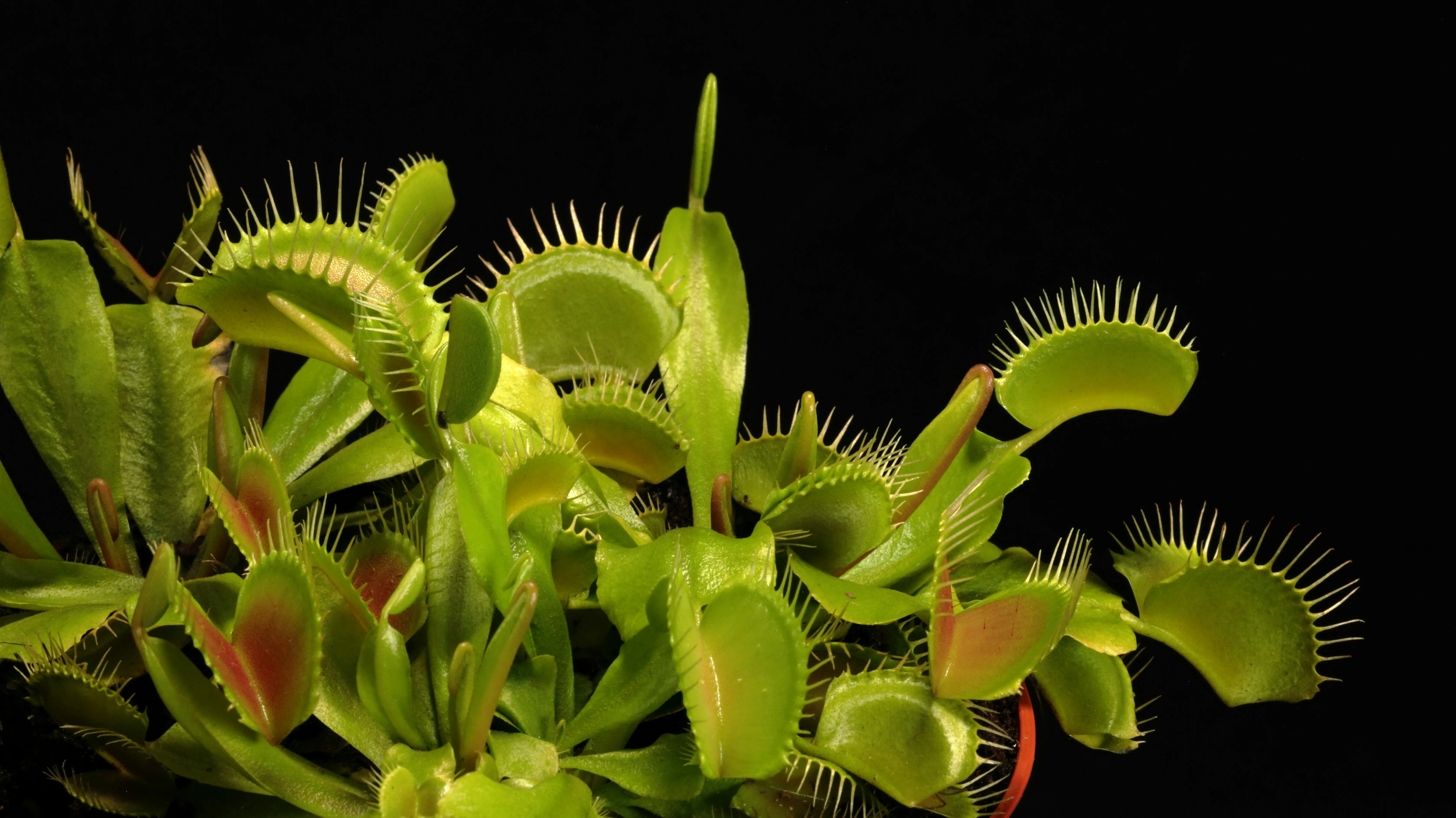
Content: Aldrovanda vesiculosa, the waterwheel plant, is a free-floating, rootless aquatic plant in the Droseraceae, the same family as the Venus flytrap. It has successive whorls of small snap traps shaped like tiny clams, with 4 to 9 traps per whorl according to one nursery. It occurs in scattered locations in Europe, Asia, Africa and Australia, and is the only living species in its genus. It is listed as Endangered on the IUCN Red List. It is a relative of the Venus flytrap, another snap-trap plant in the family Droseraceae, and shares its aquatic habit with the bladderworts.
- traps:
Content: The traps are small and underwater, borne on the whorled leaves of a rope-like floating stem. They capture tiny aquatic animals. Because the plant has no roots, it takes up everything it needs from the surrounding water, which is why water quality is so critical.
- habitat:
Content: In nature the waterwheel plant grows in shallow standing water with humic elements, which is nutrient-poor and often peaty. Nurseries describe dark, tea-colored water rich in tannins and low in nutrients, in sunny partial cover among water lilies, reeds and other emergent plants. Eutrophication is considered the primary reason it has become extinct in much of its native range.
- growingEnvironment:
Content: Aldrovanda is not grown like a potted bog plant. Nurseries suggest a shallow, water-filled tub, pond or aquarium (one source suggests at least a 38 L aquarium indoors) with a peat, sand and leaf-litter bottom, or a sphagnum peat slurry with the plant floating on top. The peat releases tannins and supplies free CO2, which nurseries say is important for growth. Add emergent plants in pots, such as cattail, pickerelweed, water lilies or arrowhead, and floating plants such as Azolla, to compete with algae and provide shade. A Carnivorous Plant Newsletter method used water hyacinths and transparent-sided containers.
- waterConditions:
Content: Use clean, nutrient-poor, slightly acidic water. One retailer gives a pH range of 5.0 to 6.5, but treat that as a general guide rather than a verified requirement. Avoid fertilizer and nutrient-rich water, which favor algae. Aldrovanda does not compete well with algae, and too much algae is a sign of unsuitable water conditions. Fish and other animals add nutrients to the water and make it less suitable. See distilled water for carnivorous plants for water choices and check your water with the carnivorous water TDS calculator.
- light:
Content: Nurseries describe bright to partially bright light indoors and full sun to dappled shade outdoors, with the plant doing best in sunny conditions among floating plants. Light also warms the water. A Carnivorous Plant Newsletter article reports that plants also grew well under constant 20 to 25°C water and 24-hour artificial light. Too much light with too many nutrients invites algae.
- temperature:
Content: One nursery reports a mean summer water temperature of about 27°C, a mean winter water temperature of about 4°C and an observed range of 2 to 32°C. It says Aldrovanda can tolerate frost or a light freeze as long as the water does not freeze solid. Treat these as nursery figures, not universal limits, and note that forms from tropical habitats do not go dormant.
- dormancy:
Content: In temperate regions the plant slows its growth and forms winter buds called turions as day length and temperature drop. Tropical plants grow year-round without forming turions. If you keep a temperate form, expect the plant to appear to disappear over winter, and do not discard the bottom of the tank. For comparison with the winter rest of other carnivorous plants, see the dormancy requirements guide.
- feeding:
Content: Avoid fertilizer. The plant feeds on tiny aquatic animals that the water supports, so leaf litter and companion plants help maintain the small invertebrate population. Avoid adding nutrients that encourage algae.
- propagation:
Content: Aldrovanda reproduces mostly vegetatively, from stem pieces and turions. Seeds are rare. Nurseries recommend stem cuttings a few centimeters long for propagation. Plants produce small white flowers above the water in summer to late summer.
- beginnerSuitability:
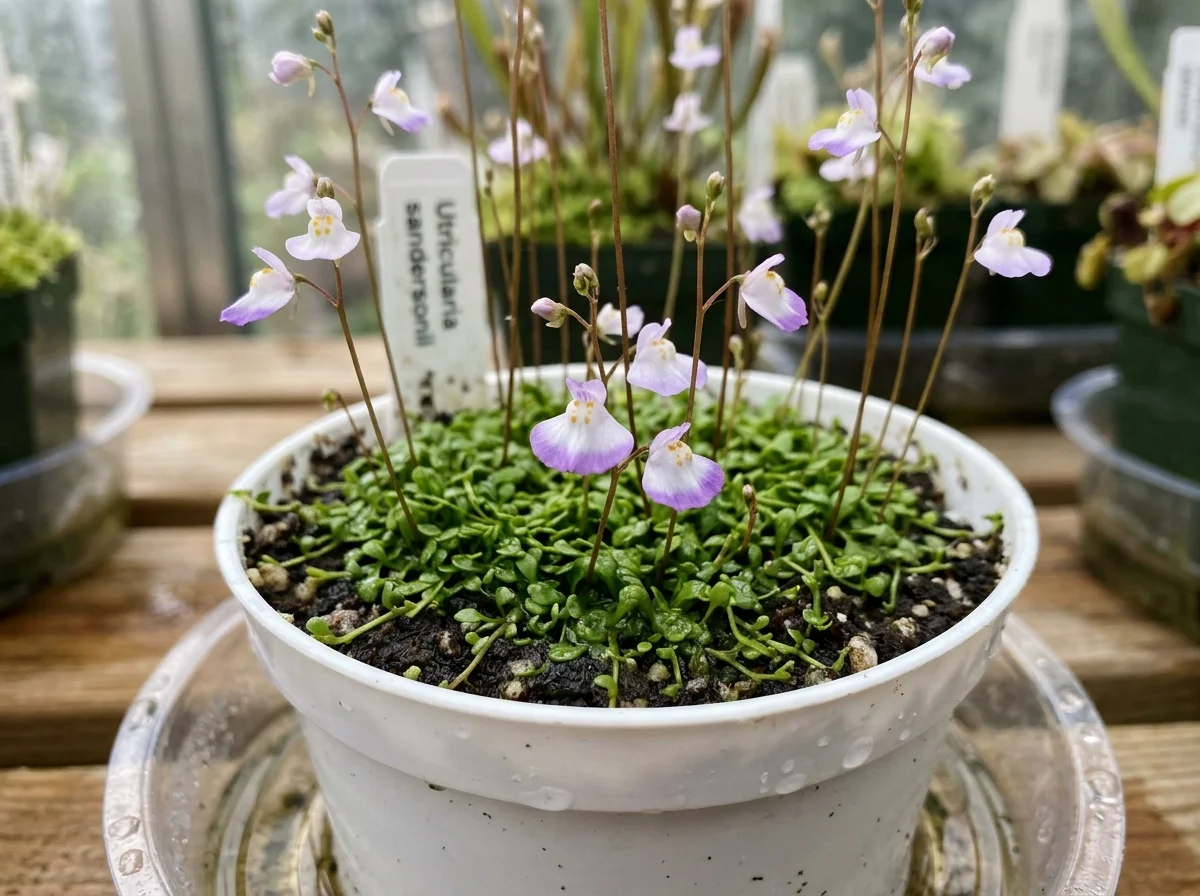
Content: This is a specialist aquatic plant, not a typical beginner windowsill carnivore. Nurseries describe it as moderate to challenging. Success depends on maintaining a stable, clean, nutrient-poor aquatic environment, controlling algae and managing seasonal temperature. If you want a first aquatic carnivore, aquatic bladderworts are described as easier. If you are choosing a first carnivorous plant, our best carnivorous plants for beginners guide lists easier options, and the carnivorous plants hub covers every group.
- conservation:
Content: Aldrovanda is listed as Endangered on the IUCN Red List and has become extinct in many parts of its former range, mainly from eutrophication and habitat loss. Buy only cultivated plants. Potentially invasive naturalised populations have been reported in the eastern United States, so never release it into natural waters, and check local regulations.
Troubleshooting
- Waterwheel plant overgrown by algae:
Diagnosis: Aldrovanda does not compete well with algae; excess nutrients or light favor algae
Treatment: Reduce nutrients, remove algae, add emergent and floating companion plants and peat to restore tea-colored, low-nutrient water.
Prevention: Keep water nutrient-poor and avoid fertilizer and fish waste.
Confidence: 0.7
Evidence
- https://cpn.carnivorousplants.org/Article.php/CPNv35n3p84-88
- https://carnivorousplantnursery.com/blogs/general-growing-and-care/growing-tips-for-aldrovanda
- Plant declining or poor growth:
Diagnosis: Possible unsuitable water chemistry, too little light or unsuitable temperatures
Treatment: Check water quality and light, and keep conditions stable.
Prevention: Match peaty, nutrient-poor water and bright light.
Confidence: 0.5
Evidence
- https://cpn.carnivorousplants.org/Article.php/CPNv31n4p113-115
- https://cpn.carnivorousplants.org/Article.php/CPNv26n3p73-82
- Plant disappears in autumn or winter:
Diagnosis: Temperate forms may form turions and sink
Treatment: Do not discard the tank; keep the turions cool and the water from freezing solid.
Prevention: Allow natural seasonal slowdown.
Confidence: 0.7
Evidence
- https://cpn.carnivorousplants.org/Article.php/CPNv28n4p128-132
- Traps small or not catching prey:
Diagnosis: Low prey availability, low light, or poor water conditions
Treatment: Improve light and water, and support the small aquatic invertebrates the plant feeds on.
Prevention: Keep a leaf-litter and companion-plant ecosystem.
Confidence: 0.5
Evidence
- https://carnivorousplantnursery.com/blogs/general-growing-and-care/growing-tips-for-aldrovanda
- https://cpn.carnivorousplants.org/Article.php/CPNv26n3p73-82
Growth Rate: fast in good conditions (nursery description)
Mature Height: Free-floating; one retailer states about 15 cm
Mature Spread: Spreads by stem growth
Life Cycle: Perennial; temperate forms overwinter as turions
Dormancy Period: Winter turions in temperate forms; none in tropical forms
Foliage Texture: Whorls of leaves ending in tiny snap traps
Blooming Season: Summer to late summer
Container Friendly: yes, in a water-filled tub or aquarium
Indoor Capable: difficult
Temperature
Recommended: Warm summer water; nursery mean about 27°C
Survivable: Nursery range 2-32°C; tolerates frost if water does not freeze solid
Humidity
Recommended: Not applicable; submerged
Survivable: Not applicable
Soil PH
Recommended: Slightly acidic water (retailer suggests 5.0-6.5)
Survivable: Not established in cited sources
Description: Bright to partially bright indoors; full sun to dappled shade outdoors.
Sunlight Hours: Not established
Intensity: high
Indoor Window: Needs strong light, such as a well-lit aquarium
Shade Tolerance: moderate
Nitrogen Demand: low
Phosphate Demand: low
Potassium Demand: low
Micronutrient Notes: Keep water nutrient-poor; fertilizer and nutrient-rich water favor algae.
Fertilizer Frequency: Avoid; keep water nutrient-poor
Organic Options: Leaf litter and companion plants support the small aquatic prey it eats.
Difficulty: advanced
Pruning: Remove excess algae and dead stems
Best For: Experienced growers with a stable aquatic setup
Expert Insights
- Biggest Owner Mistake:
Type: mistake
Content: Treating it like a potted bog plant. It is a rootless aquatic plant that needs a managed water environment.
- What Nobody Tells You:
Type: hidden_truth
Content: The same nutrient pollution that has driven it to extinction across much of its range is what makes it hard to keep: nutrient-rich water fuels algae.
Glossary Terms
- Turion:
Definition: A winter bud that temperate Aldrovanda forms at the stem tips, which sinks to survive cold conditions.
- Tannin-stained water:
Definition: Tea-colored water from peat or leaf litter; nurseries say the tannins support good growth and reduce algae.
Waterwheel Plant Vs Potted Bog Carnivores
| Factor | Aldrovanda | Typical potted carnivore |
|---|---|---|
| Growing medium | Free-floating in water; no soil | Pot of peat or sand |
| Roots | None | Yes |
| Main challenge | Water quality and algae | Light and water purity |
| Beginner suitability | Specialist | Varies |
Cat: true
Dog: true
Sources
- https://www.aspca.org/pet-care/animal-poison-control/toxic-and-non-toxic-plants/cats
- https://www.carnivorousplants.org/grow/guides/Aldrovanda
Frequently Asked Questions
Direct answers to the most common grower inquiries.
How do you grow Aldrovanda vesiculosa?▼
Grow it free-floating in clean, nutrient-poor, slightly acidic, tannin-stained water in a tub, pond or aquarium, with good light, companion plants and a peat-based bottom. It is not potted in soil.
Is the waterwheel plant easy to grow?▼
No. Nurseries describe it as moderate to challenging. It is a specialist aquatic plant rather than a beginner windowsill carnivore.
What water does Aldrovanda need?▼
Clean, soft, nutrient-poor, slightly acidic water, ideally tea-colored from peat. Avoid fertilizer and nutrient-rich water.
How much light does a waterwheel plant need?▼
Bright to partially bright light indoors and full sun to dappled shade outdoors, per nursery guidance. Strong light with too many nutrients can cause algae.
What temperature does Aldrovanda need?▼
It grows best in warm water; one nursery reports a mean summer water temperature of about 27°C and winter around 4°C. Temperate plants form turions in winter.
What are turions?▼
Winter buds that temperate Aldrovanda form at the stem tips as days shorten and temperatures fall, allowing it to survive cold conditions.
Does Aldrovanda have roots?▼
No. It is a rootless, free-floating plant that absorbs what it needs from the water.
How do I propagate Aldrovanda?▼
Mostly vegetatively through stem cuttings and turions. Seeds are rare.
Why is my Aldrovanda declining?▼
Common suspects are algae, nutrient-rich water, low light and unsuitable temperatures, but the cause needs checking. Test and improve the water first.
Can I grow Aldrovanda indoors?▼
It can be grown in an aquarium with strong light, but nurseries say outdoor growing generally works better. It is not a typical windowsill plant.
Is Aldrovanda endangered?▼
Yes. The IUCN Red List (2020 assessment by Cross and Adamec) lists Aldrovanda vesiculosa as Endangered, and it has disappeared from many parts of its former range. Buy only cultivated plants.
Is the waterwheel plant invasive?▼
It is endangered worldwide yet has become naturalised outside its native range. Virginia, USA first documented a naturalised population in 2014. Never release it into natural waters, and check local regulations before keeping it outdoors.
Is Aldrovanda related to the Venus flytrap?▼
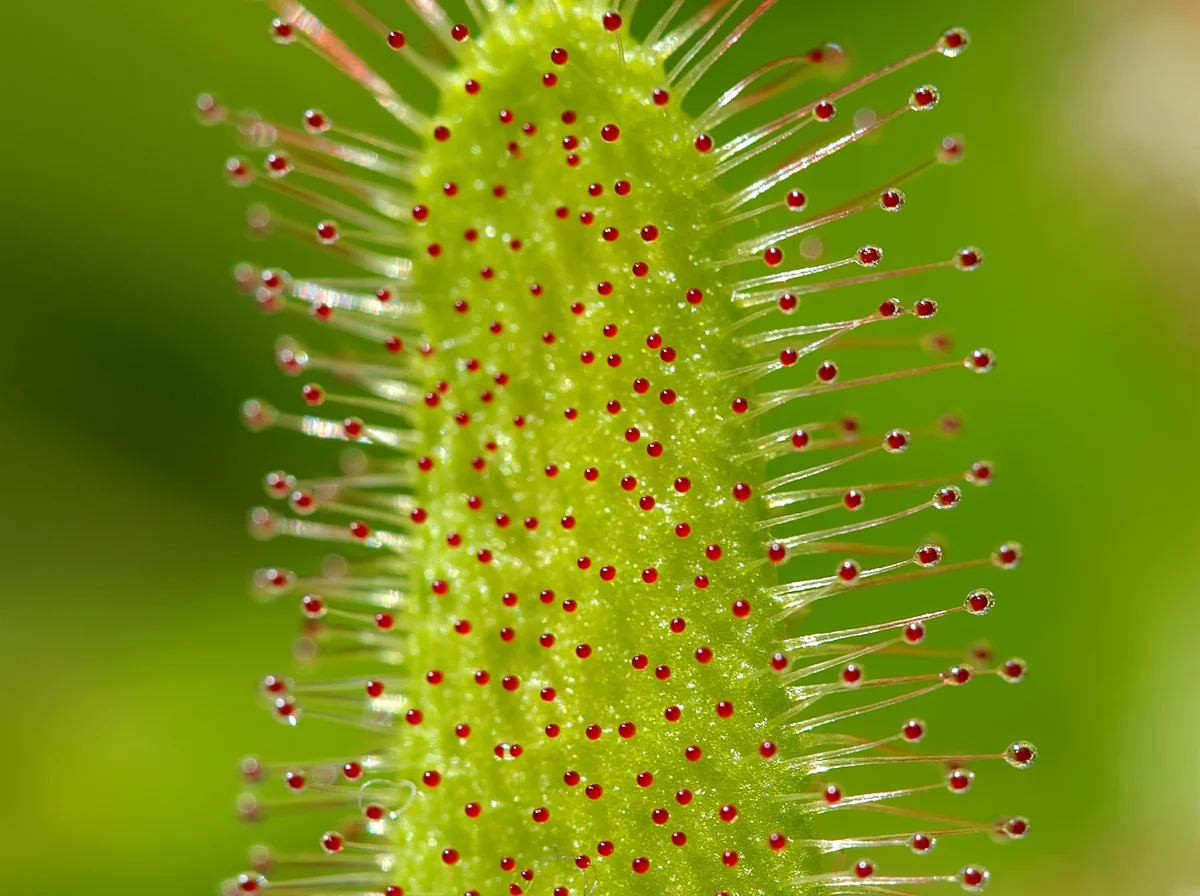
Yes. Aldrovanda vesiculosa is in the same family as the Venus flytrap (Droseraceae), is closely related to sundews and Venus flytraps, and also uses snap traps, but its traps are tiny and underwater.
Next Best Actions & Diagnostic Tools
Academic & Botanical Sources
- Aldrovanda vesiculosa (Carnivorous Plant Nursery)Access Source →
- Growing Tips for Aldrovanda (Carnivorous Plant Nursery)Access Source →
- A Method for Growing Aldrovanda (Carnivorous Plant Newsletter (ICPS))Access Source →
- Population ecology of the endangered aquatic macrophyte Aldrovanda vesiculosa (University of Western Australia / Kings Park)Access Source →
- Aldrovanda (Wikipedia (IUCN status and distribution summary))Access Source →
- Aldrovanda vesiculosa. The IUCN Red List of Threatened Species (Cross & Adamec, 2020) (IUCN)Access Source →
- A Method for Growing Aldrovanda (Darnowski, 2002) (Carnivorous Plant Newsletter (ICPS))Access Source →
- Aldrovanda vesiculosa: Description, Ecology, and Cultivation (Breckpot, 1997) (Carnivorous Plant Newsletter (ICPS))Access Source →
- The biology and cultivation of red Australian Aldrovanda vesiculosa (Adamec, 1999) (Carnivorous Plant Newsletter (ICPS))Access Source →
- Waterwheel (Aldrovanda vesiculosa) (EDDMapS)Access Source →
- The Waterwheel... Turning Over North American Wetlands (Maryland Invasive Species Council)Access Source →