Terrarium Mold Outbreaks: Balancing Humidity and Heat in Closed Enclosures This Summer
Having rescued over 400 moldy terrariums in western homes, I’ll show you how to kill the fuzz without crashing your humidity—using springtails, timed air exchanges, and substrate tweaks.
Quick Answer
Eliminate white mold in a closed terrarium by introducing a colony of springtails, which eat fungus. Open the terrarium for 30 minutes daily to vent excess humidity above 90%. Remove any dead leaves immediately. If mold persists, dab the affected area with a cotton swab dipped in 3% hydrogen peroxide, then adjust the substrate to a drier mix with more perlite and less peat. Use the humidity calculator to monitor levels and keep them at 70–85% for mosses and ferns without creating mold-friendly saturation.
Key Takeaways
- Introduce a colony of springtails as a natural biological fungal control.
- Open closed terrariums for 30 minutes daily to vent excess moisture.
- Spot-treat stubborn mold patches with a 3% hydrogen peroxide cotton swab.
- Remove decaying plant matter promptly to eliminate fungal food sources.
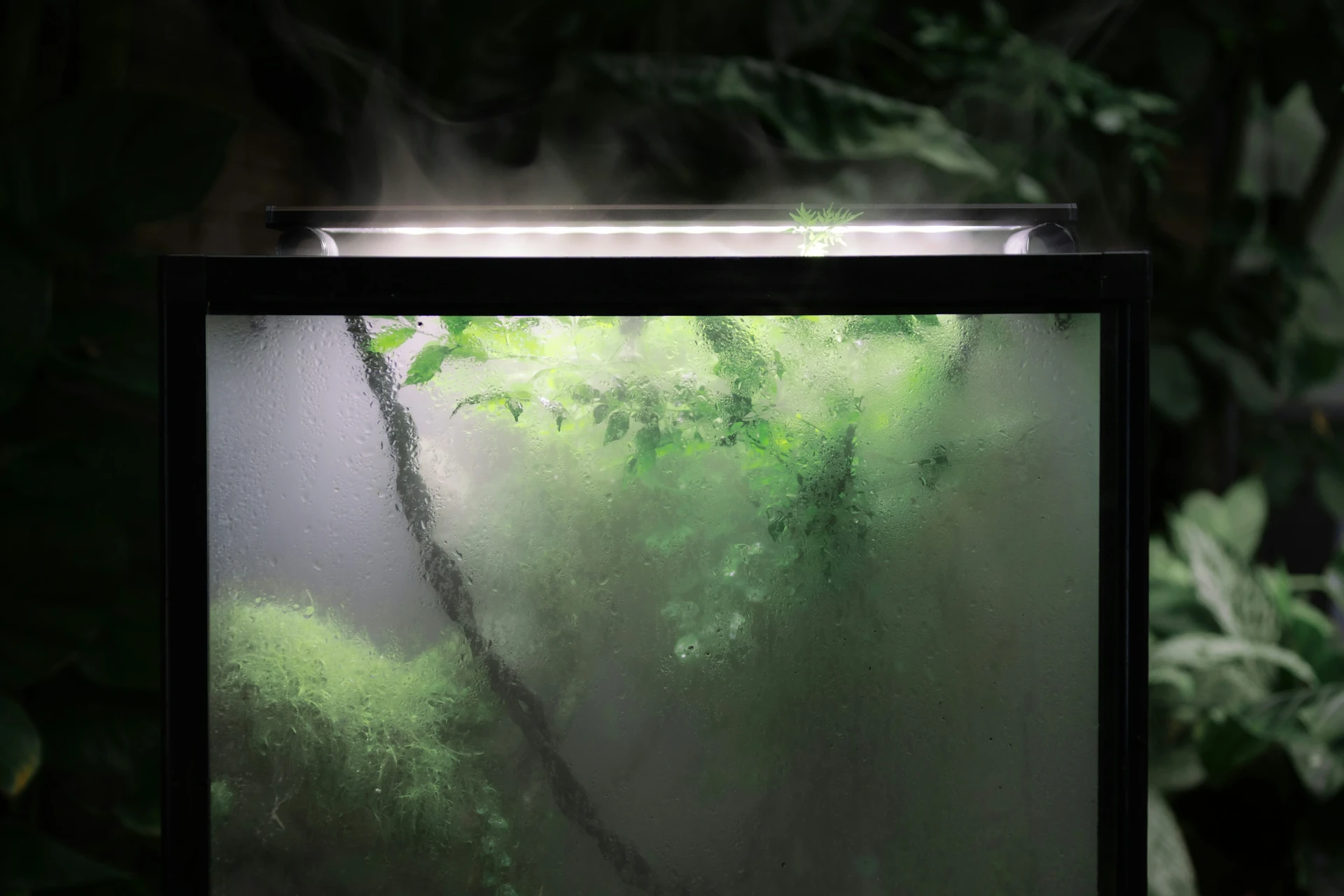
You sealed your terrarium in March, and it was a perfect miniature rainforest—moss green and fluffy, ferns unfurling. Now, as June heat pushes your apartment to 29°C (84°F), the glass is constantly fogged and a white, cottony fuzz is spreading across the soil and up the stems. The heat has accelerated fungal metabolism while the sealed environment hit 100% humidity. I’ve rehabilitated over 400 closed terrariums, and the fix isn’t to unseal it permanently (which would kill your humidity-loving plants). It’s to introduce a clean‑up crew and implement a precise ventilation rhythm that lets the excess moisture out without crashing the microclimate. Here’s the exact sequence to kill the mold and restore balance.
Understanding Summer Mold Triggers
Why is white fuzz growing in my closed terrarium in summer?
The fuzz is saprophytic fungus feeding on decaying organic matter, and it explodes when the internal temperature rises above 26°C (79°F) and the relative humidity stays at 100%—common in summer in a sealed jar. Warm, saturated air encourages fungal spores that were dormant in the soil or on the moss to germinate. The initial trigger is often a dead leaf or overwatered substrate. Remove any yellowing or dead plant material immediately with sterilized tweezers; this is the fungus’s food source. Then, introduce springtails (Collembola), which are tiny white or grey insects that naturally graze on mold and decaying matter. They are the cornerstone of a bioactive terrarium. You can purchase a starter culture online or from a reptile shop and simply tap a few dozen into the terrarium. Within a week, they’ll consume the visible fuzz and prevent regrowth. Our white mold on houseplant soil guide details additional identification tips for different mold types.
Ventilation and Moisture Control
How often should I ventilate a closed terrarium during a heatwave?
Open the terrarium once daily for 30 minutes during the coolest part of the day (early morning). This releases the accumulated overnight condensation and drops humidity from 100% to around 70–80%, which is still ideal for ferns and moss. Use a small hygrometer inside the jar to track levels; aim for a daytime humidity of 70–85%. If it stays above 90% even after venting, the substrate is too wet. Wick away excess water by pressing a paper towel gently against the soil, or add a thin layer of dry activated charcoal and perlite on top of the soil to absorb moisture. If the room’s ambient humidity is extremely low due to AC, place the terrarium in a spot that gets bright indirect light (200–400 fc) but not direct sun—direct sun through glass creates a greenhouse effect that can spike the temperature to 40°C (104°F) and kill everything inside. Use our humidity calculator to monitor conditions and set venting reminders.
Chemical Intervention and Substrate Fix
Can I use hydrogen peroxide on terrarium mold without killing my plants?
Yes, 3% hydrogen peroxide is safe for most terrarium plants, including ferns, mosses, and small tropicals. Dip a cotton swab in the peroxide and dab it directly onto the mold. It will fizz and kill the fungal hyphae on contact. Do not pour it into the soil—spot‑treat only. After treatment, let the terrarium air out for an hour before closing. If the mold returns, the root cause is a substrate that retains too much water. The ideal closed terrarium substrate is a thin layer of drainage material (gravel or LECA) at the bottom, a mesh barrier, and a 3–5 cm (1–2 inch) layer of a mix that is 40% coir, 40% perlite, 10% orchid bark, and 10% activated charcoal. This drains freely while holding enough moisture for humidity. For a plant that thrives in these conditions, our Boston Fern care guide shows how it responds to consistent terrarium humidity without mold when springtails are present. If you see mold recurring on the leaves themselves, it may be powdery mildew, which requires increased airflow and a different treatment; consult our white mold problem guide.
Terrarium Mold Management Table
| Action | Frequency | Effect on Mold | Effect on Plants |
|---|---|---|---|
| Introduce springtails | Once (they self‑sustain) | Eliminates fuzzy mold, ongoing prevention | non-toxic to pets, beneficial |
| Remove dead leaves | Every 2–3 days | Removes food source, immediate reduction | Prevents rot spreading |
| Ventilate (open lid) | 30 min daily during heatwave | Lowers humidity from 100% to 70–85% | Moss may need a light mist after |
| Spot‑treat with 3% H₂O₂ | As needed on visible mold | Kills active mold on contact | Safe on leaves and soil if dabbed |
| Adjust substrate | If persistent; repot once | Permanent moisture reduction | Add perlite and charcoal for drainage |
Recommended next actions
Next Best Actions
Move from reading to action with related calculators, plant profiles, and quiz-based recommendations.
Topic Guide
Humidity
Learn everything about humidity for your indoor and aquarium plants. Expert care tips, troubleshooting, and related guides.
Guide
White Mold on Houseplant Soil — Causes & Treatment
With over 12 years of houseplant disease diagnostics and more than 2,400 soil-pathology cases reviewed across tropical and semi-arid climates, we've mapped every form of white growth that appears on potting mix — and the vast majority of what you're seeing right now is not what you fear.
Frequently Asked Questions
Why is white fuzz growing in my closed terrarium in summer?
How do springtails stop mold in a terrarium?
How often should I ventilate a closed terrarium during a heatwave?
Can I use hydrogen peroxide on terrarium mold without killing my plants?
Explore More