Sun Pitcher (Heliamphora) Care and Cultivation
Highland pitcher plants from the tepuis of the Guiana Highlands. Success depends on bright light, cool roots and a fertilizing method that suits your setup.
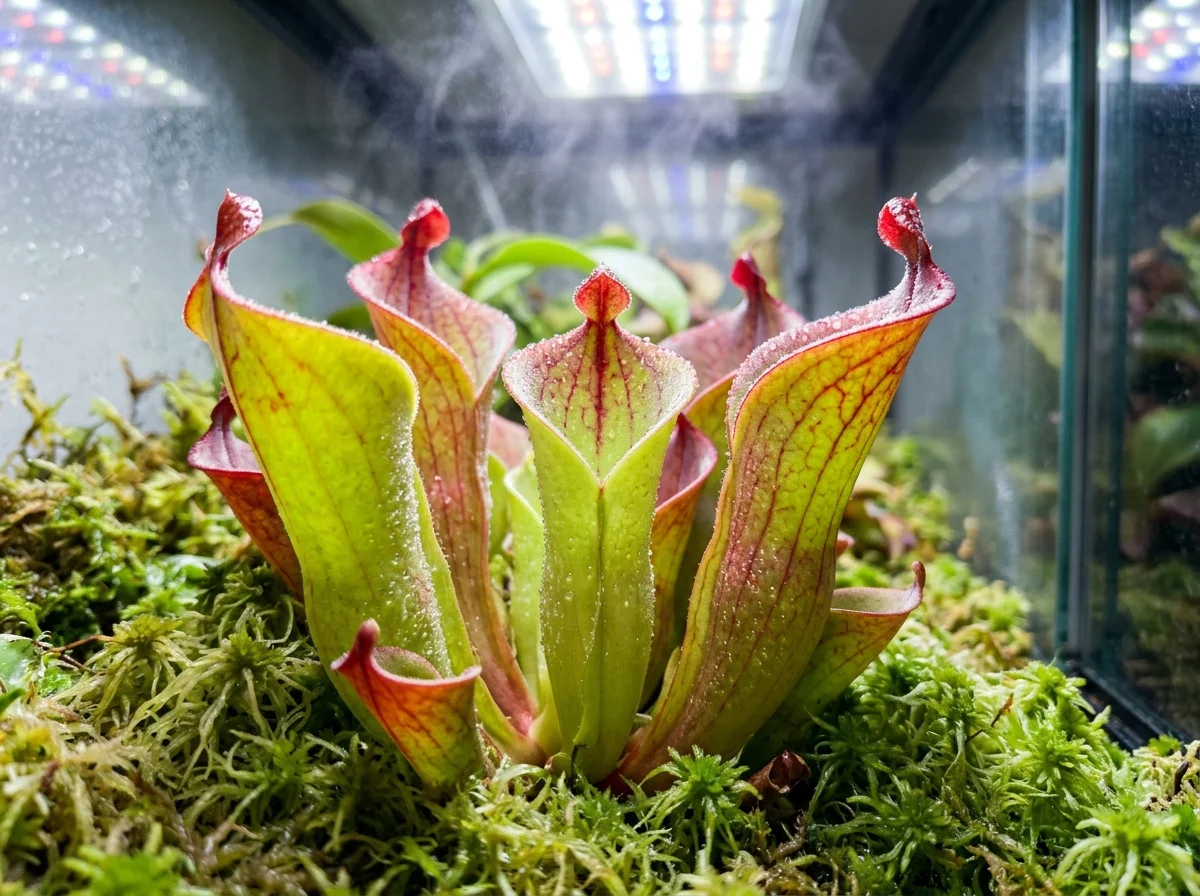
Heliamphora, the sun pitchers, are highland pitcher plants from the Guiana Highlands of Venezuela, Guyana and Brazil. ICPS says they can be one of the easier or harder carnivores depending on the conditions you can provide. They need very bright light, cool roots, pure water, a water-holding but airy mix, and a fertilizing method that suits the setup. Care varies by species, so beginners should start with hybrids or typical Heliamphora heterodoxa, H. nutans or H. minor.
Key Cultivation Takeaways
- ✓Care varies by species and hybrid: start with hybrids or typical H. heterodoxa, H. nutans or H. minor.
- ✓Root temperature matters most; large plants can die after prolonged temperatures above about 26°C (79°F).
- ✓Very bright light is essential, ideally with light from the side as well as the top.
- ✓Use pure water and a mix that holds water but stays airy and never dries out.
- ✓Unlike most carnivores, ICPS says Heliamphora requires fertilization to grow well, but too much soil fertilizer is easy to overdo.
Environmental Tolerance Matrix
Calibrated baseline thresholds for physiological stress prevention.
| TARGET PARAMETER | WARNING THRESHOLD | CRITICAL THRESHOLD |
|---|---|---|
| Ambient Temperature | Roots around 16-20°C (60-68°F); cool conditions | Up to about 30°C; above 40°C fatal for most species; light frost tolerated |
| Relative Humidity (RH) | Above about 70%, or use an enclosure | Not established |
| Substrate pH & Root Aeration | Not established in cited sources | Not established in cited sources |
Biggest Owner Mistake
Over-fertilizing the soil. ICPS says it is one of the easiest ways to kill a Heliamphora.
What Nobody Tells You
Heliamphora needs fertilizing, unlike most carnivores, and care varies widely by species and clone.
Heliamphora declining in warm conditions
Diagnosis: Prolonged heat is a risk; large plants can die above about 26°C (ICPS)
Rapid decline in warm, humid conditions
Diagnosis: A fungal pathogen in the vascular system has been reported to kill infected plants in under 10 days at constant 28°C and high humidity (ICPS)
Decline after fertilizing
Diagnosis: Too much fertilizer in the soil is an easy way to kill Heliamphora (ICPS)
Weak or stunted growth
Diagnosis: Possible low light, an unsuitable mix, or too little fertilizer
Moss or fungus gnats on the surface
Diagnosis: Live sphagnum can overgrow small plants and attract gnats
Interactive Watering & Substrate Calculator
Calibrated hydrological and soil volume modeling for Sun Pitcher.
Comprehensive Species Profile & Care Guide
Aliases
- Sun Pitcher
- Sun Pitchers
- Heliamphora
- Heliamphora care
Quick Answer: Heliamphora, the sun pitchers, are highland pitcher plants from the Guiana Highlands of Venezuela, Guyana and Brazil. ICPS says they can be one of the easier or harder carnivores depending on the conditions you can provide. They need very bright light, cool roots, pure water, a water-holding but airy mix, and a fertilizing method that suits the setup. Care varies by species, so beginners should start with hybrids or typical Heliamphora heterodoxa, H. nutans or H. minor.
Summary: Heliamphora is a genus of at least 23 pitcher plant species restricted to the Guiana Highlands, mostly on cool, rainy tepui summits at high elevation. In cultivation the roots matter most: ICPS emphasizes root temperature, pure water, aerated mix and a controlled fertilizing approach. Because care varies across species and hybrids, general guidance here is based on ICPS's overview, and highland-specific species may need more specialized conditions.
Key Takeaways
- Care varies by species and hybrid: start with hybrids or typical H. heterodoxa, H. nutans or H. minor.
- Root temperature matters most; large plants can die after prolonged temperatures above about 26°C (79°F).
- Very bright light is essential, ideally with light from the side as well as the top.
- Use pure water and a mix that holds water but stays airy and never dries out.
- Unlike most carnivores, ICPS says Heliamphora requires fertilization to grow well, but too much soil fertilizer is easy to overdo.
References
- Growing Heliamphora:
Url: https://carnivorousplants.org/grow/guides/Heliamphora
- Carnivorous plants:
Url: https://www.rhs.org.uk/plants/types/carnivorous
- Grow Heliamphora:
Url: https://species.carnivorousplants.org/Grow/Heliamphora.php
Family: Sarraceniaceae
Genus: Heliamphora
Species: at least 23 species and many hybrids
Native Range: Guiana Highlands of Venezuela and adjacent Guyana and Brazil
Growth Habit: Highland pitcher plant, mostly on tepui summits
Plant Type: Carnivorous perennial
Difficulty: intermediate to advanced (varies by species)
Light: Very bright light; side light as well as top light
Light Min: bright
Light Max: full
Water: Pure water (RO is common) or tap water very low in minerals; keep the medium wet and never dry
Dormancy Shift: false
Humidity: Enclosure needed unless room humidity is above about 70% (ICPS terrarium advice)
Temperature: Roots 16-20°C (60-68°F) in the wild; tolerate up to about 30°C; large plants can die after prolonged temperatures above 26°C
Mature Size: Varies by species
Growth Rate: Varies by species
Soil: Water-holding, airy mix; e.g. long-fibered sphagnum, perlite and aquatic planting medium in equal parts (North American consensus)
Fertilizer: Requires careful fertilization; dilute, urea-free; in-pitcher feeding for adult plants
Repotting Frequency: Two or more years without repotting is not uncommon
Pot Preference: Pot in a mix that matches your watering method
Propagation: Division, leaf pullings, seed
Flowering: true
Native Region: Guiana Highlands
Seasonality: year-round
Sources
- https://carnivorousplants.org/grow/guides/Heliamphora
- https://species.carnivorousplants.org/Grow/Heliamphora.php
Sections
- overview:
Content: Heliamphora, the sun pitchers, are pitcher plants found only in the Guiana Highlands of Venezuela and adjacent Guyana and Brazil. ICPS says there are at least 23 species plus many hybrids in the wild, and that most species live between 1200 and 2800 m on tepuis, which are sandstone plateaus. ICPS says Heliamphora can be one of the easier carnivores to grow or one of the harder, depending on the conditions you can provide, and that much of what has been written about its culture is wrong or misleading.
- howPitchersDiffer:
Content: Heliamphora is a New World highland pitcher plant, unlike tropical Nepenthes, which the RHS describes as warm, humid, partly shaded jungle plants, and unlike hardy Sarracenia, which the RHS describes as outdoor plants for a sunny spot. ICPS notes that Heliamphora, like Sarracenia, can use nutrients in the soil but cannot tolerate the fertilizer levels Sarracenia appreciates. Their requirements are therefore not interchangeable with either genus. Compare it with Nepenthes, Sarracenia and our pitcher plant guide. Heliamphora is in the same family as Sarracenia and the cobra lily, Darlingtonia.
- speciesVariation:
Content: General advice here comes from ICPS's overview and applies broadly; specific species may differ. ICPS says the easiest Heliamphora to grow are hybrids and the generic or typical selections of Heliamphora heterodoxa, H. nutans and H. minor, and that beginners should start with those. Highland-adapted species and clones may be less tolerant of heat, so do not assume that every species suits a given setup. If you are new to carnivorous plants, compare easier options in our best carnivorous plants for beginners guide first.
- temperature:
Content: On tepui summits the temperature range is generally 7 to 23°C (45 to 74°F), with occasional higher and lower temperatures but not below freezing. ICPS cites root temperatures of 16 to 20°C (60 to 68°F) in the wild. In captivity, Andreas Wistuba reported that plants tolerate up to 30°C (86°F), and that temperatures above 40°C (104°F) are fatal for most species. Large plants are especially susceptible to heat and can die with prolonged temperatures above 26°C (79°F). Plants survive light frosts. ICPS says it is not necessary to cool plants at night as long as the soil was not warm during the day.
- light:
Content: Heliamphora requires very bright light. ICPS says the easiest way to grow them is indoors under artificial lighting. In an enclosure with reflective sides, plants need at least 20 W of LED light or 1200 lumens per square foot (30 cm square) for 15 hours a day at about 10 to 15 cm above the plants. Shorter light periods or non-reflective enclosures need more intense light. Light only from the top is not very effective because the pitchers need light from the sides as well. ICPS does not recommend fluorescent lighting unless heat is kept away from the plants.
- airflowAndHumidity:
Content: ICPS says that unless the room humidity is above 70%, plants will need an enclosure such as a terrarium. It also notes that a common pathogenic fungus in the plant's vascular system, studied by Andreas Fleischmann, killed infected plants in under 10 days at a constant 28°C (82°F) and high humidity, and that plants can be infected from soil, rainwater and other plants. Reusing soil, using contaminated soil ingredients and overhead watering can spread it. Keep temperatures from sitting at a constant high level, avoid reusing soil, and keep the setup clean. Enclosure options are covered in the carnivorous plant terrarium build guide.
- rootZoneMoisture:
Content: ICPS notes that plants in the wild can be partially submerged or flooded by daily showers, which limits bacteria and fungi and supplies oxygen to the roots. It is not necessary to flood or top-water daily in cultivation. The important point is the combination of enough light, a mix matched to the watering schedule, and a fertilizing technique that suits the environment. The soil should never dry out, the plants should root throughout it, and it should never smell stagnant. Use pure water such as reverse osmosis, or tap water very low in dissolved minerals; ICPS says well water is generally too salty and that filtering or softening will not make water less salty. Read distilled water for carnivorous plants for pure water choices and check your water with the carnivorous water TDS calculator.
- soil:
Content: ICPS says the current consensus among North American growers is Butch Tincher's mix of equal parts long-fibered sphagnum, perlite and aquatic planting medium. Alternatives include long-fibered sphagnum with perlite, or with coarse sand, or equal parts long-fibered sphagnum, coarse sand and aquatic planting medium. In Europe, Andreas Wistuba recommends equal parts fine horticultural pine bark, long-fibered sphagnum and Aggrofoam. ICPS says there is no magic mix: choose one that matches the materials and growing conditions you have, and avoid ingredients that break down quickly. A 1 cm sand mulch can reduce moss and fungus gnats. The carnivorous plant substrate guide lists safe peat, sand and perlite mixes.
- fertilizing:
Content: ICPS says Heliamphora requires fertilization to grow well. Options include spraying with a fertilizer solution, putting solution or pellets in the pitchers, watering with a dilute solution, or adding pellets to the soil. ICPS prefers urea-free fertilizers and warns that one of the easiest ways to kill a Heliamphora is to put too much fertilizer in the soil, and that some species are more sensitive than others. For plants with adult pitchers, in-pitcher feeding is the best option, and ICPS describes dilute urea-free solutions or slow-release pellets, keeping the total dissolved solids low if it reaches the soil.
- checklist:
Content: Growing-environment checklist, based on ICPS: confirm the species or hybrid, and whether it is highland-adapted. Provide very bright light from the top and sides. Keep roots below about 26°C and avoid sustained heat. Use pure water, and keep the medium wet and airy. Use an enclosure if room humidity is below about 70%. Choose a long-lasting mix, avoid reusing soil, and use a fertilizing method that suits your setup, with very dilute amounts.
- propagation:
Content: ICPS says healthy mature Heliamphora naturally divide, especially when they bloom, and that division is where you see how well your setup is working. Divide when plants are at their peak and temperatures are relatively low, and avoid dividing in late spring and summer if your plants exceed 26°C. Leaf pullings work best with juvenile leaves and small pitchers, and can take six months to a year to root, with success varying by species. Plants from seed grow very slowly unless started in sterile culture. ICPS gives detailed division steps; follow them only to the level you have experience with.
- commonProblems:
Content: Symptoms to investigate rather than diagnose from one sign: collapse or decline in hot conditions (check root and air temperature), rapid decline at high temperature and humidity (a fungal pathogen is one reported cause), decline after soil fertilization (too much fertilizer is a known risk), stunted growth (check light and fertilizing), and moss or fungus gnats on the surface. Check light, temperature, water purity, fertilization and hygiene first.
Troubleshooting
- Heliamphora declining in warm conditions:
Diagnosis: Prolonged heat is a risk; large plants can die above about 26°C (ICPS)
Treatment: Reduce root and air temperature and check water and light.
Prevention: Keep the root zone cool and avoid constant high temperatures.
Evidence
- https://www.carnivorousplants.org/grow/guides/Heliamphora
- Rapid decline in warm, humid conditions:
Diagnosis: A fungal pathogen in the vascular system has been reported to kill infected plants in under 10 days at constant 28°C and high humidity (ICPS)
Treatment: Isolate the plant and improve conditions; seek specialist advice.
Prevention: Avoid reusing soil, overhead watering and constant high temperature.
Evidence
- https://www.carnivorousplants.org/grow/guides/Heliamphora
- Decline after fertilizing:
Diagnosis: Too much fertilizer in the soil is an easy way to kill Heliamphora (ICPS)
Treatment: Flush the pot with pure water and stop soil fertilizing.
Prevention: Use very dilute solutions or in-pitcher feeding.
Evidence
- https://www.carnivorousplants.org/grow/guides/Heliamphora
- https://species.carnivorousplants.org/Grow/Heliamphora.php
- Weak or stunted growth:
Diagnosis: Possible low light, an unsuitable mix, or too little fertilizer
Treatment: Increase light, check the mix and fertilize carefully.
Prevention: Provide very bright light with side lighting.
Evidence
- https://species.carnivorousplants.org/Grow/Heliamphora.php
- Moss or fungus gnats on the surface:
Diagnosis: Live sphagnum can overgrow small plants and attract gnats
Treatment: Mulch with a thin layer of sand.
Prevention: Keep the surface clean.
Evidence
- https://www.carnivorousplants.org/grow/guides/Heliamphora
- https://species.carnivorousplants.org/Grow/Heliamphora.php
Growth Rate: varies by species
Mature Height: varies by species
Mature Spread: varies by species
Life Cycle: Perennial
Dormancy Period: Not established at genus level
Foliage Texture: Pitcher leaves
Blooming Season: Varies; mature plants divide especially when they bloom
Container Friendly: yes
Indoor Capable: yes, under strong artificial lighting
Temperature
Recommended: Roots around 16-20°C (60-68°F); cool conditions
Survivable: Up to about 30°C; above 40°C fatal for most species; light frost tolerated
Humidity
Recommended: Above about 70%, or use an enclosure
Survivable: Not established
Soil PH
Recommended: Not established in cited sources
Survivable: Not established in cited sources
Description: Very bright light; side light as well as top light for pitchers.
Sunlight Hours: ICPS: at least 20 W of LED per square foot for 15 hours in a reflective enclosure
Intensity: high
Indoor Window: Artificial lighting is the easiest method
Shade Tolerance: low
Nitrogen Demand: moderate
Phosphate Demand: low
Potassium Demand: low
Micronutrient Notes: Requires fertilization to grow well, but too much soil fertilizer easily kills plants. Prefer urea-free fertilizers.
Fertilizer Frequency: Very dilute and infrequent; in-pitcher for adult plants
Organic Options: Insect prey, where available
Difficulty: intermediate to advanced
Pruning: Remove dead pitchers
Best For: Growers who can keep roots cool and provide very bright light
Expert Insights
- Biggest Owner Mistake:
Content: Over-fertilizing the soil. ICPS says it is one of the easiest ways to kill a Heliamphora.
- What Nobody Tells You:
Content: Heliamphora needs fertilizing, unlike most carnivores, and care varies widely by species and clone.
Glossary Terms
- Tepui:
Definition: A sandstone plateau rising above the surrounding landscape in the Guiana Highlands, where most Heliamphora grow.
- Aquatic planting medium:
Definition: A clay-based pond-plant soil that holds moisture and nutrients without breaking down, used in some Heliamphora mixes.
Heliamphora Vs Nepenthes Vs Sarracenia
| Plant | Habitat | Care emphasis |
|---|---|---|
| Heliamphora | Cool, rainy tepui highlands | Very bright light, cool roots, careful fertilizing |
| Nepenthes | Tropical jungle | Warm, humid, partly shaded conditions indoors all year (RHS) |
| Sarracenia | Bogs | Hardy outdoor plants happy in a sunny spot (RHS) |
Cat: true
Dog: true
Sources
- https://www.aspca.org/pet-care/animal-poison-control/toxic-and-non-toxic-plants/cats
- https://www.carnivorousplants.org/grow/guides/Heliamphora
Frequently Asked Questions
Direct answers to the most common grower inquiries.
How do you care for Heliamphora?▼
Give it very bright light, cool roots, pure water, a water-holding but airy mix that never dries out, and a careful fertilizing method. Care varies by species, so start with an easy one.
Which Heliamphora are best for beginners?▼
ICPS says the easiest are hybrids and typical selections of Heliamphora heterodoxa, H. nutans and H. minor, and that beginners should start with those.
Is Heliamphora hard to grow?▼
ICPS says it can be one of the easier or harder carnivores depending on the conditions you can provide, and that much of the published culture advice is wrong or misleading.
What temperature does Heliamphora need?▼
Roots stay at about 16 to 20°C in the wild. Plants tolerate up to about 30°C in captivity, but large plants can die after prolonged temperatures above about 26°C, and above 40°C is fatal for most species.
Does Heliamphora need fertilizer?▼
Yes, according to ICPS, but carefully. Too much soil fertilizer is an easy way to kill a plant, so in-pitcher feeding or very dilute solutions are preferred.
What soil does Heliamphora need?▼
A mix that holds water but stays airy. ICPS says North American growers favor equal parts long-fibered sphagnum, perlite and aquatic planting medium, but there is no magic mix.
What light does Heliamphora need?▼
Very bright light. ICPS says at least 20 W of LED light per square foot (30 cm square) for 15 hours a day in a reflective enclosure, with light from the sides as well as the top.
Does Heliamphora need high humidity?▼
ICPS says unless room humidity is above about 70%, plants need an enclosure such as a terrarium.
How do I propagate Heliamphora?▼
By division of mature plants when they are at their peak and temperatures are lower, by leaf pullings of juvenile leaves, or by seed, which grows slowly.
How is Heliamphora different from Nepenthes and Sarracenia?▼
Nepenthes are tropical jungle plants, Sarracenia are hardy outdoor plants, and Heliamphora are cool, bright highland plants that need cool roots and different fertilizing.
Where does Heliamphora come from?▼
Heliamphora grows on the tepuis of the Guiana Highlands in Venezuela, Guyana and Brazil. ICPS describes these sandstone plateaus as rising hundreds of metres above the surrounding land, with summit temperatures generally between 7 and 23°C (45-74°F) and not below freezing.
Can I grow Heliamphora under LED lights?▼
Yes. ICPS says the easiest way to grow Heliamphora is indoors under artificial lighting, and its guide shows plants growing in a terrarium under LEDs. You still need very bright light and cool roots.
How many Heliamphora species are there?▼
ICPS says there are at least 23 species of Heliamphora, plus many hybrids. Beginners should start with hybrids or typical Heliamphora heterodoxa, H. nutans or H. minor.
Next Best Actions & Diagnostic Tools
Academic & Botanical Sources
- Growing Heliamphora (International Carnivorous Plant Society)Access Source →
- Carnivorous plants (Royal Horticultural Society)Access Source →
- Grow Heliamphora (International Carnivorous Plant Society (species pages))Access Source →