Rainbow Plant (Byblis) Care and Cultivation
Australian carnivores with sticky glistening leaves, annual or perennial depending on species. They need strong light and pure water.
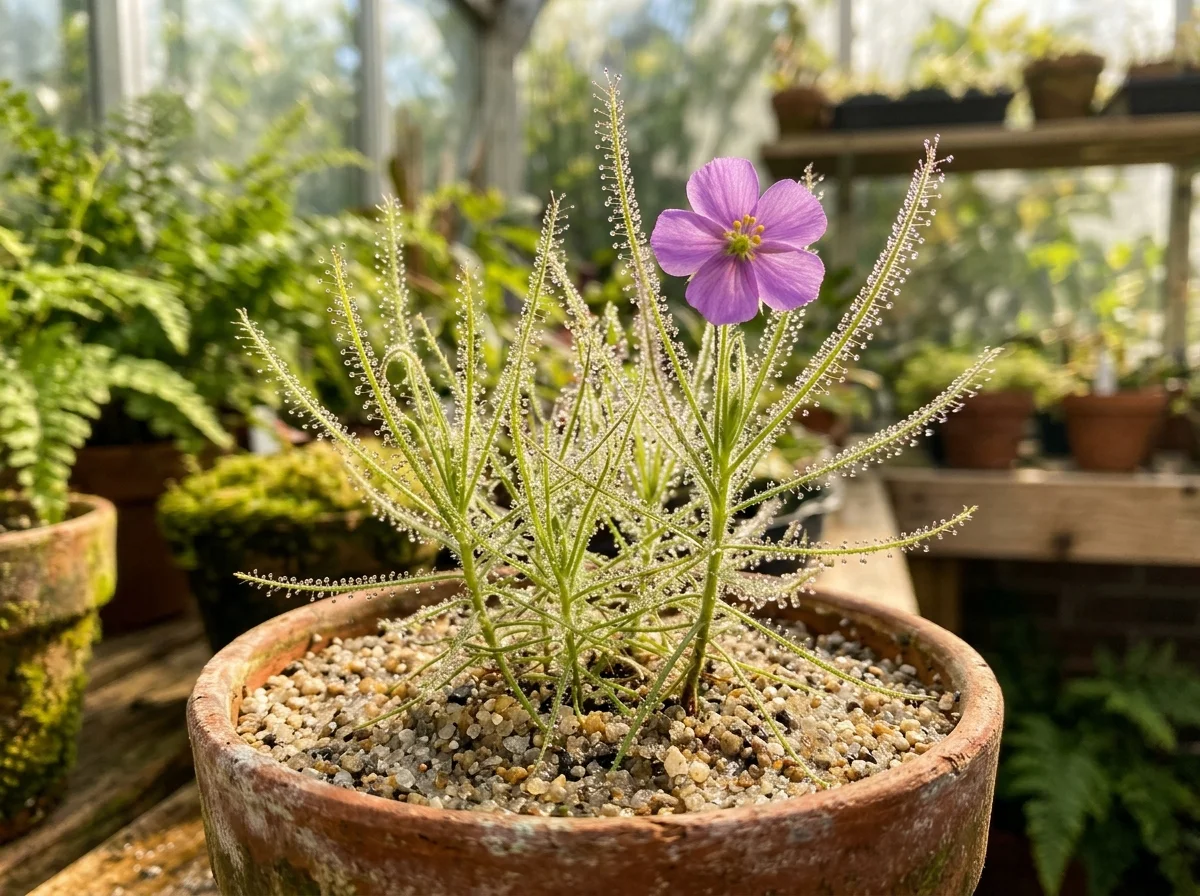
Byblis, the rainbow plants, are Australian carnivores with sticky, mucilage-covered leaves that look like tall sundews. Species differ, so do not assume all have the same needs: five recognized species are annual and two are perennial. ICPS's grower reports a peat and sand mix, pure RO or distilled water, 8 to 10 hours of direct light, and a wetter tray for Byblis liniflora than for the other species. Annuals must be grown from seed.
Key Cultivation Takeaways
- ✓Do not assume all Byblis have identical needs: B. liniflora likes it wetter than the other species.
- ✓ICPS recognizes seven species: two perennial and five annual.
- ✓Use pure RO or distilled water; Byblis is sensitive to high-TDS water.
- ✓Provide at least 8 to 10 hours of direct light, natural or artificial.
- ✓Annual species need to be raised from seed; germination can be slow without treatment.
Environmental Tolerance Matrix
Calibrated baseline thresholds for physiological stress prevention.
| TARGET PARAMETER | WARNING THRESHOLD | CRITICAL THRESHOLD |
|---|---|---|
| Ambient Temperature | About 15-30°C (60-85°F), one grower report | About 4-37°C (38-100°F), not recommended |
| Relative Humidity (RH) | About 50-80%, one grower report | Not established |
| Substrate pH & Root Aeration | Not established in cited sources | Not established in cited sources |
Biggest Owner Mistake
Assuming all Byblis species have the same needs. B. liniflora wants to stay wetter than other species, and annual species need seed management.
What Nobody Tells You
The growing numbers in the main ICPS guide come from one Florida grower, so you may need to adjust them for your climate.
Weak growth
Diagnosis: Unclear from the cited guide; light is one factor to check (guide recommends 8-10 hours of direct light)
Declining plants in tap water
Diagnosis: Byblis seems sensitive to high TDS water
Plant too wet or too dry
Diagnosis: Watering regime may not match the species (B. liniflora wetter than others)
Seed not germinating
Diagnosis: Untreated seed can take up to a year to germinate
Interactive Watering & Substrate Calculator
Calibrated hydrological and soil volume modeling for Rainbow Plant.
Comprehensive Species Profile & Care Guide
Aliases
- Rainbow Plant
- Byblis
- Rainbow plants
- Rainbow plant care
- Byblis plant
Quick Answer: Byblis, the rainbow plants, are Australian carnivores with sticky, mucilage-covered leaves that look like tall sundews. Species differ, so do not assume all have the same needs: five recognized species are annual and two are perennial. ICPS's grower reports a peat and sand mix, pure RO or distilled water, 8 to 10 hours of direct light, and a wetter tray for Byblis liniflora than for the other species. Annuals must be grown from seed.
Summary: Byblis is a small genus of Australian carnivorous plants with sticky, glistening leaves. ICPS recognizes seven species, two perennial and five annual, and the growing advice here comes from one experienced Florida grower, so conditions may need adjusting. The annual species complete their life cycle quickly, so flowering and seed production are central to keeping them going. Beginner suitability depends on species and your ability to provide strong light and pure water.
Key Takeaways
- Do not assume all Byblis have identical needs: B. liniflora likes it wetter than the other species.
- ICPS recognizes seven species: two perennial and five annual.
- Use pure RO or distilled water; Byblis is sensitive to high-TDS water.
- Provide at least 8 to 10 hours of direct light, natural or artificial.
- Annual species need to be raised from seed; germination can be slow without treatment.
References
- Growing Byblis Successfully:
Source: International Carnivorous Plant Society
Url: https://carnivorousplants.org/grow/guides/Byblis
- Byblis Salisb.:
Source: Plants of the World Online (Royal Botanic Gardens, Kew)
Url: https://powo.science.kew.org/taxon/urn:lsid:ipni.org:names:14440-1
- Grow Byblis (Australian Rainbow Plant):
Source: International Carnivorous Plant Society
Url: https://species.carnivorousplants.org/Grow/Byblis.php
- Byblis in cultivation in the tropics and in temperate climates (Allan & Chiang, 2019):
Source: Carnivorous Plant Newsletter (ICPS)
Url: https://cpn.carnivorousplants.org/Article.php/CPNv48n2p79-88
- An amateur's experiences with Byblis germination (Carlton, 2019):
Source: Carnivorous Plant Newsletter (ICPS)
Url: https://cpn.carnivorousplants.org/Article.php/CPNv48n2p93-95
Family: Byblidaceae
Genus: Byblis
Species: seven recognized species (ICPS)
Native Range: Australia
Growth Habit: Annual or perennial carnivorous plants with sticky leaves
Plant Type: Carnivorous annual or perennial (varies by species)
Difficulty: intermediate
Light: At least 8-10 hours of direct light, natural or artificial
Light Min: bright
Light Max: full
Water: Pure RO or distilled water; B. liniflora kept wet in a tray, other species watered so the surface stays wet and allowed to dry slightly between waterings
Dormancy Shift: false
Humidity: About 50-80% in one grower report
Temperature: Best about 15-30°C (60-85°F) in one grower report; tolerates 4-37°C (not recommended)
Mature Size: Resembles a tall sundew; varies by species
Growth Rate: Varies by species
Soil: About 1/2 sand to 1/2 peat for most species; about 3/4 peat to 1/4 sand for B. liniflora
Fertilizer: Not covered by the cited guide
Repotting Frequency: Not covered by the cited guide
Pot Preference: Pots in a tray
Propagation: Seed (smoke or gibberellic acid treatment helps germination)
Flowering: true
Native Region: Australia
Seasonality: annual or perennial depending on species
Sources
- https://carnivorousplants.org/grow/guides/Byblis
- https://species.carnivorousplants.org/Grow/Byblis.php
Sections
- overview:
Content: Byblis, known as the rainbow plant for the prismatic look of sunlight on its glistening leaves, is a genus of carnivorous plants native to Australia. ICPS says there are currently seven recognized species: two perennial (Byblis lamellata and B. gigantea) and five annual (B. liniflora, B. filifolia, B. aquatica, B. guehoi and B. rorida). The ICPS growing guide is written by a grower in Florida, so treat its numbers as a starting point.
- stickyLeaves:
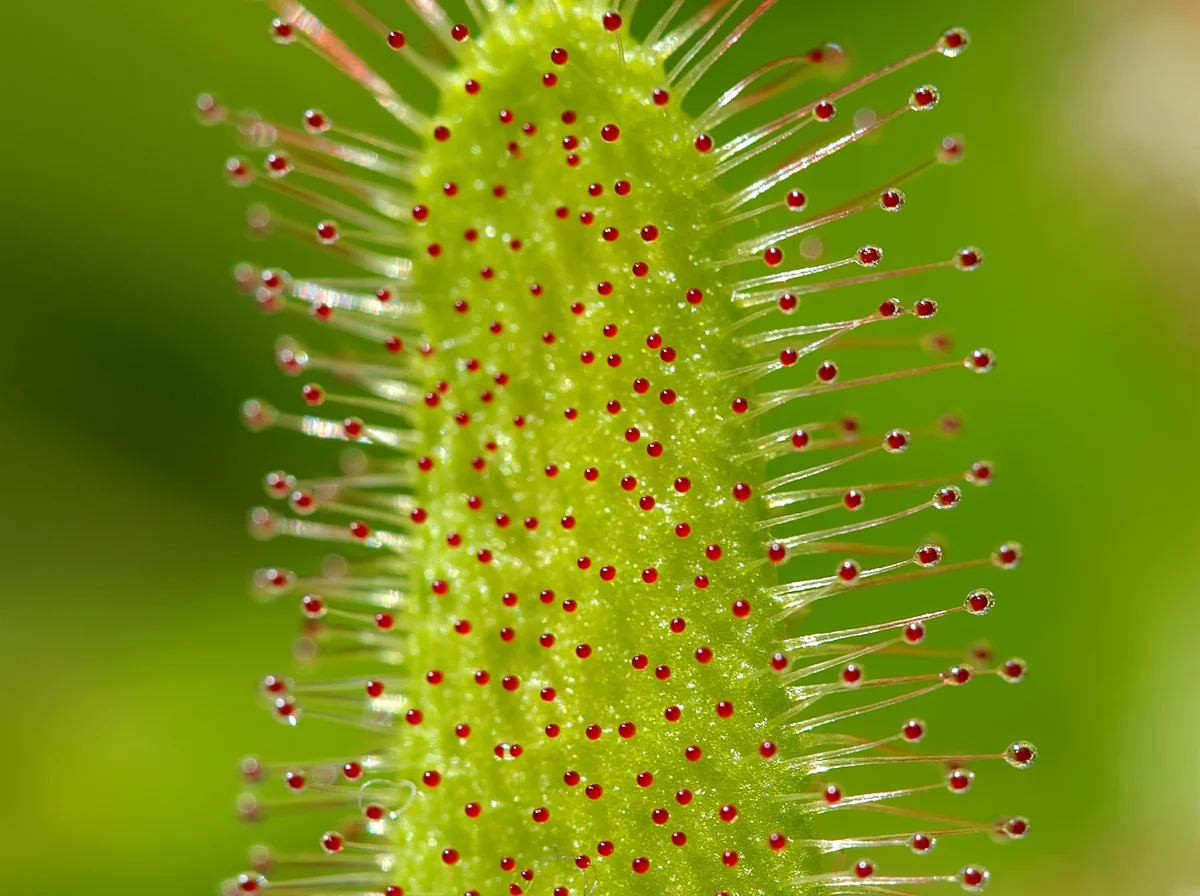
Content: Byblis catches insects on mucilage-laden, sticky leaves. ICPS says it resembles a tall Drosera tree, but the flower structure differs: Byblis flowers are zygomorphic (bilaterally symmetrical), while Drosera flowers are actinomorphic (radially symmetric). That is the key botanical difference from the sundews it resembles. Sundews are the closest comparison: see our sundew (Drosera) care guide and the easier Cape sundew.
- annualVsPerennial:
Content: Five recognized species are annuals and two are perennials. Annuals complete their life cycle in a year or less, so keeping them going means collecting and sowing seed. The perennial species (B. lamellata and B. gigantea) can be kept for longer. Always confirm which species you have, because the life cycle changes how you manage flowering and seed.
- light:
Content: ICPS's grower says plants thrive with at least 8 to 10 hours of direct light, natural or artificial. The guide specifies the amount of light but does not describe symptoms of insufficient light.
- temperatureAndHumidity:
Content: In Florida, the grower reports that all species grow best between about 15 and 30°C (60 to 85°F), and can tolerate temperatures as low as about 4°C (38°F) and as high as about 37°C (100°F) without too much damage, although extremes are not recommended. Ideal humidity is about 50 to 80%. These are one grower's experience and may need adjusting for your climate.
- soil:
Content: A mixture of about half sand and half peat works for most Byblis species other than B. liniflora. B. liniflora tolerates wetter conditions better, so the grower uses about three-quarters peat to one-quarter sand. These are general guides, and you may need to adjust them for your conditions. The carnivorous plant substrate guide explains how to choose and rinse peat and sand safely.
- watering:
Content: Use pure RO or distilled water, because Byblis seems sensitive to high TDS water, as other carnivorous plants are. B. liniflora is kept wet at all times using the tray method. Other species, including the cultivars 'Goliath' and 'David', prefer things slightly drier: water is added to the tray only as it can be absorbed, so the soil surface stays wet, the pots do not sit in a full tray constantly, and they dry slightly between waterings. During cooler seasons the grower sometimes waters from above, keeping the soil more damp than saturated. Our guide to distilled water for carnivorous plants explains RO and distilled water, and the carnivorous water TDS calculator shows whether your water is low enough.
- germination:
Content: ICPS describes two ways to improve germination. One is smoke treatment, burning a small amount of straw or paper on top of the seeds and covering them to contain the smoke. The other, which worked best for the author, is a 24-hour soak in a 10 ppm gibberellic acid (GA3) solution. After either, sow on the surface of the growing medium, keep it wet at 20 to 30°C (70 to 85°F) with 8 to 10 hours of direct light daily. Main germination usually occurs within 2 to 4 weeks, though without treatment seeds can take up to a year.
- floweringAndSeed:
Content: Flowering and seed production are part of the life cycle. For annual species, saving seed is how you keep the plant going, and seeds benefit from germination treatment as described above. The perennial species persist from year to year, but the cited guide gives no flowering details for them.
- propagation:
Content: The cited ICPS guide covers seed propagation only. If you have a perennial species, ask the seller or check species-specific sources for other methods before trying them.
- beginnerSuitability:
Content: This genus is not described as a beginner plant in the cited guide. Success needs strong light, pure water and species-appropriate watering. Annual species are short-lived, which makes seed handling part of care. Treat it as an intermediate project and confirm the species before buying. If you are new to carnivorous plants, start with an easier plant from our best carnivorous plants for beginners guide, and browse the carnivorous plants hub for other groups.
- commonProblems:
Content: The cited guide does not list specific failure symptoms, so treat these as things to check rather than confirmed causes: water quality (TDS), light, whether the watering regime matches the species, and temperature extremes. If a plant has already been watered with tap water, follow the steps for a carnivorous plant watered with tap water.
Troubleshooting
- Weak growth:
Diagnosis: Unclear from the cited guide; light is one factor to check (guide recommends 8-10 hours of direct light)
Treatment: Check light, water purity and watering regime against the species.
Prevention: Provide strong direct light and pure water.
Confidence: 0.4
Evidence
- https://carnivorousplants.org/grow/guides/Byblis
- Declining plants in tap water:
Diagnosis: Byblis seems sensitive to high TDS water
Treatment: Switch to RO or distilled water.
Prevention: Use pure water.
Confidence: 0.7
Evidence
- https://carnivorousplants.org/grow/guides/Byblis
- https://species.carnivorousplants.org/Grow/Byblis.php
- Plant too wet or too dry:
Diagnosis: Watering regime may not match the species (B. liniflora wetter than others)
Treatment: Adjust to the species: keep B. liniflora wet; let other species dry slightly between waterings.
Prevention: Confirm the species before choosing a watering method.
Confidence: 0.6
Evidence
- https://carnivorousplants.org/grow/guides/Byblis
- Seed not germinating:
Diagnosis: Untreated seed can take up to a year to germinate
Treatment: Use smoke or gibberellic acid treatment and keep the medium wet and warm.
Prevention: Treat seed before sowing.
Confidence: 0.7
Evidence
- https://carnivorousplants.org/grow/guides/Byblis
- https://cpn.carnivorousplants.org/Article.php/CPNv48n2p93-95
Growth Rate: varies by species
Mature Height: Resembles a tall sundew; varies by species
Mature Spread: varies by species
Life Cycle: Five annual species, two perennial (ICPS)
Dormancy Period: Not covered by the cited guide
Foliage Texture: Sticky, mucilage-covered leaves
Blooming Season: Varies by species
Container Friendly: yes
Indoor Capable: yes, with strong light
Temperature
Recommended: About 15-30°C (60-85°F), one grower report
Survivable: About 4-37°C (38-100°F), not recommended
Humidity
Recommended: About 50-80%, one grower report
Survivable: Not established
Soil PH
Recommended: Not established in cited sources
Survivable: Not established in cited sources
Description: Thrives with at least 8-10 hours of direct light, natural or artificial.
Sunlight Hours: At least 8-10 hours direct light
Intensity: high
Indoor Window: Strong light required; grow lights suitable
Shade Tolerance: low
Nitrogen Demand: low
Phosphate Demand: low
Potassium Demand: low
Micronutrient Notes: Not covered by the cited guide; sensitive to high TDS water.
Fertilizer Frequency: Not established
Organic Options: Catches insects on sticky leaves.
Difficulty: intermediate
Pruning: Remove dead growth
Best For: Growers who can provide strong light and pure water and handle seed
Expert Insights
- Biggest Owner Mistake:
Type: mistake
Content: Assuming all Byblis species have the same needs. B. liniflora wants to stay wetter than other species, and annual species need seed management.
- What Nobody Tells You:
Type: hidden_truth
Content: The growing numbers in the main ICPS guide come from one Florida grower, so you may need to adjust them for your climate.
Glossary Terms
- Zygomorphic:
Definition: Bilaterally symmetrical; Byblis flowers are zygomorphic, unlike the radially symmetrical flowers of sundews.
- Gibberellic acid (GA3):
Definition: A plant hormone used in a soak to improve seed germination in Byblis.
Byblis Vs Sundews
| Feature | Byblis | Sundews (Drosera) |
|---|---|---|
| Leaf surface | Sticky, mucilage-laden | Sticky, glandular |
| Flower symmetry | Zygomorphic (bilateral) | Actinomorphic (radial) |
| Life cycle | Five annual and two perennial species | Varies by species |
Cat: true
Dog: true
Sources
- https://www.aspca.org/pet-care/animal-poison-control/toxic-and-non-toxic-plants/cats
- https://www.carnivorousplants.org/grow/guides/Byblis
Frequently Asked Questions
Direct answers to the most common grower inquiries.
How do you care for a rainbow plant?▼
Use a peat and sand mix, pure RO or distilled water, at least 8 to 10 hours of direct light, and species-appropriate watering. Care varies by species.
How is Byblis different from a sundew?▼
It resembles a tall sundew with sticky leaves, but its flowers are bilaterally symmetrical, whereas sundew flowers are radially symmetrical.
Is Byblis annual or perennial?▼
Both. ICPS recognizes seven species: two perennial (B. lamellata and B. gigantea) and five annual.
How much water does Byblis need?▼
It depends on the species. B. liniflora is kept wet with a tray at all times, while other species are watered more lightly and allowed to dry slightly between waterings.
What soil does Byblis need?▼
About half sand to half peat for most species, and about three-quarters peat to one-quarter sand for B. liniflora.
What temperature and humidity does Byblis need?▼
One Florida grower reports 15 to 30°C and 50 to 80% humidity as ideal, with tolerance for 4 to 37°C. Adjust for your climate.
How much light does Byblis need?▼
At least 8 to 10 hours of direct light, natural or artificial.
How do I germinate Byblis seed?▼
ICPS describes smoke treatment or a 24-hour soak in 10 ppm gibberellic acid, then sowing on wet medium at 20 to 30°C with strong light. Untreated seed can take up to a year.
Is Byblis good for beginners?▼
The cited guide does not describe it as a beginner plant. It needs strong light and pure water, and annuals need seed handling.
Do all Byblis species have the same needs?▼
No. B. liniflora needs wetter conditions than other species, and annual and perennial species differ in life cycle.
What is a rainbow plant?▼
A rainbow plant is Byblis, a genus of carnivorous plants native to Australia. It is named for the prismatic look of sunlight on its glistening, mucilage-covered leaves. ICPS recognizes seven species: five annual and two perennial.
Does Byblis catch insects?▼
Yes. Byblis catches insects on sticky, mucilage-laden leaves, much like a tall sundew, although its flowers are bilaterally symmetrical rather than radially symmetrical like a sundew's.
Next Best Actions & Diagnostic Tools
Academic & Botanical Sources
- Growing Byblis Successfully (International Carnivorous Plant Society)Access Source →
- Byblis Salisb. (Plants of the World Online (Royal Botanic Gardens, Kew))Access Source →
- Grow Byblis (Australian Rainbow Plant) (International Carnivorous Plant Society)Access Source →
- Byblis in cultivation in the tropics and in temperate climates (Allan & Chiang, 2019) (Carnivorous Plant Newsletter (ICPS))Access Source →
- An amateur's experiences with Byblis germination (Carlton, 2019) (Carnivorous Plant Newsletter (ICPS))Access Source →