🧮
Calculators
🌿
Plants
💧
Watering
☀️
Sunlight
🧪
Fertilizers
🪴
Potting Mix
🎯
Quizzes
fertiliser

Nutrient Lockout in Plants: Causes, Diagnosis & How to Fix It

Written by PlantSolve Editorial Team16 min readLast updated: 2026-06-21
Nutrient Lockout in Plants: Causes, Diagnosis & How to Fix It - Plant Care Guide
⚠ DIAGNOSTIC TRIAGE // SYMPTOMS & ROOT CAUSESTriage Telemetry

Observed Symptoms(6)

  • !
    Yellowing leaves despite fertilizing

    Mimics nitrogen deficiency. Older leaves yellow uniformly.

  • !
    Interveinal chlorosis on young leaves

    High pH locks out micronutrients; veins remain green.

  • !
    Stunted growth and delayed flowering

    General starvation from broad lockout or salt stress.

  • !
    Leaf tip burn and marginal necrosis

    Excess salts draw water out of leaf margins, causing burn.

  • !
    Purple or reddish leaf discolouration

    Often appears in cold or high-pH conditions.

  • !
    Dark green foliage with brown edges

    Salt buildup or calcium excess can antagonize potassium.

Underlying Causes(7)

  • ▸
    High soil pH (>7.5) binding micronutrients
  • ▸
    Low soil pH (<5.5) locking out macronutrients
  • ▸
    Salt buildup from excess fertiliser or hard water
  • ▸
    Overfertilization causing ionic imbalance and antagonism
  • ▸
    Root damage from rot, pests, or physical injury
  • ▸
    Compacted soil limiting root access and drainage
  • ▸
    Cold soil temperatures slowing metabolic uptake
🔬 DIAGNOSIS PROTOCOL8 Steps

Diagnosis Protocol

1
Are symptoms present despite regular fertilisation?
↳ Expected Outcome / Observation:If yes, suspect lockout rather than simple deficiency.
2
What is the soil or media pH?
3
What is the runoff EC?
4
Are roots healthy?
5
Has fertilisation been heavy or recently increased?
↳ Expected Outcome / Observation:Rapid increases in fertiliser strength are a leading cause of lockout.
6
Flush growing medium with pH-balanced water (2–3x container volume).
7
Retest pH and EC of runoff. Confirm EC has dropped and pH is in range.
8
Resume feeding at 1/4 to 1/2 strength and monitor new growth.
✓ BEST PRACTICES & COMMON MISTAKES(6)
  • ✓
    Measure pH after mixing nutrients, not before
  • ✓
    Check runoff EC regularly to detect salt accumulation early
  • ✓
    Flush the medium before switching nutrient formulas or growth stages
  • ✓
    Ensure 10–20% runoff with each container irrigation
  • ✓
    Apply pH adjusters gradually to avoid root shock
  • ✓
    Maintain a garden log of feed dates, pH, EC, and flush events
⚠ Common Grower Mistakes(7)
  • ✕
    Adding more fertiliser when plants show deficiency-like symptoms
  • ✕
    Ignoring runoff EC and assuming nutrients are simply missing
  • ✕
    Flushing with untreated tap water of unknown pH or high EC
  • ✕
    Correcting pH too rapidly with harsh chemical doses
  • ✕
    Assuming lockout is always a deficiency and treating only with foliar sprays
  • ✕
    Using ice-cold water for flushing, which shocks roots
  • ✕
    Resuming full-strength feeding immediately after a flush
🛡 Proactive Prevention Guidelines7 Guidelines
  • ▸
    Test pH of growing medium and irrigation water monthly
  • ▸
    Measure EC of nutrient solution and runoff weekly
  • ▸
    Follow fertiliser label rates without exceeding recommendations
  • ▸
    Flush container plants every 3–4 weeks or when runoff EC rises 20% above feed EC
  • ▸
    Use filtered or reverse-osmosis water if tap water is hard
  • ▸
    Maintain adequate drainage and avoid standing water
  • ▸
    Keep root zones within optimal temperature ranges

What is Nutrient Lockout?

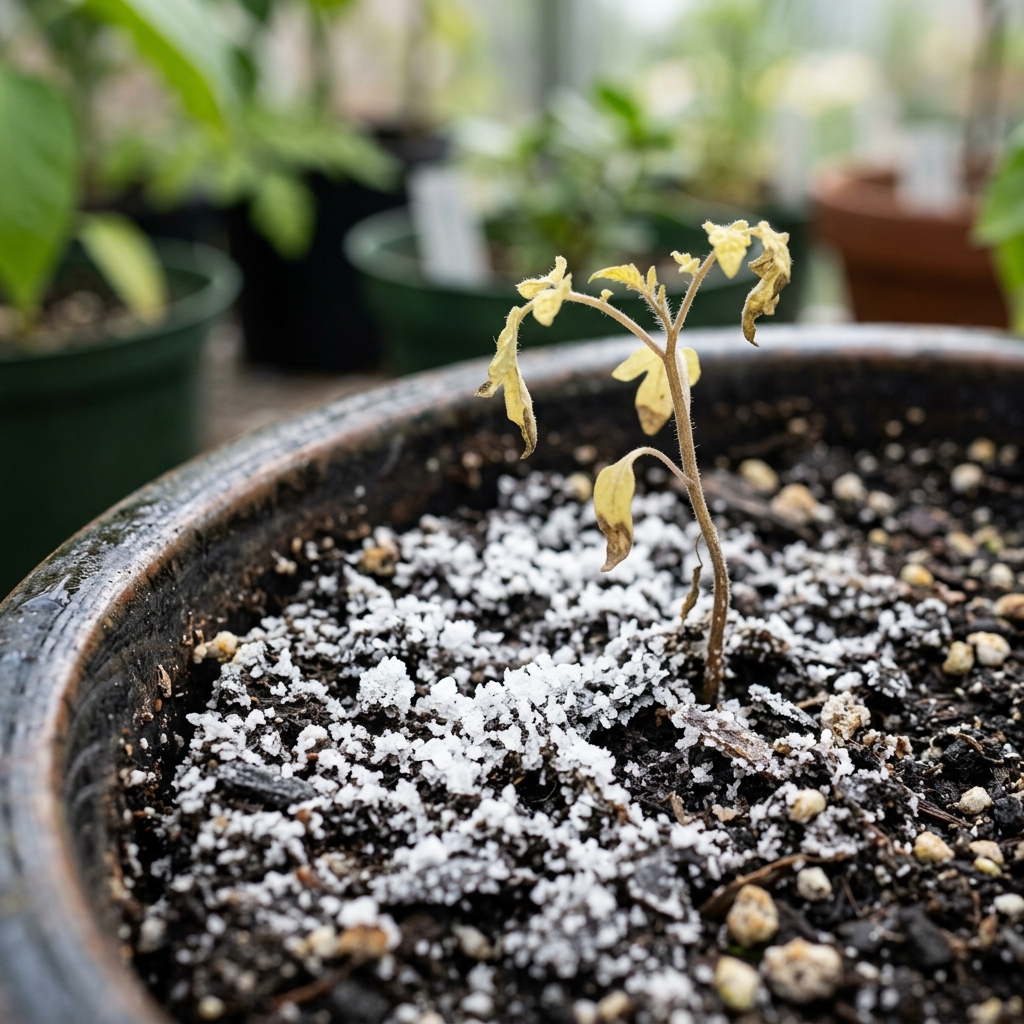
Nutrient lockout is a condition in which essential minerals are present in the root zone but cannot be absorbed by the plant. Unlike true deficiency, where the nutrient is missing, lockout is an availability problem. It is most often caused by extreme pH, salt accumulation, or compromised root systems, and it is one of the most commonly misdiagnosed problems in plant care.

How Lockout Differs from Deficiency

True deficiency means the nutrient is absent or depleted. Lockout means the nutrient is present but inaccessible. Adding more fertiliser to a lockout situation worsens the problem by increasing salt concentration and osmotic stress. The key diagnostic distinction is confirmed by measuring soil pH and runoff EC: if pH is outside 6.0–7.0 (soil) or 5.5–6.5 (hydroponics), or if EC is excessively high, lockout is likely.

Causes of Nutrient Lockout

High pH (>7.5)

In alkaline conditions, iron, manganese, zinc, copper, and boron become insoluble and precipitate out of soil solution. Plants cannot absorb these micronutrients even when soil tests show adequate total content.

Low pH (<5.5)

Acidic conditions lock out macronutrients including nitrogen, phosphorus, potassium, calcium, and magnesium. Aluminum and manganese may also become toxic at low pH, further damaging roots.

Salt Buildup

Repeated fertilisation without leaching accumulates soluble salts. High salinity creates osmotic pressure that makes it harder for roots to draw in water, effectively dehydrating the plant and blocking nutrient channels.

Overfertilization

Excess of one nutrient can antagonize another. For example, excess potassium blocks magnesium uptake; excess calcium blocks iron and manganese; excess phosphorus locks out zinc and copper.

Root Damage

Root rot, root-feeding pests, physical injury, or transplant shock reduces the absorptive surface area. Even perfect pH and nutrient levels cannot be taken up by a compromised root system.

Compacted Soil

Compaction limits root expansion, water percolation, and gas exchange. Roots in compacted zones cannot explore for nutrients, and waterlogged anaerobic pockets trigger rot.

Cold Soil

Soil temperatures below 55°F (13°C) slow root metabolism and reduce active transport of nutrients across root membranes, creating a temporary functional lockout.

Symptoms

Lockout symptoms mirror those of true deficiency because the plant experiences the same cellular starvation. Common signs include:

  • Yellowing (chlorosis) of older or younger leaves depending on which nutrient is locked out
  • Interveinal chlorosis, often mistaken for iron or magnesium deficiency
  • Stunted growth and delayed development
  • Leaf tip burn and marginal necrosis from salt toxicity
  • Poor flowering, fruit set, or bud development
  • Purple or reddish discolouration mimicking phosphorus deficiency
  • General decline despite regular fertilisation

Diagnosis Guide

  1. Visual inspection: Note symptom patterns and which leaves are affected first.
  2. Measure soil pH: Use a calibrated pH meter or test kit. Optimal range is 6.0–7.0 for most plants in soil.
  3. Measure runoff EC: Collect leachate after watering. EC above 2.0–2.5 mS/cm (depending on crop) indicates salt stress.
  4. Inspect roots: Gently examine roots for browning, slime, or foul odor indicating rot.
  5. Review fertilisation history: Determine if feeding has been heavy, frequent, or recently changed.
  6. Flush growing medium: Water thoroughly with pH-balanced water equal to 2–3 times the container volume.
  7. Retest pH and EC: Measure runoff again. EC should drop significantly; pH should approach target range.
  8. Resume feeding: Reintroduce nutrients at 1/4 to 1/2 previous strength and monitor new growth.

Treatment

Flushing Soil and Soilless Mixes

Flush with clean, pH-balanced water at room temperature. Use twice the container volume. For example, a 5-gallon container receives 10 gallons of flush water. Allow full drainage.

Hydroponic Systems

Drain the reservoir completely. Clean the system. Refill with fresh water adjusted to the correct pH. Allow plants to feed on plain water for 24–48 hours before reintroducing nutrients at reduced strength.

pH Correction

After flushing, adjust the root zone to the species-appropriate pH. Use dolomitic lime to raise pH in acidic soils; use elemental sulphur or acidifying fertilisers to lower pH in alkaline soils. For immediate relief, use chelated micronutrients that remain available across a wider pH range.

Root Recovery

If root rot is present, trim damaged roots with sterile tools, repot in fresh medium, and ensure proper drainage and aeration. Avoid fertilizing until new white root tips appear.

Gradual Refeeding

Resume fertilisation at 25–50% of the manufacturer's recommended rate. Increase gradually over 1–2 weeks as new growth shows recovery. Judge success by the colour and vigour of new leaves, not old damage.

Recovery Timeline

After a successful flush and pH correction, plants typically show stabilized conditions within 3–5 days. New growth should appear healthy within 7–14 days. Old leaves that were damaged during lockout rarely recover fully and may be removed once new foliage is established. Full vegetative recovery can take 2–4 weeks depending on species and severity.

Prevention

  • Test pH of growing medium and irrigation water monthly.
  • Measure EC or TDS of nutrient solution and runoff weekly.
  • Follow fertiliser label rates; more is not better.
  • Flush container plants every 3–4 weeks or whenever runoff EC exceeds target by 20%.
  • Use filtered or reverse-osmosis water if tap water is hard or high in carbonates.
  • Maintain adequate drainage and avoid saucers that trap standing water.
  • Keep root zones within optimal temperature ranges.

Best Practices

  • Always measure pH after mixing nutrients, as concentrates alter water chemistry.
  • Check runoff EC every few waterings to catch salt accumulation early.
  • Flush the medium before switching from vegetative to bloom nutrients.
  • Ensure 10–20% runoff with each irrigation in container culture.
  • Use pH adjusters (phosphoric acid, potassium hydroxide) sparingly to avoid shocking roots.
  • Maintain a garden log of feed dates, pH, EC, and any flush events.

Common Mistakes

  • Adding more fertiliser when plants show deficiency-like symptoms.
  • Ignoring runoff EC and assuming nutrients are simply "missing."
  • Flushing with untreated tap water of unknown pH or high EC.
  • Correcting pH too rapidly with harsh chemical doses.
  • Assuming lockout is always a deficiency and treating with foliar sprays alone.
  • Using ice-cold flush water, which shocks roots and slows recovery.
  • Resuming full-strength feeding immediately after a flush.
RECOMMENDED WORKFLOWS

Next Best Actions & Diagnostic Tools

All Plant Calculators →
⚡
Plant Macronutrients Explained
Macronutrients are the mineral elements plants need in the largest quantities to support structural growth, photosynthesis, and reproduction. The primary macronutrients, nitrogen, phosphorus, and potassium, form the basis of virtually every commercial fertilizer and are collectively known as NPK. Beyond NPK, secondary macronutrients like calcium, magnesium, and sulfur are also required in significant amounts, though they're less commonly featured on fertilizer labels. Understanding what each macronutrient does helps growers diagnose deficiency symptoms and choose fertilizer formulas suited to a plant's current growth stage.
⚡
Micronutrients for Plants
Micronutrients are essential mineral elements plants require in far smaller quantities than macronutrients like nitrogen or potassium, yet their absence triggers significant physiological problems that macronutrient supplementation cannot fix. These trace minerals include iron, manganese, zinc, copper, boron, and several others measured in parts per million. Soil pH is the primary factor controlling micronutrient availability; outside the optimal range, iron and manganese in particular form insoluble compounds that roots cannot absorb, even when the soil technically contains enough of the nutrient. This is why correcting pH is often the real fix for a suspected micronutrient deficiency.
⚡
Iron Chlorosis in Plants
Iron chlorosis is one of the most common micronutrient issues affecting houseplants, lawns, and woody ornamentals. Because iron is an immobile nutrient within plant tissue, plants cannot transport stored iron from older foliage to nourish new growth. As a result, symptoms always appear on the newest leaves first. While an actual absence of iron in the substrate can cause chlorosis, high soil pH (above 6.5–7.0) is the primary trigger, converting soluble iron into insoluble forms roots cannot absorb. Treating iron chlorosis requires immediate symptom relief using chelated iron alongside long-term fixes like correcting soil pH, improving drainage, and relieving root compaction.
⚡
Salt Buildup in Plants: Causes, Symptoms & How to Fix It
Salt buildup occurs when soluble salts from fertilizers, hard water, and soil amendments accumulate in the growing medium faster than they can be leached away. It raises soil EC, creates osmotic stress, and causes specific ion toxicities that damage roots and foliage. Common in container plants, indoor gardens, and arid climates, salt buildup is preventable through proper watering, periodic flushing, and regular EC monitoring. This approach helps maintain optimal conditions and prevents common issues that can affect your plant's overall health and longevity over time.
Hydration & Irrigation Tool

Plant Watering Calculator: Estimate the Ideal Watering Schedule

Calculate the correct watering frequency for your plant based on species, pot size, soil type, season, and climate.

Enter plant type, pot size, and conditions for a custom watering schedule.Free Evidence-Based Botanical Tool

Frequently Asked Questions

What is nutrient lockout?

Nutrient lockout is a condition where essential minerals are present in the growing medium but cannot be absorbed by the plant, usually due to incorrect pH, salt buildup, or root damage.

How is nutrient lockout different from deficiency?

In a true deficiency, the nutrient is absent or depleted. In lockout, the nutrient is present but unavailable due to pH, salts, or root problems. Adding more fertiliser fixes deficiency but worsens lockout.

What pH causes nutrient lockout?

In soil, pH below 5.5 locks out macronutrients like nitrogen, phosphorus, and potassium. pH above 7.5 locks out micronutrients like iron, manganese, and zinc. Most plants absorb nutrients best between pH 6.0 and 7.0.

Can overwatering cause nutrient lockout?

Yes. Overwatering can lead to root rot, which destroys the root hairs responsible for nutrient uptake. It can also leach beneficial nutrients or create anaerobic conditions that change soil chemistry.

How do I flush my plants to fix lockout?

Water the soil with pH-balanced water equal to 2–3 times the container volume, allowing full drainage. For hydroponics, drain the reservoir and refill with fresh pH-balanced water.

How long does it take to fix nutrient lockout?

Conditions usually stabilize within 3–5 days after flushing and pH correction. Healthy new growth typically appears within 7–14 days. Full recovery may take 2–4 weeks.

Can nutrient lockout kill plants?

Yes. Chronic lockout starves the plant of essential nutrients, weakens its immune system, and can lead to death if the underlying cause—such as root rot or extreme pH—is not corrected.

Does EC measure nutrient lockout?

EC measures the electrical conductivity of dissolved salts. High EC indicates salt buildup, which is a common cause of lockout. However, pH-induced lockout can occur even at normal EC levels, so both metrics are needed.

Can organic fertilisers cause lockout?

Organic fertilisers can cause lockout if overapplied or if they decompose in ways that drastically alter pH. However, they generally have lower salt indexes than synthetic fertilisers, making salt buildup less likely.

How often should I flush potted plants?

As a preventive measure, flush container plants every 3–4 weeks. Flush immediately if runoff EC exceeds feed EC by more than 20% or if lockout symptoms appear.

What does nutrient lockout look like?

It looks like nutrient deficiency: yellowing, stunted growth, leaf burn, or poor flowering. The critical clue is that these symptoms appear despite adequate fertilisation.

Can lockout affect hydroponic systems?

Yes. Hydroponic systems are especially sensitive to pH drift and salt accumulation. Lockout can develop rapidly if reservoir pH is not monitored daily or if nutrient concentrations are too high.

Is flushing the same as overwatering?

No. Flushing is a deliberate, one-time application of large water volume to leach salts. Overwatering is repeated saturation that causes chronic oxygen deprivation. Flushing should be followed by a normal dry-back cycle.

Why are my plants yellow even though I fertilize?

This is the classic sign of nutrient lockout. The nutrients are in the soil but unavailable. Test pH and EC before adding more fertiliser.

Can I prevent lockout with slow-release fertiliser?

Slow-release fertilisers reduce the risk of salt buildup and overfertilization, but they do not prevent pH-induced lockout. Regular pH monitoring is still essential.

Keep exploring

Related Guides and Articles

Plant Macronutrients ExplainedMacronutrients are the mineral elements plants need in the largest quantities to support structural growth, photosynthesis, and reproduction. The primary macronutrients, nitrogen, phosphorus, and potassium, form the basis of virtually every commercial fertilizer and are collectively known as NPK. Beyond NPK, secondary macronutrients like calcium, magnesium, and sulfur are also required in significant amounts, though they're less commonly featured on fertilizer labels. Understanding what each macronutrient does helps growers diagnose deficiency symptoms and choose fertilizer formulas suited to a plant's current growth stage.
Read guide →
Micronutrients for PlantsMicronutrients are essential mineral elements plants require in far smaller quantities than macronutrients like nitrogen or potassium, yet their absence triggers significant physiological problems that macronutrient supplementation cannot fix. These trace minerals include iron, manganese, zinc, copper, boron, and several others measured in parts per million. Soil pH is the primary factor controlling micronutrient availability; outside the optimal range, iron and manganese in particular form insoluble compounds that roots cannot absorb, even when the soil technically contains enough of the nutrient. This is why correcting pH is often the real fix for a suspected micronutrient deficiency.
Read guide →
Iron Chlorosis in PlantsIron chlorosis is one of the most common micronutrient issues affecting houseplants, lawns, and woody ornamentals. Because iron is an immobile nutrient within plant tissue, plants cannot transport stored iron from older foliage to nourish new growth. As a result, symptoms always appear on the newest leaves first. While an actual absence of iron in the substrate can cause chlorosis, high soil pH (above 6.5–7.0) is the primary trigger, converting soluble iron into insoluble forms roots cannot absorb. Treating iron chlorosis requires immediate symptom relief using chelated iron alongside long-term fixes like correcting soil pH, improving drainage, and relieving root compaction.
Read guide →
Salt Buildup in Plants: Causes, Symptoms & How to Fix ItSalt buildup occurs when soluble salts from fertilizers, hard water, and soil amendments accumulate in the growing medium faster than they can be leached away. It raises soil EC, creates osmotic stress, and causes specific ion toxicities that damage roots and foliage. Common in container plants, indoor gardens, and arid climates, salt buildup is preventable through proper watering, periodic flushing, and regular EC monitoring. This approach helps maintain optimal conditions and prevents common issues that can affect your plant's overall health and longevity over time.
Read guide →