How to calculate bioactive substrate volume for an enclosure
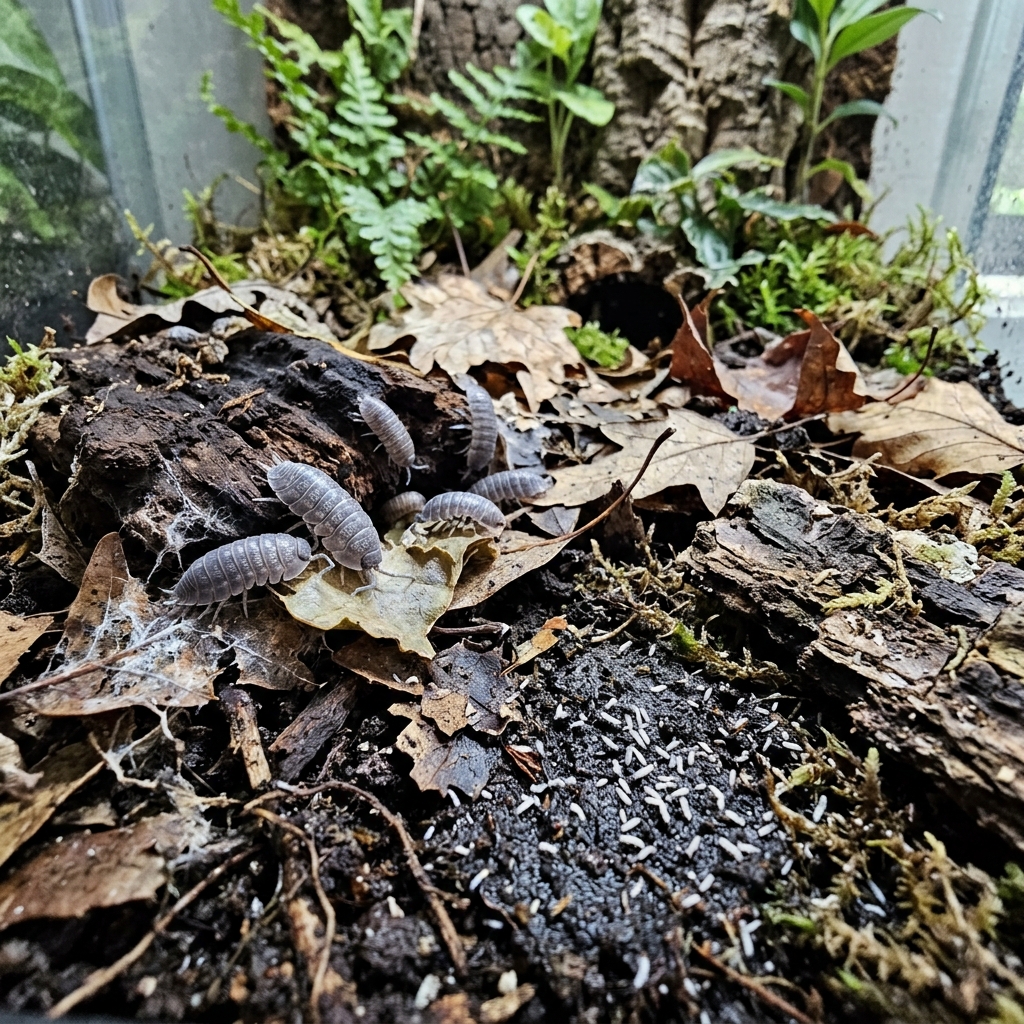
To calculate the substrate volume needed for a bioactive terrarium or vivarium, use the enclosure's usable interior footprint and the substrate depth you plan to use.
- Measure the internal length and width: Record the usable interior base dimensions of the enclosure.
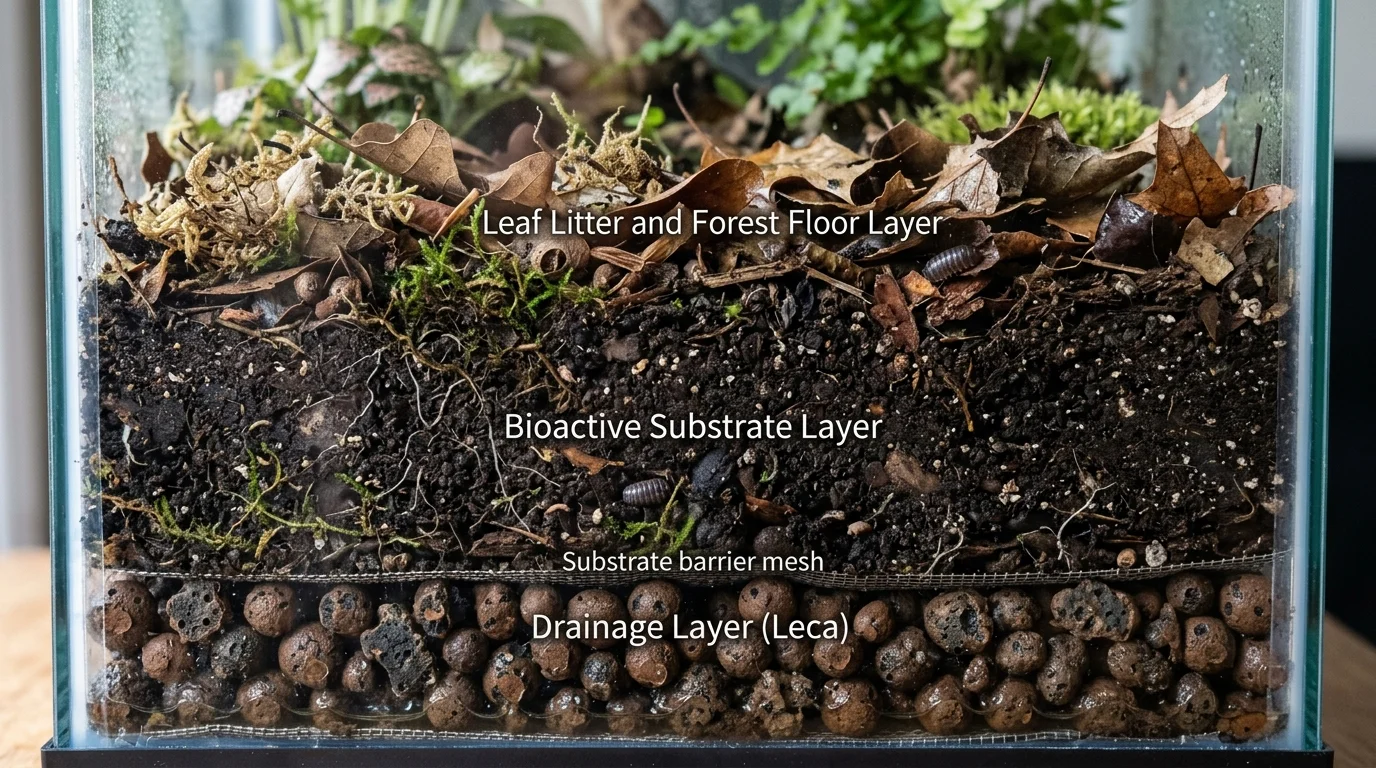
- Enter your substrate depth: Measure only the substrate layer you want to calculate. Do not include a separate drainage layer when entering substrate depth.
- Calculate rectangular volume: Multiply
Length × Width × Substrate Depth. - Apply coverage: If substrate will not cover the entire enclosure floor, enter the percentage of the floor that will receive substrate.
- Choose your output units: Metric results are provided in Liters. US measurements are provided in US gallons, using 231 cubic inches per US gallon.
- Apply a recipe if needed: The calculator can divide the required substrate volume according to the Classic ABG-style preset or a custom recipe using your selected ingredient parts.
Classic ABG-style substrate recipe
The calculator includes a Classic ABG-style 7-part preset. It divides the required substrate volume into five ingredients according to their selected parts:
- Tree Fern Fiber: 2 parts (28.6%)
- Orchid Bark: 2 parts (28.6%)
- Peat Moss: 1 part (14.3%)
- Sphagnum Moss: 1 part (14.3%)
- Horticultural Charcoal: 1 part (14.3%)
You can also select Custom Recipe and enter your own ingredients and relative parts. The calculator proportionally allocates the required substrate volume across the ingredients you provide.
US gallons for substrate volume
For US measurements, the calculator converts enclosure dimensions into volume using 231 cubic inches per US gallon. This keeps the result consistent with the US gallon unit used for substrate volume.
Optional drainage layer calculation
If your enclosure uses a separate drainage layer, enable the drainage option and enter its depth. The calculator reports the drainage volume separately from the substrate volume, so the two layers are not combined.
Planning your purchase quantity
The optional extra-material purchase allowance is a planning buffer. For example, a 10% allowance increases the purchase-planning volume by 10%. It is not a required adjustment to the substrate calculation.