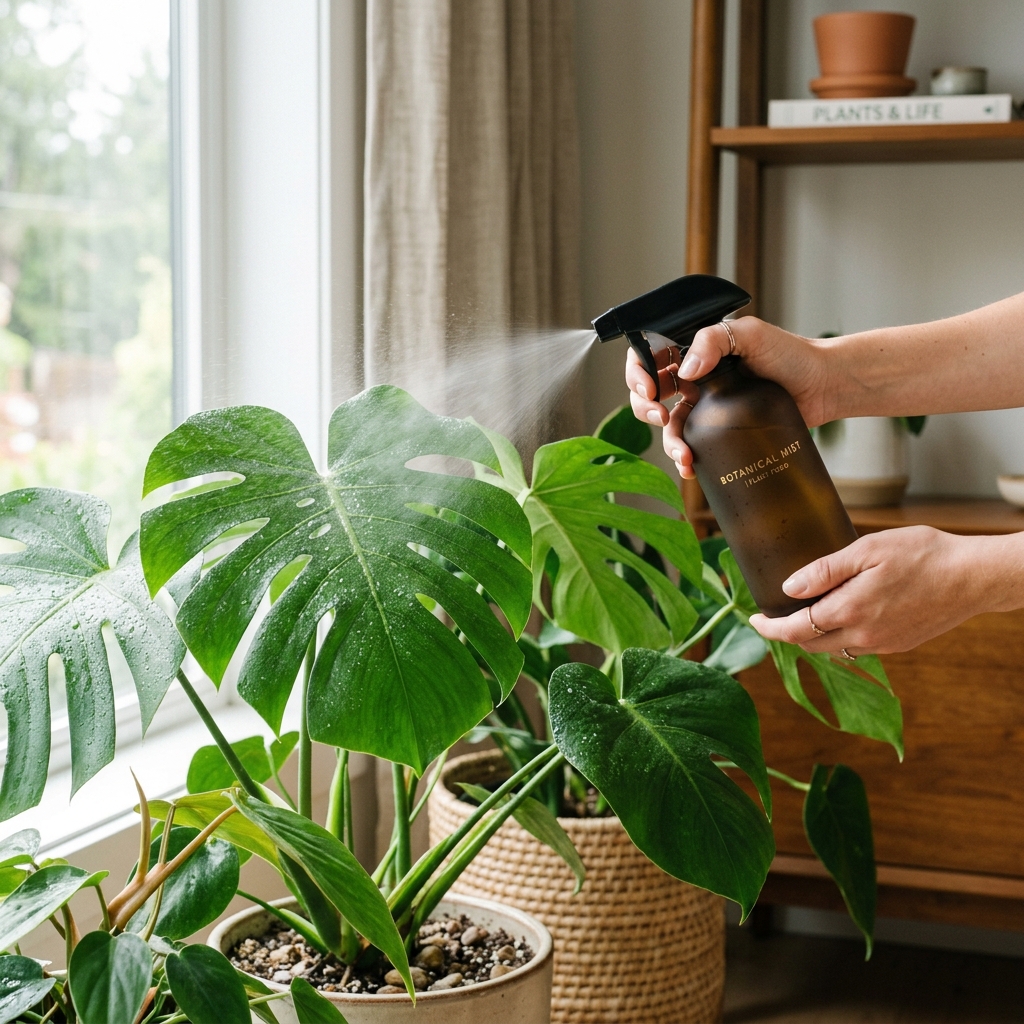
What Is Foliar Feeding?
Foliar feeding is a supplementary fertilizing method where dilute liquid nutrients are sprayed directly onto a plant's foliage. Instead of traveling through the root system, the dissolved minerals are absorbed directly through the leaf's epidermis and microscopic pores called stomata. Because the nutrients enter the vascular system immediately, foliar feeding is an excellent "first aid" treatment for struggling plants.
When to Use Foliar Sprays
While roots remain the primary engine for macronutrient uptake, foliar feeding bypasses the soil entirely. We recommend reserving foliar sprays for specific horticultural scenarios:
- Nutrient Lockout: When incorrect soil pH prevents roots from absorbing minerals, foliar sprays bypass the soil block.
- Root Damage: Plants suffering from root rot or severe root-bound stress can be temporarily sustained with light foliar feeding while they recover.
- Targeted Deficiencies: Micronutrient deficiencies, particularly iron chlorosis (yellow leaves with green veins), respond rapidly to chelated iron foliar sprays.
How to Foliar Feed Safely
The greatest risk of foliar feeding is chemical burn. If the solution is too concentrated, the fertiliser salts will dehydrate the leaf tissue, leaving brown, crispy spots.
- Dilute Heavily: Mix your liquid fertiliser at 1/4 to 1/8 of the recommended soil-drench strength.
- Use a Fine Mist: A fine mist sprayer provides even coverage and prevents large droplets from pooling at the leaf tips, where salts can concentrate and burn the tissue.
- Spray the Undersides: Stomata are heavily concentrated on the undersides of leaves, making absorption significantly more efficient there.
- Timing is Critical: Never spray plants in direct, intense sunlight. The water droplets can act as magnifying glasses and scorch the leaves. Early morning is ideal because the stomata are fully open and the leaves will dry before nightfall.
Common Mistakes to Avoid
Foliar feeding is a supplement, not a replacement for traditional root fertilisation. Leaves simply cannot absorb enough nitrogen, phosphorus, and potassium (N-P-K) to sustain long-term growth. Furthermore, frequently soaking the foliage of sensitive plants like Begonias or African Violets can invite fungal diseases like powdery mildew or crown rot.